Skip to content

7 Best Apps for ProRAW Workflow

7 Best Apps for ProRAW Workflow

If your iPhone library is full of 25 MB ProRAW files you no longer need in full RAW form, the bottleneck is not image quality. It is workflow. The best apps for ProRAW workflow are the ones that help you move cleanly from capture to edit to long-term storage without breaking your Photos library, losing metadata, or creating a loose-file mess.

That matters more than most app roundups admit. ProRAW is excellent when you need extra latitude for exposure, color, and detail recovery. But once an image is edited and approved, keeping every shot as a large DNG is not always the smartest use of iPhone, iPad, or Mac storage. The right app stack depends on where friction shows up for you – at capture, at editing, or after the edit is finished.

What makes the best apps for ProRAW workflow

A good ProRAW workflow app does one specific job very well. It should either help you capture with intention, edit with control, or reduce storage overhead without forcing you out of Apple Photos.

For most Apple users, four things matter. First, native behavior matters because Photos is where albums, favorites, captions, locations, and edits already live. Second, privacy matters because photo libraries are personal, and cloud detours are often unnecessary. Third, speed matters because export-import loops get old fast. Fourth, file size matters because ProRAW libraries grow aggressively.

That is why there is no single winner for everyone. If you mostly want better edits, your best app will look different from someone who already likes Apple’s editing tools and simply wants their finished photos to take up less space.

Capture: Apple Camera

For many users, the best ProRAW capture app is the one already on the phone. Apple Camera is the cleanest way to shoot ProRAW when you want reliability, Smart HDR integration, and the least friction. It is built for speed. You open the camera, enable RAW when needed, and the image lands directly in Photos.

That direct path is hard to beat. There is no handoff problem, no import step, and no question about where the original file went. If your goal is a simple ProRAW workflow with minimal overhead, Apple Camera remains the default for a reason.

The trade-off is control. If you want deeper manual shooting options, Apple’s camera app is intentionally limited. It is optimized for consistency, not for the kind of hands-on adjustment some photographers prefer.

Capture with more control: Halide

Halide earns its place in any serious discussion of the best apps for ProRAW workflow because it gives you more say at the moment of capture. Manual focus tools, exposure controls, and a photography-first interface make it appealing to users who want to slow down and shoot more deliberately.

For iPhone photographers who already understand when ProRAW is worth using, Halide can be a better front end than Apple Camera. You get more tactile control without giving up the benefits of Apple’s image pipeline entirely.

The catch is that extra control only helps if you will use it. If you mostly tap and shoot, Halide can feel like added complexity. It also does not solve the storage side of the equation by itself. It improves capture, but it does not reduce the footprint of a growing ProRAW library.

Edit inside Photos: Apple Photos

Apple Photos is underrated as a ProRAW editor because it is not trying to look like pro desktop software. For many users, that is exactly its strength. It keeps the workflow native, non-destructive, and organized. You can edit on iPhone, continue on iPad, and revisit on Mac without creating duplicate files or breaking album structure.

If your adjustments are mostly exposure, highlights, shadows, white balance, and crop, Photos is often enough. It is fast, familiar, and built into the library you already use every day. More importantly, it keeps your organizational context intact.

This is where many workflows should probably stop pretending they need more software than they do. If Photos gives you the result you want, staying in Photos is usually the smartest move. The limitation appears when you need more localized control, more advanced masking, or a more stylized finishing process.

Edit with more depth: Lightroom

Lightroom is still a strong option when your ProRAW edits need more precision. It offers better local adjustments, stronger selective editing, and a more mature set of tools for photographers who want consistent results across larger batches.

For some users, Lightroom is the center of the workflow. For others, it is a selective tool brought in only when Photos feels too basic. That second use case makes more sense for many Apple-centric photographers. You do not need to build your whole library around Lightroom just to benefit from its stronger editing controls on the images that need them.

The main trade-off is workflow overhead. Lightroom can pull you toward its own library logic, cloud behavior, and subscription model. If you are committed to Photos as your main system of record, Lightroom works best as a specialist tool, not as the place where your entire photo life has to live.

Edit with a desktop-first feel: Photomator

Photomator fits nicely between Photos and heavier pro software. It feels native to Apple devices, offers strong adjustment tools, and stays approachable. For users who want more than Photos but less friction than a full traditional photo suite, it is a compelling middle ground.

Its Apple-first design matters. The interface feels at home on Mac and iPad, and that lowers the barrier to actually using more advanced tools. If Lightroom feels like too much infrastructure for your needs, Photomator can be the better fit.

As with any editor, though, it does not address the final storage problem on its own. Once your ProRAW edits are done, you still need to decide whether keeping the original RAW forever makes sense for every finished image.

Convert for long-term storage: RawToHEIC

This is the part most ProRAW workflows ignore. Editing gets the attention, but library maintenance is where the long-term pain shows up. If your finished ProRAW shots are staying in Photos and consuming large amounts of storage, conversion is the missing step.

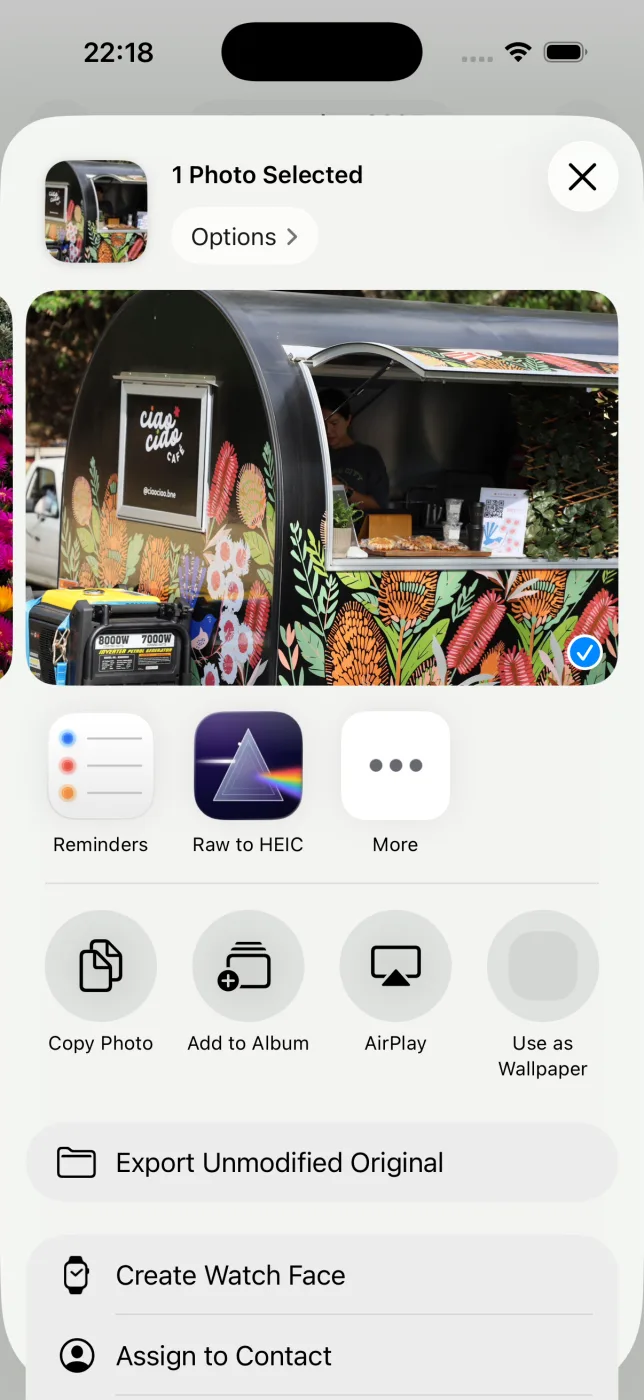
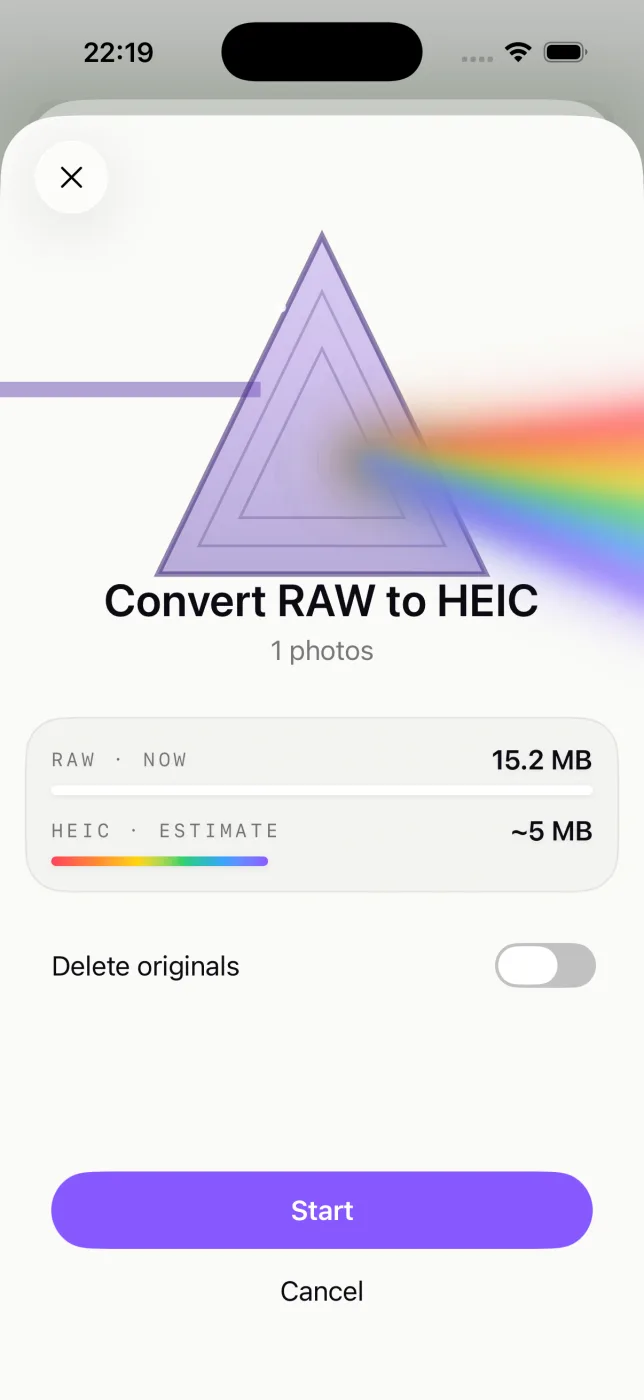
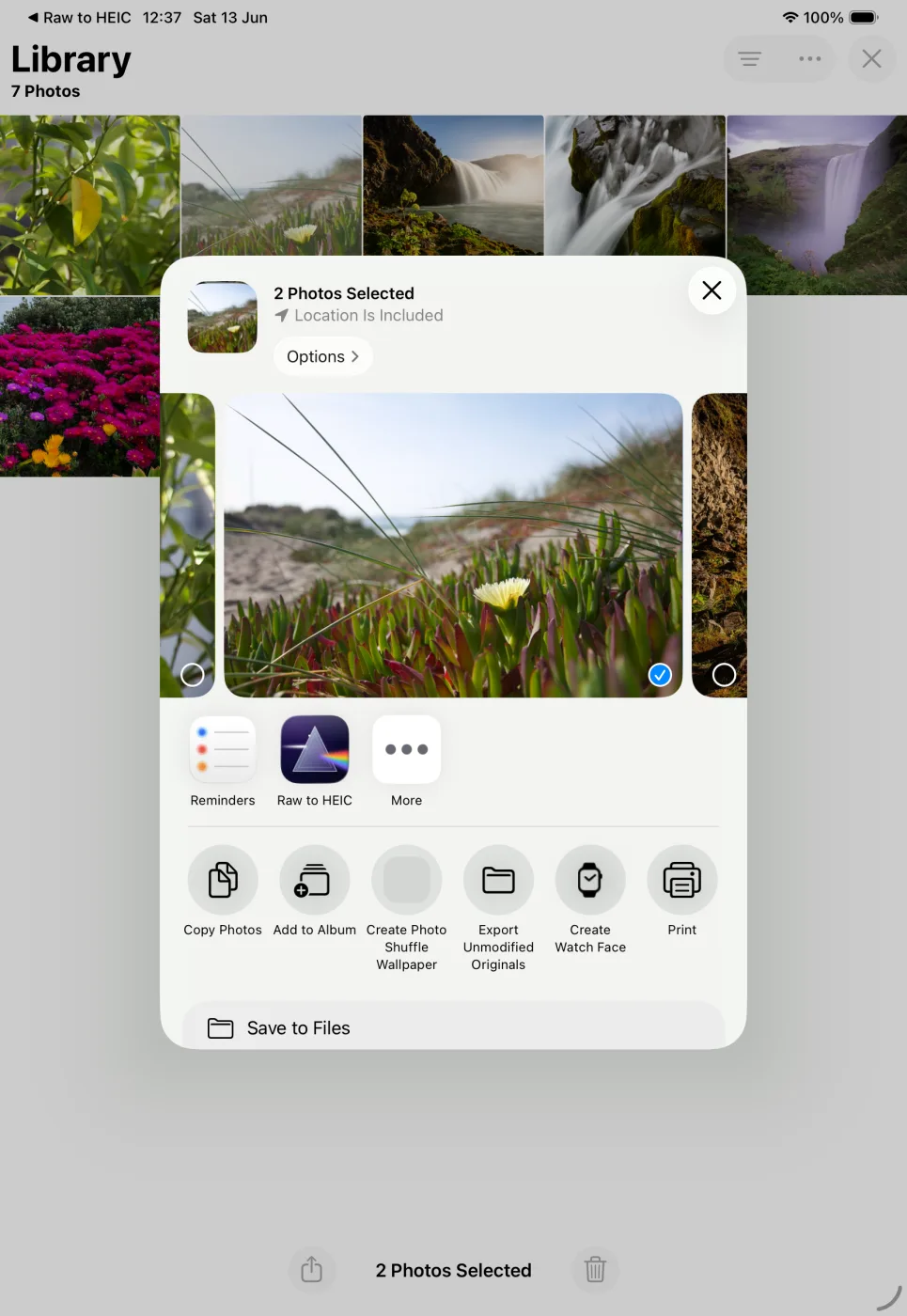
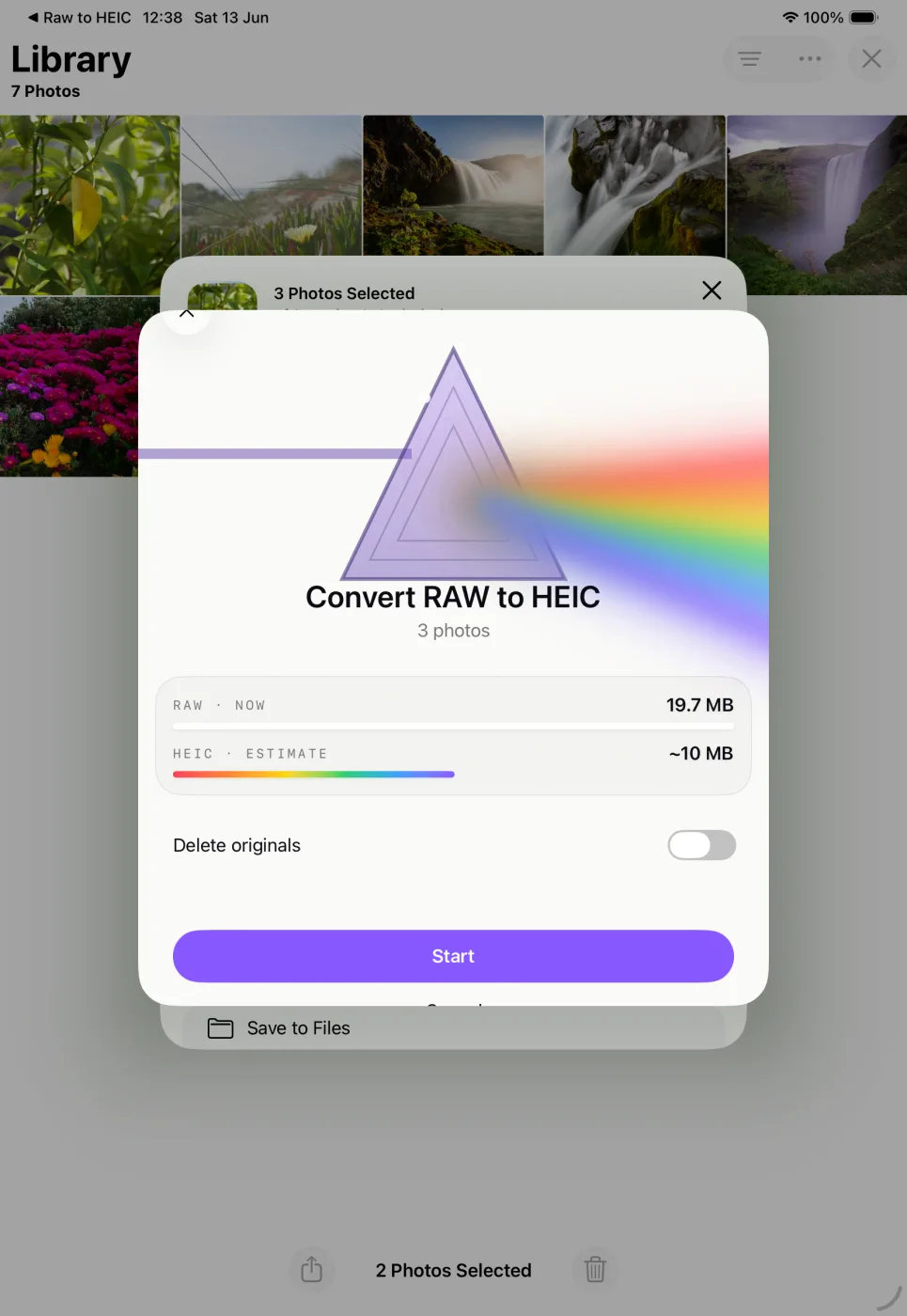
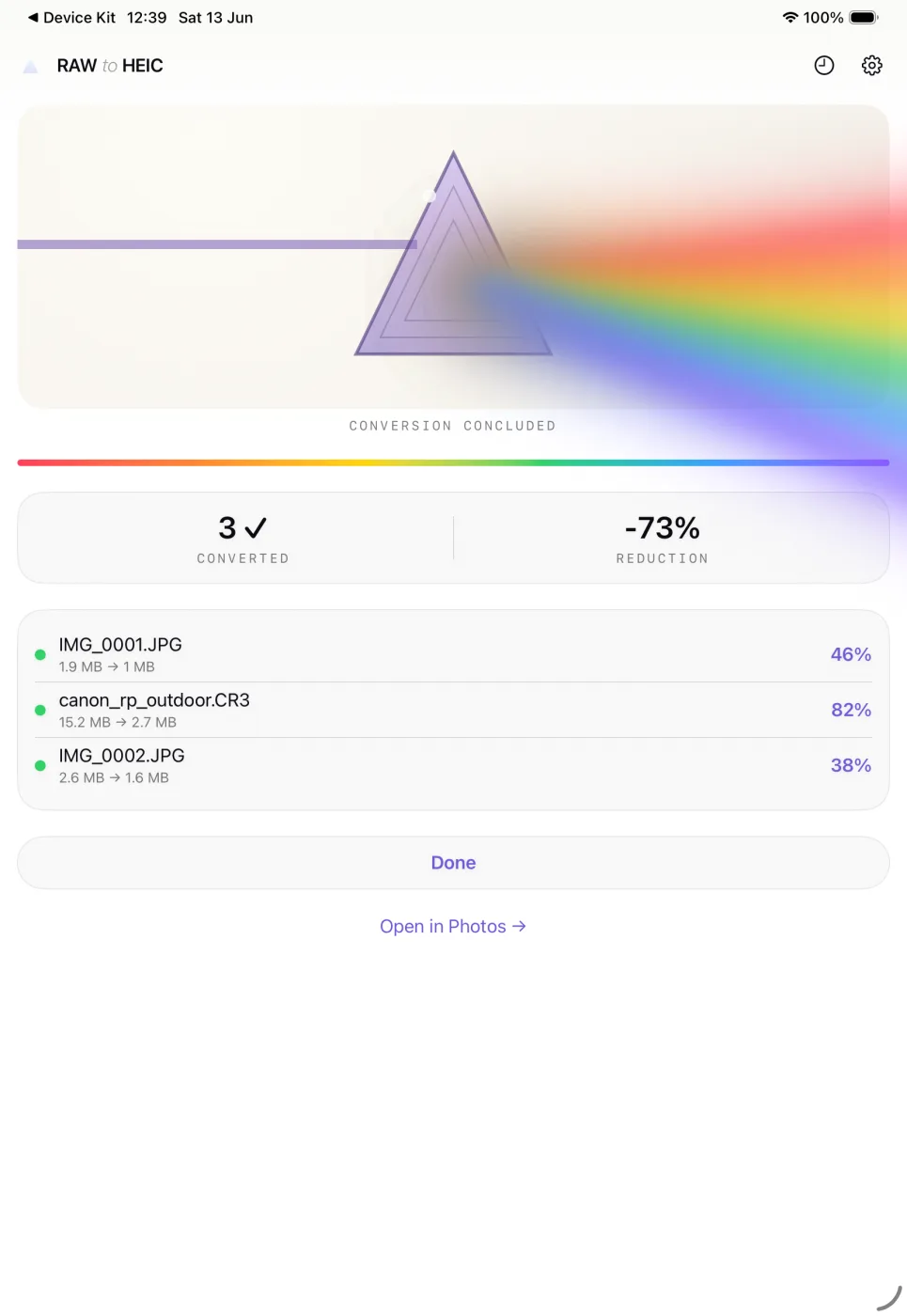
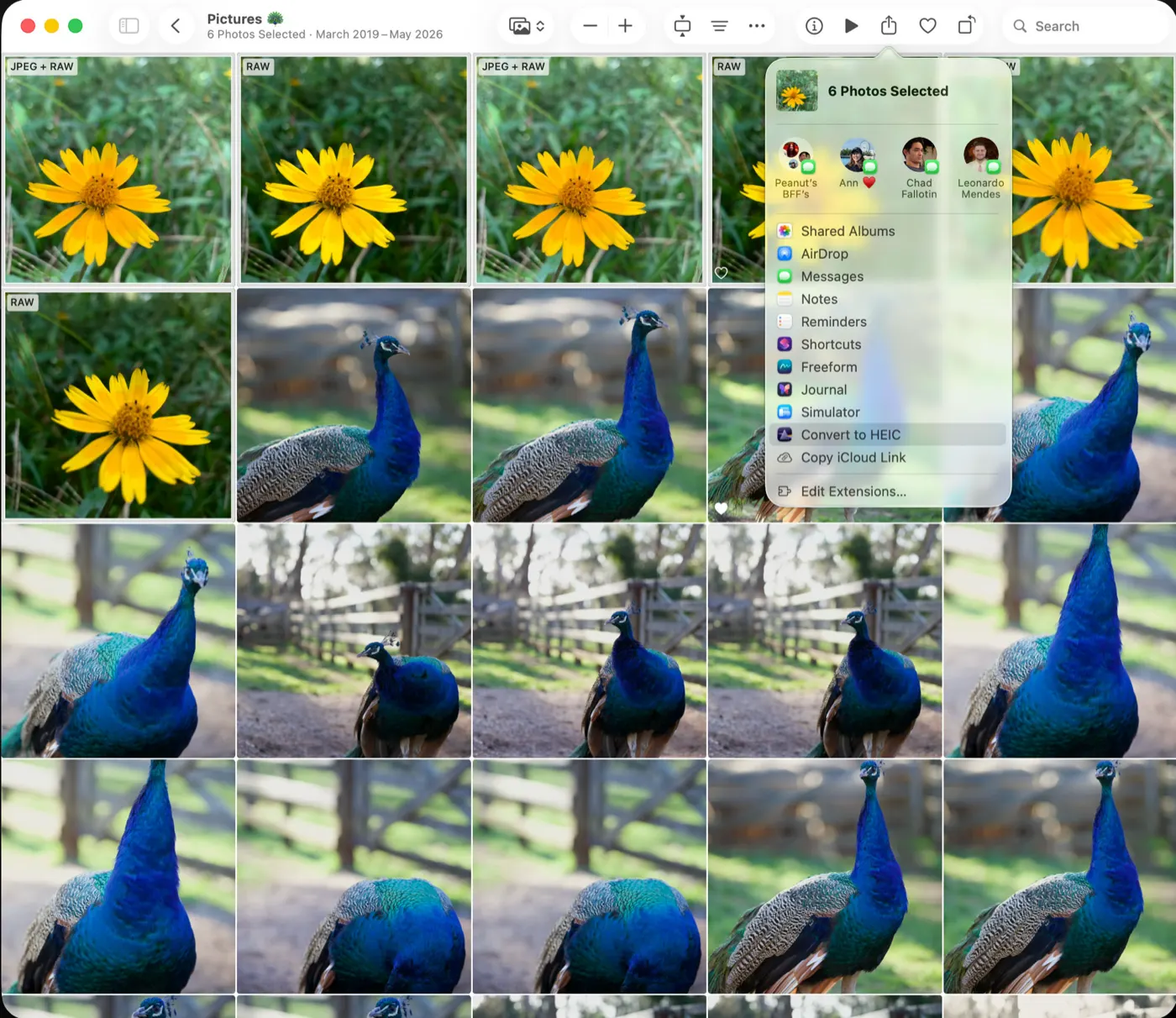
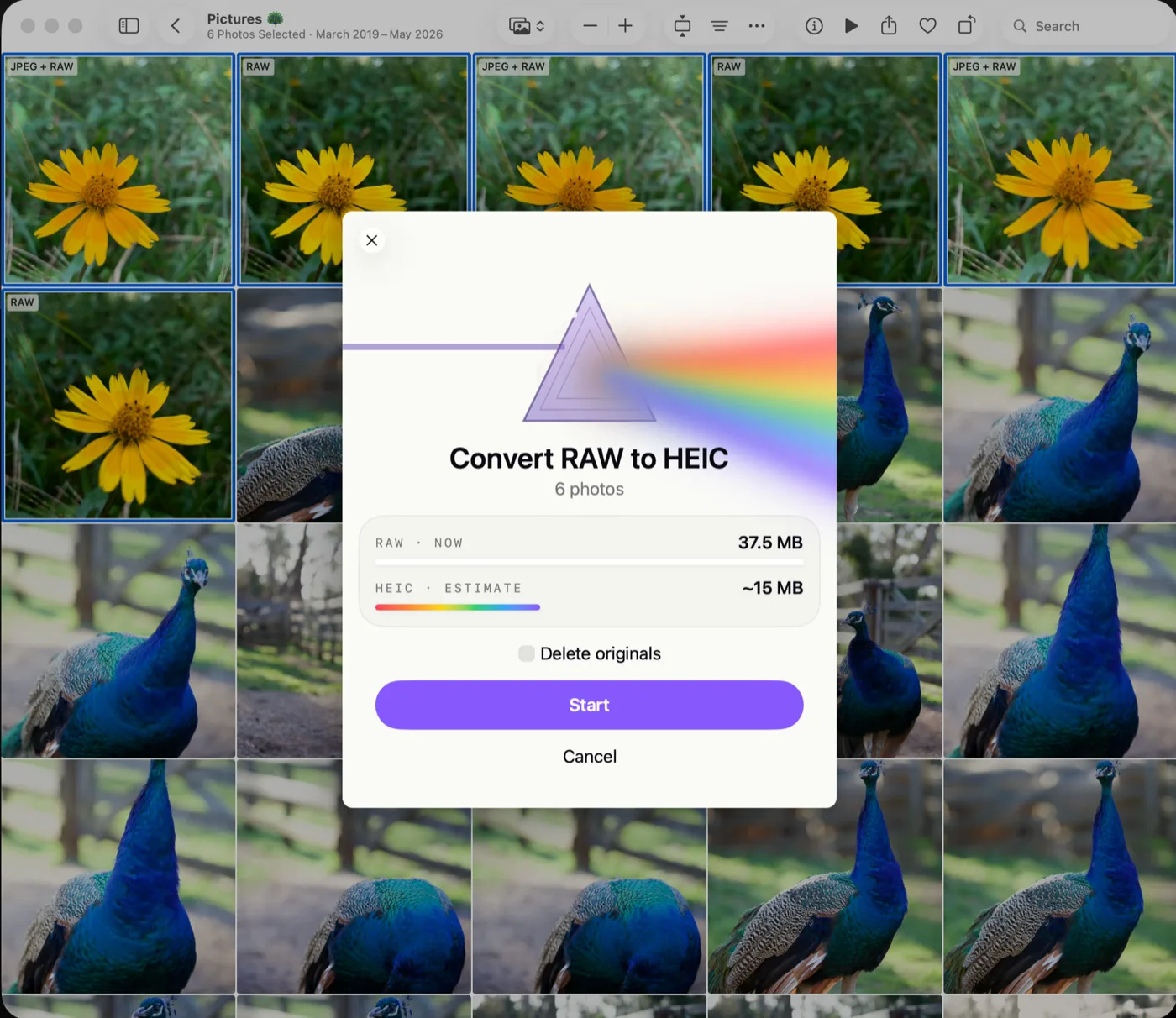
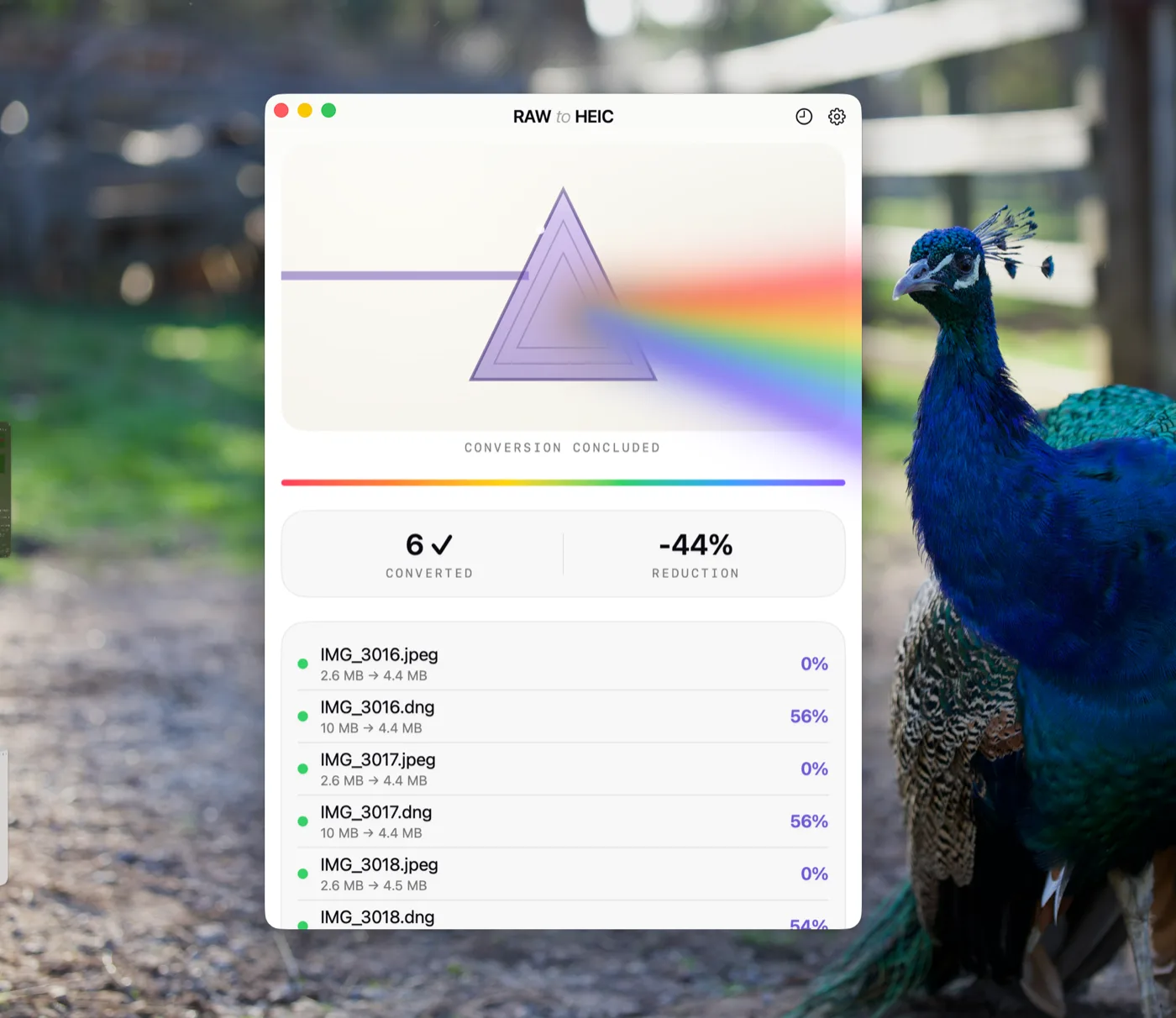
RawToHEIC is built specifically for that job. It converts RAW files, including iPhone ProRAW, directly inside the native Photos app on iPhone, iPad, and Mac. That matters because it avoids the usual export-import routine that strips the process of simplicity and often creates duplicate files, broken organization, or uncertainty about what is safe to delete.

For Apple users who organize everything in Photos, this is a very different proposition from a general-purpose file converter. Albums, favorites, captions, locations, metadata, and edits stay where they belong. Processing happens on device. There is no subscription required, no analytics collection, and no loose-file workflow to clean up afterward.

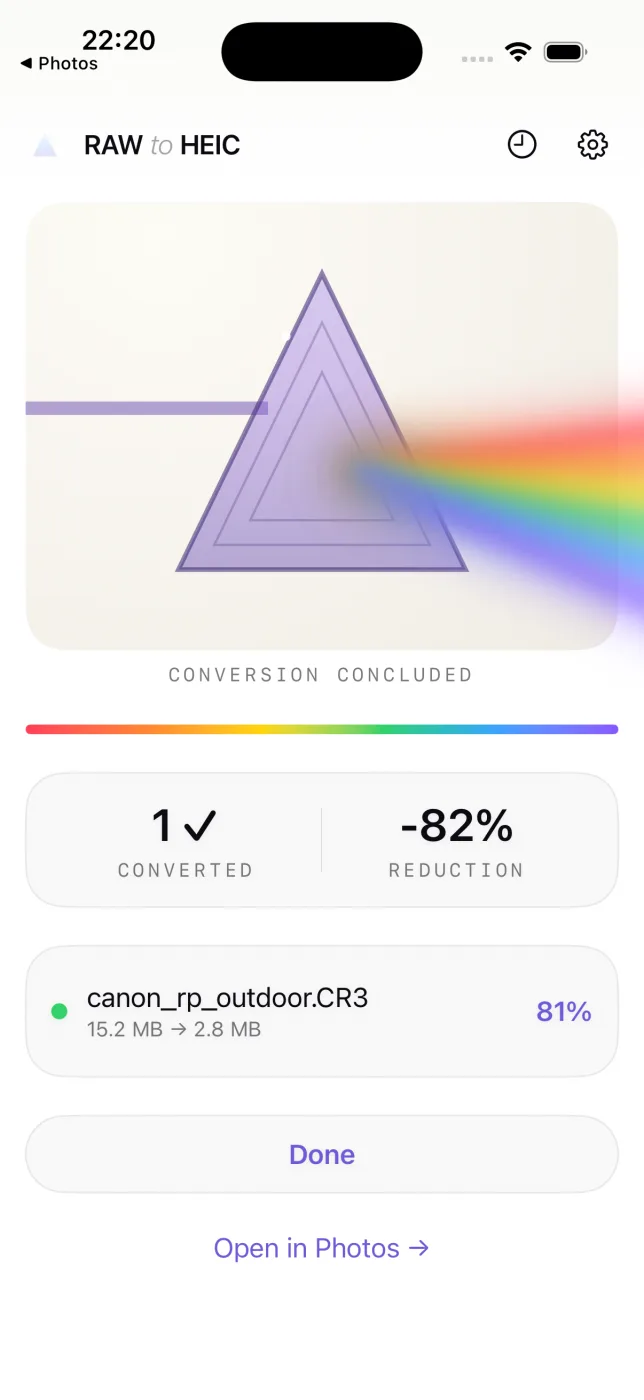
This kind of app is not for deciding how to edit a difficult image. It is for what happens after. Once a photo is finished, converting it to HEIC can reduce storage dramatically while keeping a Photos-native library usable over time. If your biggest ProRAW problem is storage pressure rather than editing capability, this is likely the most important app in your stack.

So which app setup makes sense?

The best apps for ProRAW workflow depend on what you are actually trying to fix.

If you want the simplest path, Apple Camera plus Apple Photos is enough for a lot of people. You capture quickly, edit non-destructively, and stay fully native from start to finish.

If capture control matters most, add Halide. If editing depth matters most, add Lightroom or Photomator depending on how much complexity you want to manage. If storage pressure is the real issue, add a conversion step after editing so your finished images do not keep occupying RAW-sized space forever.

A practical setup for many Apple users looks like this: shoot in Apple Camera or Halide, make most edits in Photos, use a stronger editor only when needed, then convert completed ProRAW images for long-term storage efficiency. That keeps the workflow compact and avoids turning every photo into a desktop-style asset-management project.

The real test: does the app remove friction?

The best ProRAW workflow is not the one with the most software. It is the one that removes the most friction without asking you to give up quality, privacy, or organization.

That usually means being honest about which stage is costing you time or storage. Some users need better controls at capture. Some need more editing range. A lot of Apple users already have those pieces covered and simply need a clean way to keep their Photos library from swelling out of control.

Choose apps that respect the way you already work. If they keep your images in Photos, preserve your metadata, process on device, and cut out unnecessary steps, they are doing the job. And if your workflow feels heavier every month, the smartest next app may not be another editor. It may be the one that helps you keep the photos you already finished.

Shrink your RAW library, right inside Photos.

RawToHEIC converts camera RAW and iPhone ProRAW to HEIC up to 10× smaller — keeping every edit, album, favorite, and location. On-device, no account, one purchase for iPhone, iPad, and Mac.

Not sure yet? Convert a few sample photos free — no install, nothing uploaded.

Try it free — no install →

Free to start · Unlimited $19.99 once · iPhone · iPad · Mac