Skip to content

7 Best Apps for RAW Compression

7 Best Apps for RAW Compression

A 48MP ProRAW file can eat tens of megabytes before you even decide whether the shot is worth keeping. Multiply that by a weekend trip, a sports event, or a few months of family photos, and the search for the best apps for RAW compression stops being theoretical. It becomes a storage problem, a workflow problem, and often a trust problem too.

Most tools promise smaller files. Fewer solve the real issue: what happens to your library, your edits, your metadata, and your time after compression. For Apple users especially, that distinction matters. If your photos already live in Apple Photos, the best option is not always the one with the longest feature list. It is usually the one that reduces size without forcing a loose-file workflow.

What actually makes the best apps for RAW compression?

RAW compression can mean a few different things, and that is where many comparisons get fuzzy. Some apps truly compress RAW formats. Others convert RAW to a more efficient final format such as HEIC or JPEG. Others are full editors that happen to export smaller copies. If your goal is reclaiming storage, the practical question is simple: which app gets your image size down while preserving the parts of your workflow you care about?

For most Apple users, there are five criteria that matter.

First is file reduction. If the storage savings are minor, the app is solving the wrong problem. Second is image quality. A smaller file is only useful if the result still looks right for your screen, sharing, or archive needs. Third is workflow fit. An app that requires exporting, re-importing, and manually rebuilding albums adds friction fast.

Fourth is metadata and edit preservation. Captions, favorites, dates, locations, and existing adjustments are often more valuable than the original file itself once editing is done. Fifth is privacy. Photo libraries are deeply personal, so on-device processing matters more than many buyers realize.

7 best apps for RAW compression, compared

1. RawToHEIC

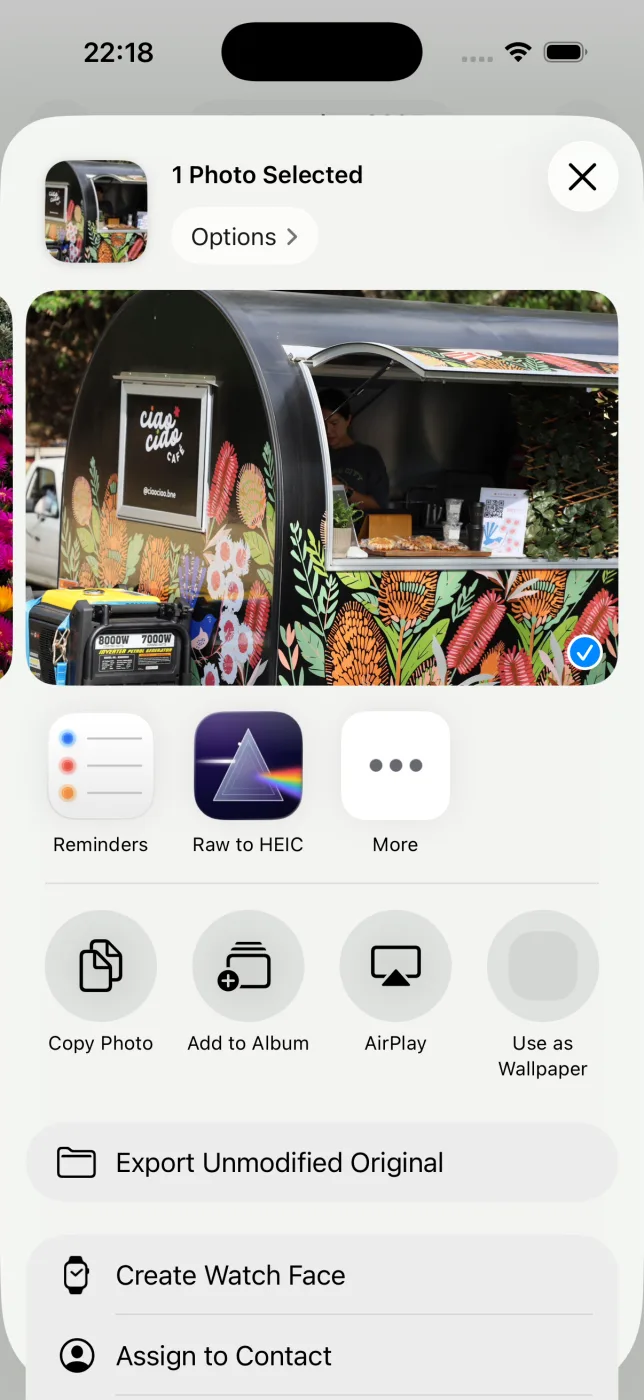
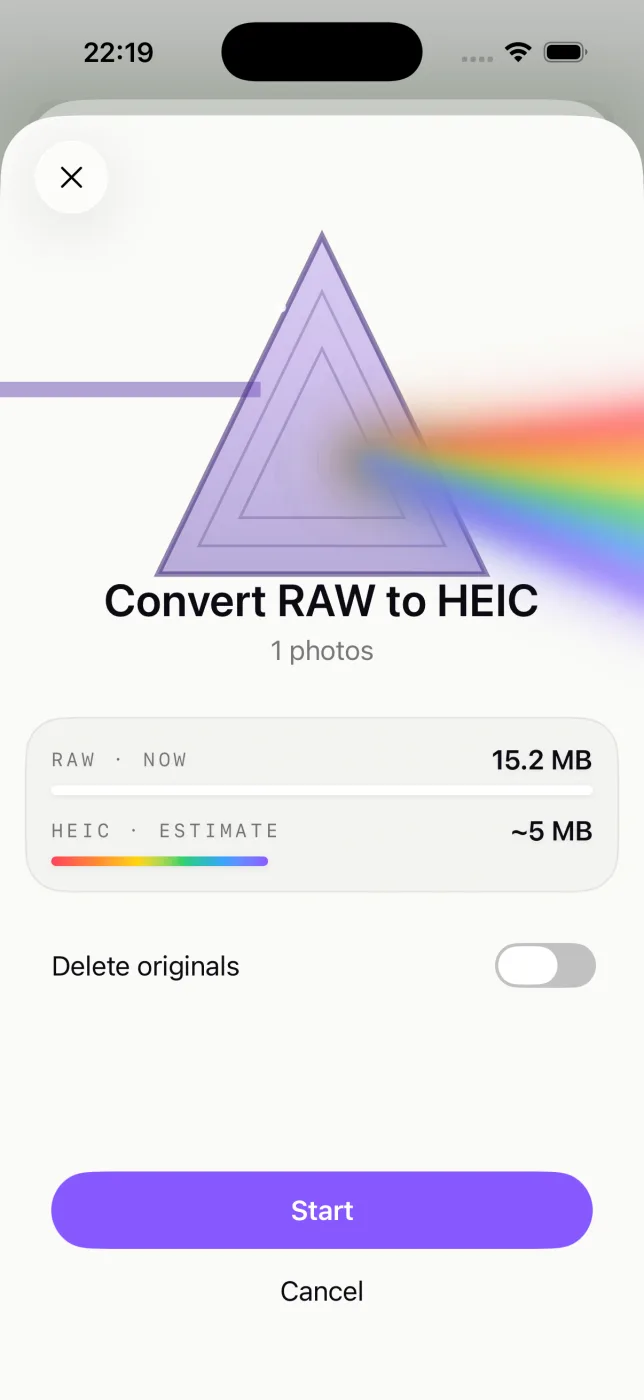
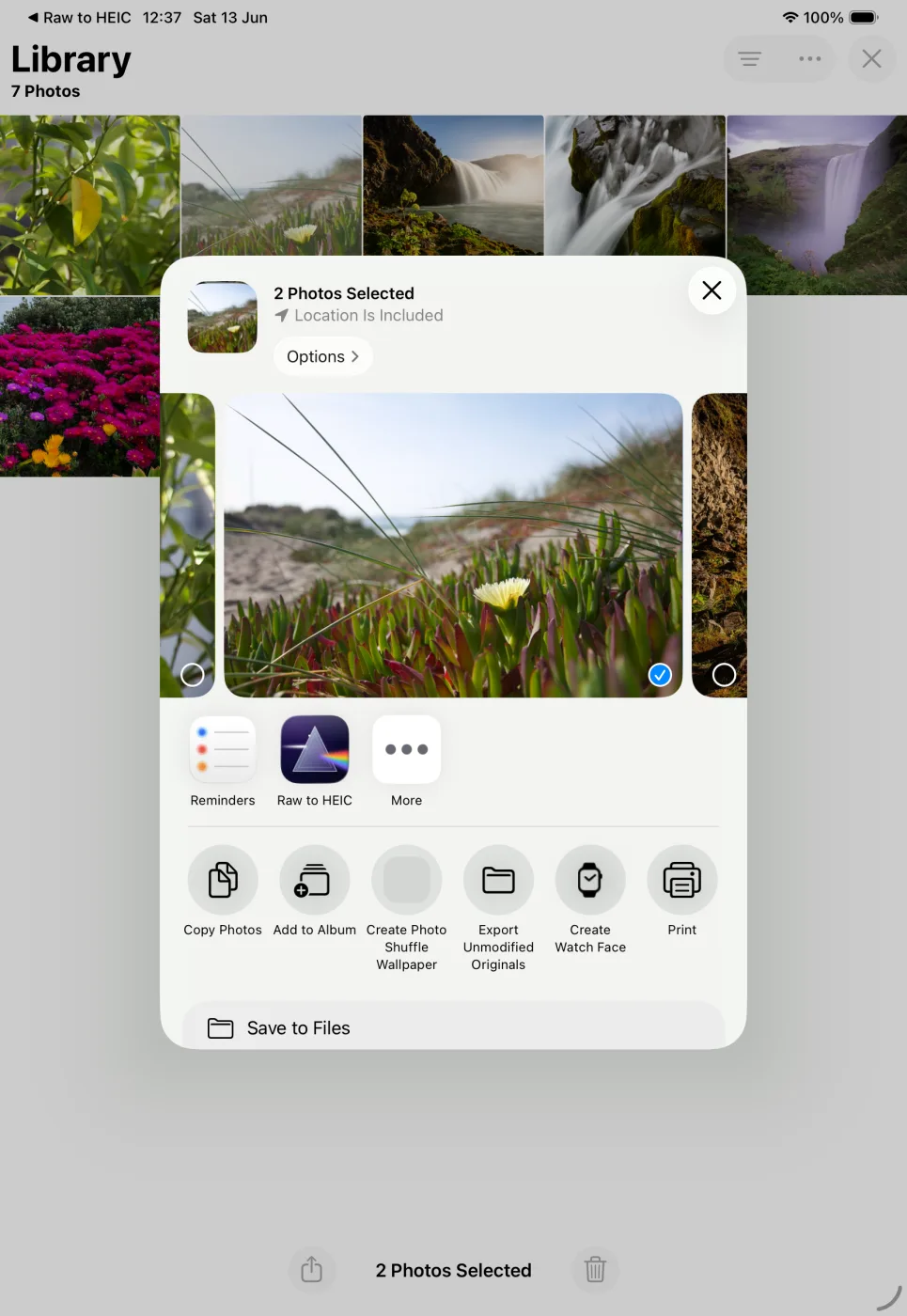
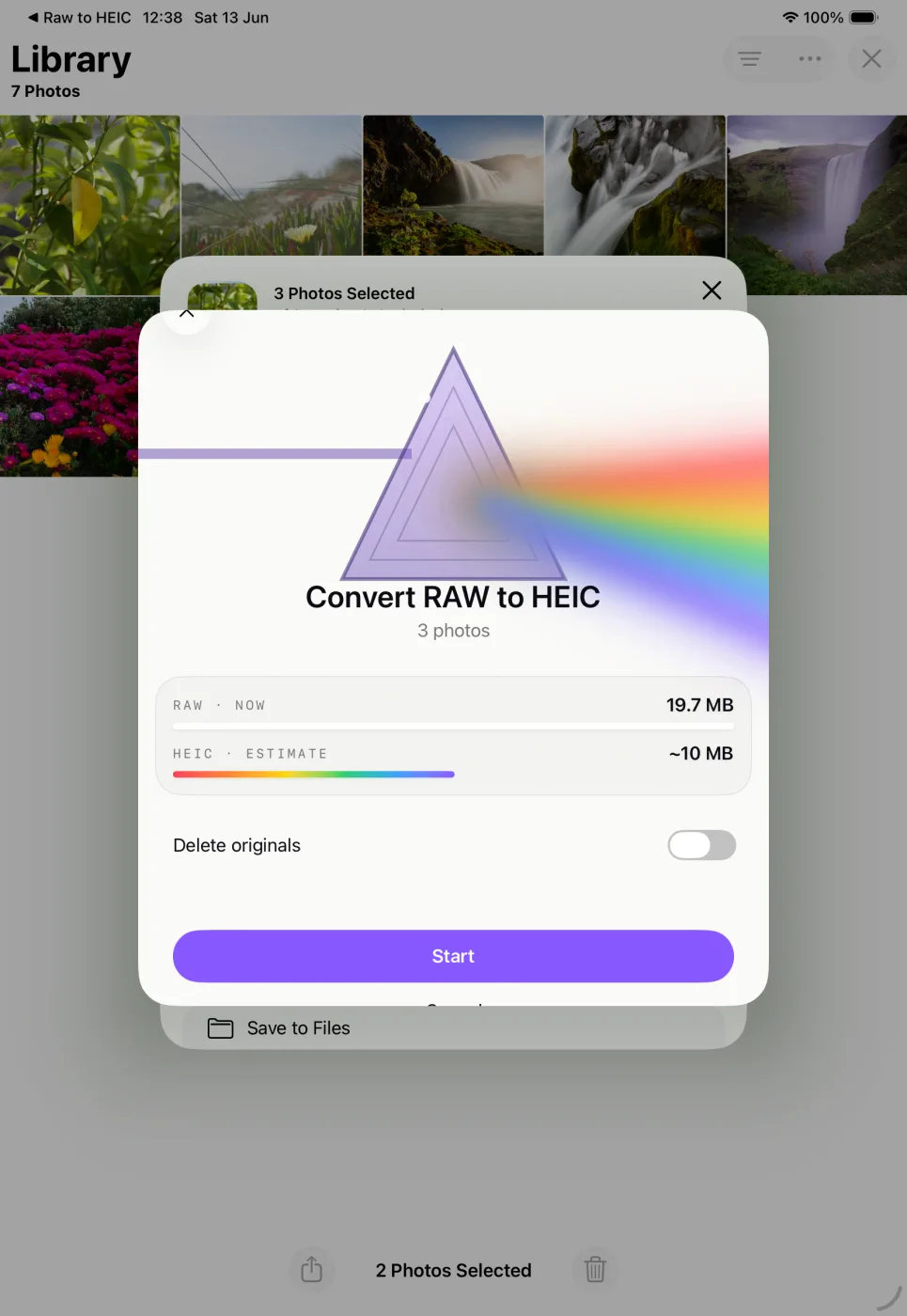
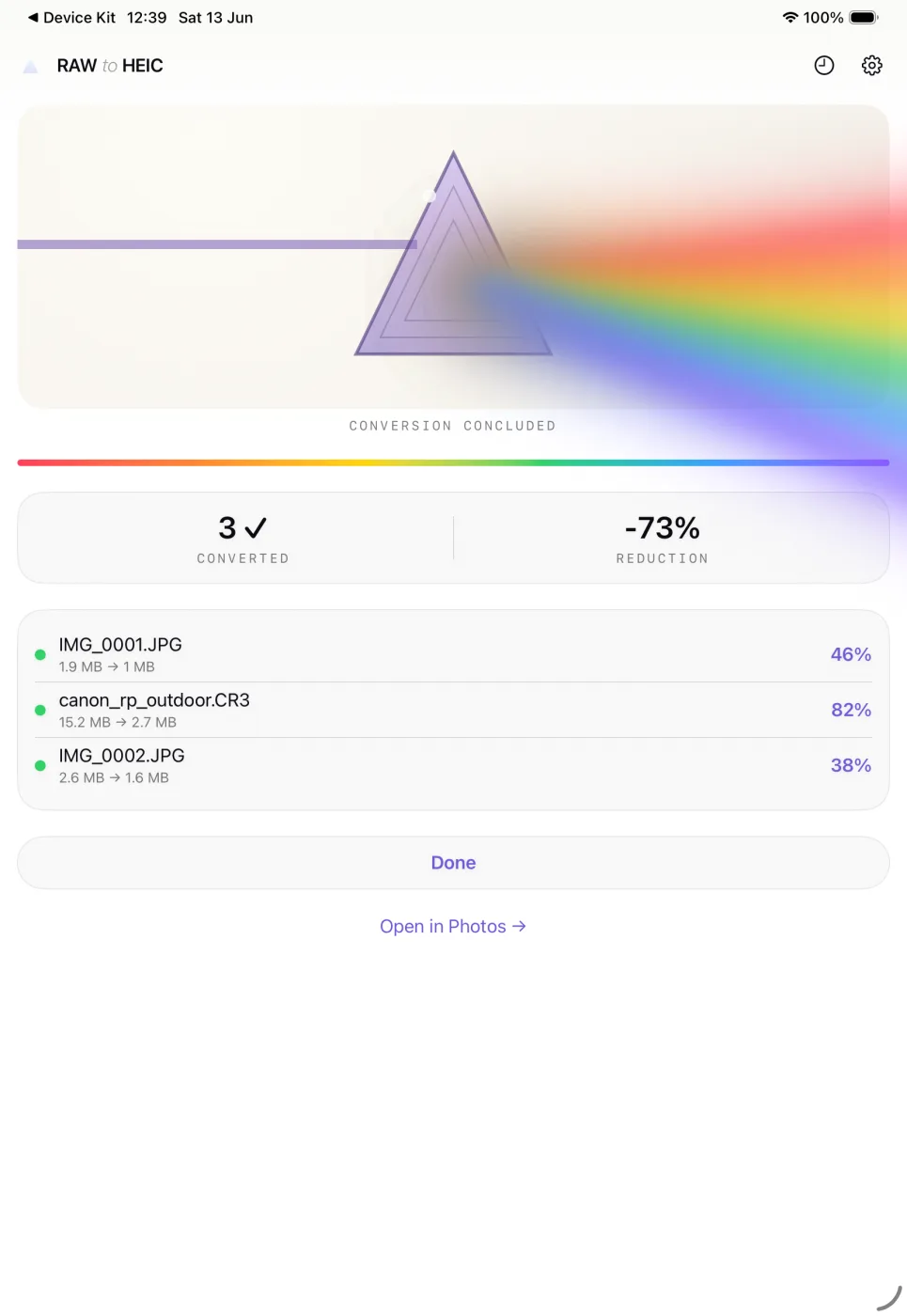
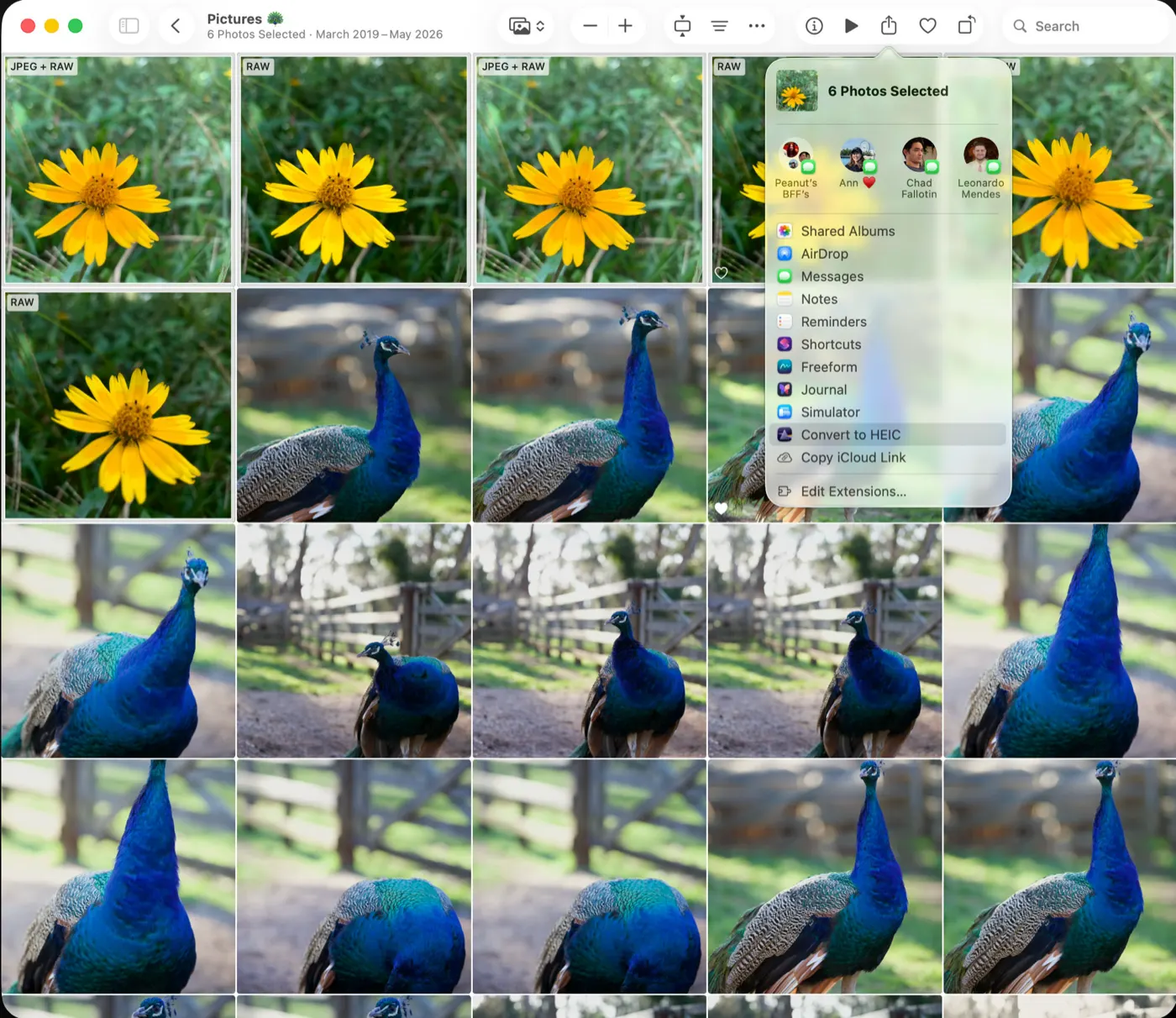
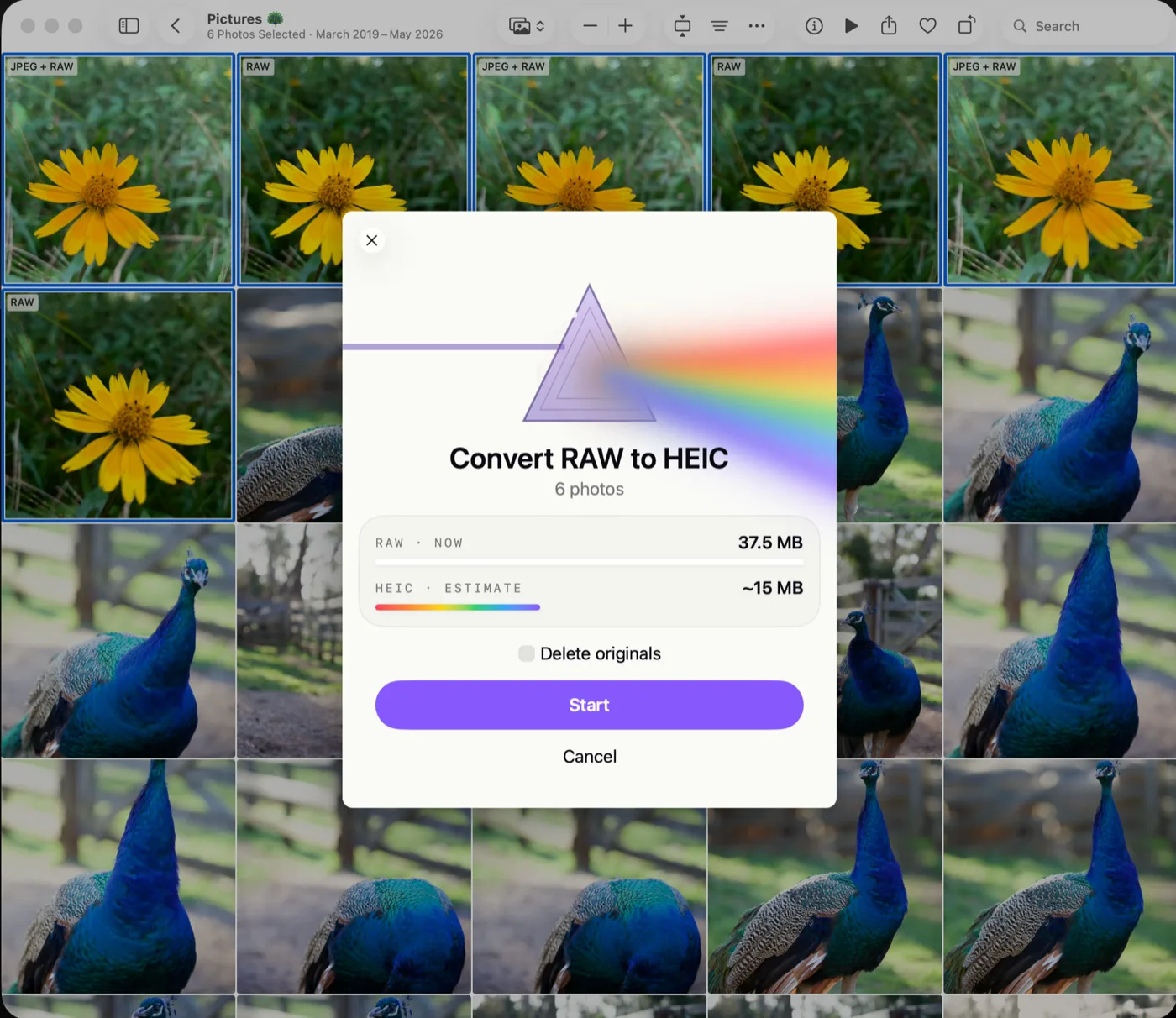
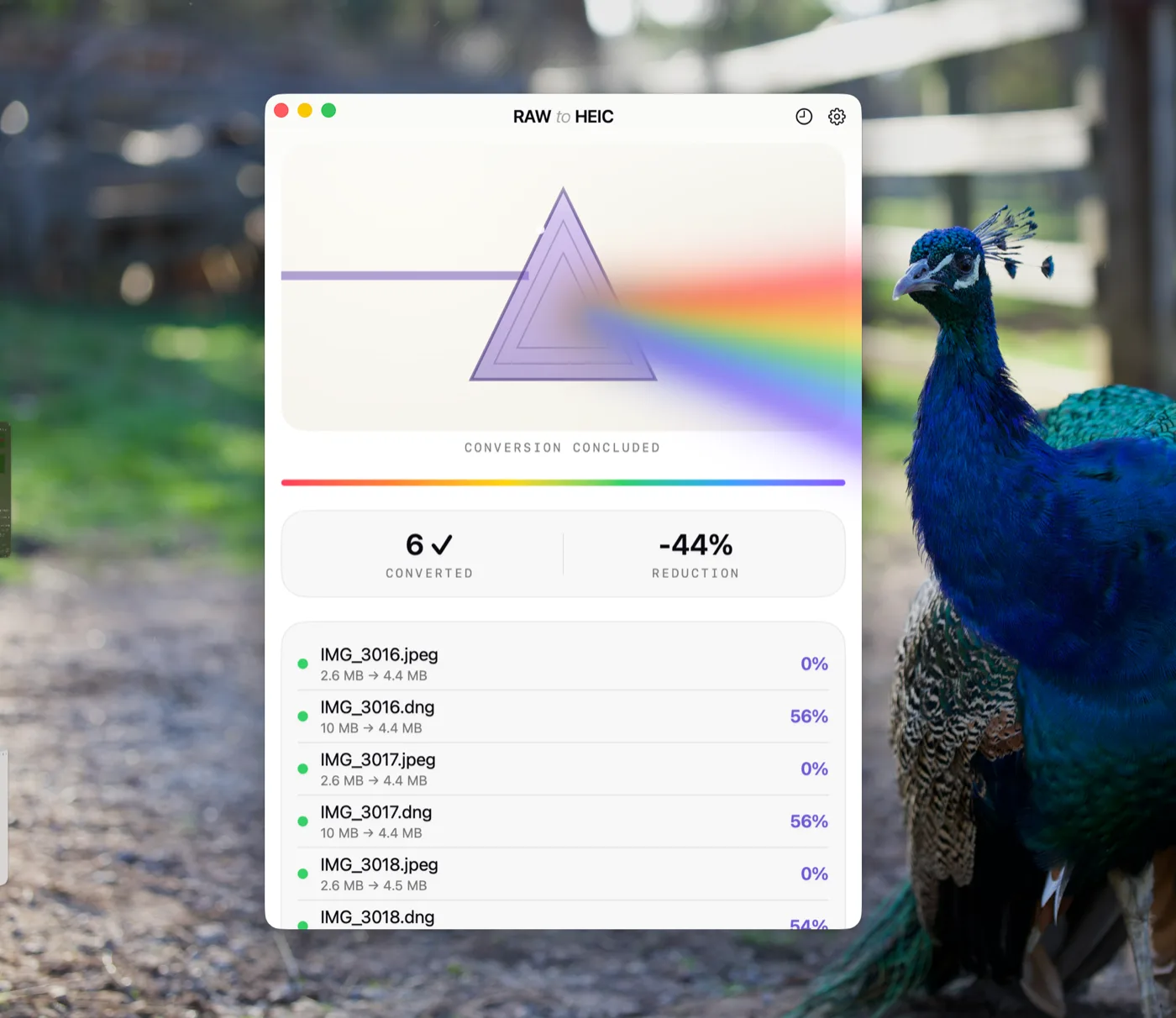
If your library lives in Apple Photos, this is the most focused option in the category. Rather than treating compression as a detached export task, it converts RAW files directly inside Photos on iPhone, iPad, and Mac. That matters because the app is built around the part other tools often break: keeping your library intact.

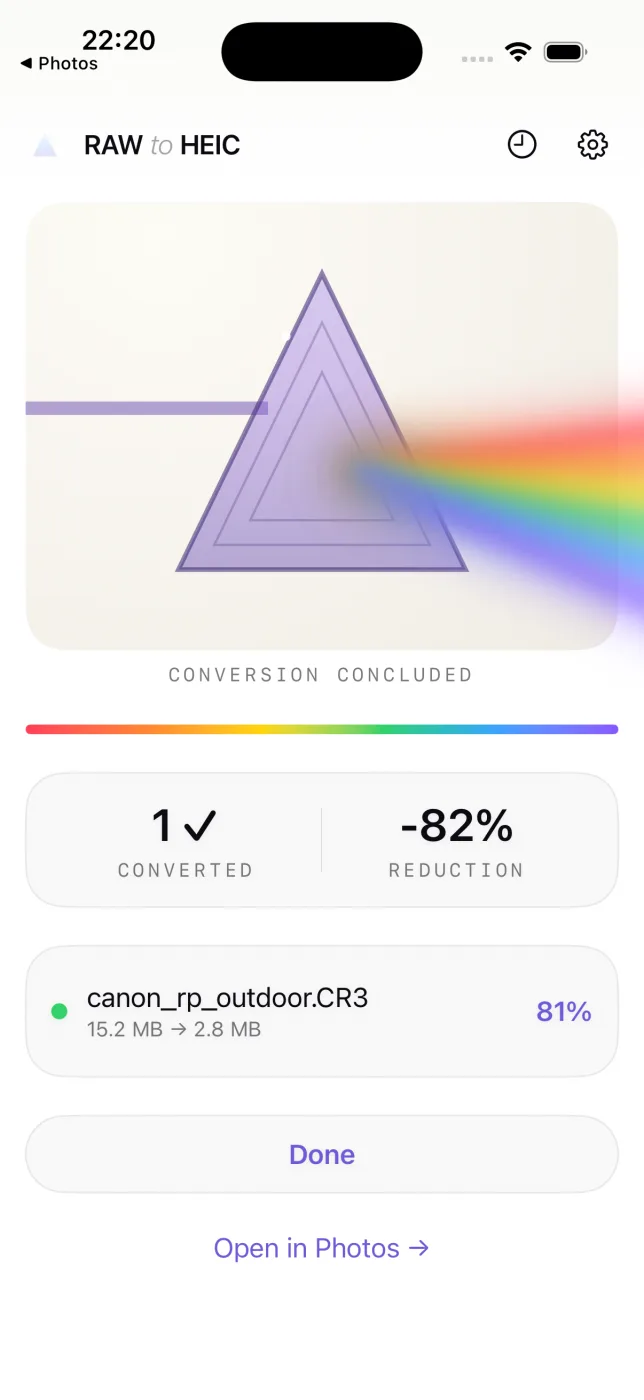
The biggest advantage is workflow. There is no round-trip through Finder folders, no duplicate loose files to manage, and no need to manually restore albums or metadata afterward. Your Photos context stays in place, including favorites, captions, locations, and non-destructive edits. For users sitting on large ProRAW or camera RAW libraries, that is the difference between “I should clean this up someday” and actually reclaiming space.

The trade-off is also clear. This is not a broad editor or DAM. It is a specialized utility designed for one job: turning storage-heavy RAW files into much smaller HEICs with minimal friction. If that is exactly your problem, specialized is a strength. If you want layers, masking, and advanced retouching, you will still use a separate editor before converting.

2. Adobe Lightroom

Lightroom is powerful, familiar, and capable of handling nearly any RAW workflow. If you already edit there, you can export smaller files in HEIC, JPEG, or DNG depending on your setup and needs. That gives you flexibility, especially if compression is just one step in a broader editing pipeline.

But Lightroom is not really a RAW compression app in the narrow sense. It is an editing platform with export controls. For users who manage everything inside Lightroom, that is fine. For users who keep their main library in Apple Photos, the process can feel heavier than it should. Exporting derivatives, tracking versions, and deciding what to delete requires more hands-on library management.

There is also the cost question. If you only need storage relief, a recurring plan can feel disproportionate to the task.

3. Apple Photos with export options

Apple Photos itself can help in limited cases. On Mac, you can export edited or unmodified versions into smaller formats, then re-import them if needed. For some users, that is enough. It uses the tools already on your device, and the interface is familiar.

The issue is that Photos is not designed as a native RAW-to-HEIC storage reduction workflow. You can get smaller files out, but the process is manual, and your organizational context can get messy quickly. Albums may need rebuilding. Versions can pile up. Deleting originals safely becomes your responsibility.

This route works best for occasional one-off conversions, not large library cleanup.

4. Affinity Photo

Affinity Photo is a serious editor with a one-time purchase model, which makes it attractive to photographers who want control without a subscription. It opens RAW files well and can export compressed final formats for archiving or delivery.

As with Lightroom, though, compression is secondary to editing. Affinity is ideal when you want to develop a RAW image carefully and then save a smaller output. It is less ideal if your problem is hundreds or thousands of photos already sitting in Photos and taking up too much space.

In other words, Affinity helps create smaller files. It does not simplify photo-library replacement or cleanup by itself.

5. DXO PhotoLab

DXO PhotoLab is often chosen for image quality, noise reduction, and lens corrections. If you care about extracting the best possible result from difficult RAW files, it is excellent. You can then export smaller deliverables for storage or sharing.

That makes DXO a strong quality-first tool, but not the most convenient compression-first tool. It is better suited to photographers who are already committed to a desktop editing workflow and want premium rendering before they archive smaller outputs.

For Apple users who prioritize native Photos management, the disconnect is familiar: the image quality can be great, but the workflow is not especially compact.

6. ON1 Photo RAW

ON1 tries to cover a lot of ground, from editing to organization to effects. That breadth can be useful if you want one app to do many things, and it supports a wide range of RAW workflows. Smaller exports are easy enough to create.

The trade-off is complexity. When your core need is shrinking a RAW library efficiently, broad software can introduce more choices than value. Some users appreciate that. Others just want to reduce size, keep metadata, and move on.

ON1 makes more sense for photographers looking to replace a larger editing stack, not for users seeking the cleanest Apple-native storage fix.

7. JPEGmini and similar image optimizers

This category is worth mentioning because people often find it while searching for compression tools. JPEGmini and similar apps are good at making JPEGs smaller with minimal visible loss. They are useful, but they are not true RAW solutions.

If your files are still RAW, these apps are one step too late. They only become relevant after conversion or export. That means they can be part of a workflow, but they are not the answer for a bloated RAW library on their own.

Which app is right for your workflow?

If you edit heavily and want maximum creative control before exporting, Lightroom, DXO, or Affinity Photo may be the better fit. They are editing-first tools, and their compression value comes after the main work is done.

If you mostly use Apple Photos and your priority is reclaiming space without disrupting your library, the equation changes. The best app is usually the one that works where your images already live. That is why a Photos-native utility stands out. Less handling means fewer mistakes, fewer duplicate files, and less hesitation about starting.

This is also where privacy matters. Cloud-dependent or server-based workflows may be acceptable for some users, but many people would rather keep family photos, client work, or travel archives on-device. Compression is not just about storage. It is about control.

The trade-offs to watch before you choose

No app can avoid the core compromise completely: once you convert a RAW file into HEIC or JPEG, you are usually giving up some of the original editing latitude. That may be perfectly reasonable if the image is finished, lightly edited, or mainly being kept for memory and reference. It may be the wrong choice for portfolio selects or paid work you expect to revisit aggressively later.

A smart approach is often selective. Keep RAW where future flexibility matters most. Compress the rest. That gives you meaningful storage savings without treating every image as equally important.

It is also worth checking device fit. Some tools are Mac-only. Some are desktop-first. Some make sense on iPhone and iPad, especially if that is where your ProRAW library is growing fastest. Convenience affects follow-through more than people expect.

If you want one clean benchmark, ask this: after compression, do I still trust my library? Not just the image quality, but the albums, metadata, edits, and deletion process too. That is the standard that separates a useful tool from one you use once and avoid later.

For Apple users who want smaller photo libraries without turning photo management into a side project, the best choice is usually the one that feels like it belongs in Photos from the start. Storage savings are great. Keeping your workflow intact is what makes them stick.

Shrink your RAW library, right inside Photos.

RawToHEIC converts camera RAW and iPhone ProRAW to HEIC up to 10× smaller — keeping every edit, album, favorite, and location. On-device, no account, one purchase for iPhone, iPad, and Mac.

Not sure yet? Convert a few sample photos free — no install, nothing uploaded.

Try it free — no install →

Free to start · Unlimited $19.99 once · iPhone · iPad · Mac