Skip to content

How to Reduce iCloud Photo Storage

How to Reduce iCloud Photo Storage

If your iPhone keeps warning you about storage, the real problem often is not the phone. It is your photo library. For anyone trying to reduce iCloud photo storage, the biggest gains usually come from a small number of very large files – RAW images, ProRAW shots, long videos, and duplicate versions that quietly pile up in Photos.

That matters because iCloud storage pressure gets expensive fast. Once your library grows past the free tier, you are paying to keep every oversized original synced across devices. If you shoot in ProRAW, import camera RAW files, or treat Apple Photos as your main library, you can hit that limit much sooner than expected.

What actually uses the most iCloud photo storage

Most people assume thousands of regular iPhone photos are the main issue. Usually, they are not. Standard HEIC images are relatively efficient. The bigger storage drain is high-bit-depth, high-resolution media – especially RAW and ProRAW files that preserve far more image data than you need for everyday viewing.

A single JPEG or HEIC might take a few megabytes. A RAW file from a mirrorless camera can be ten times that, sometimes more. iPhone ProRAW files are smaller than many camera RAWs, but they are still much heavier than standard HEIC photos. If you have years of edited keeper shots sitting in RAW after you are done processing them, you are likely paying iCloud to store a lot of data you no longer need.

Video is the other obvious space hog, but photos are trickier because the library can look modest while the underlying storage footprint is huge. A clean, organized Photos library can still be bloated underneath.

The fastest ways to reduce iCloud photo storage

If your goal is to cut space without blowing up your library, start with the options that preserve your workflow.

First, review what you are capturing going forward. If you do not need RAW for every shot, stop using it as the default. On iPhone Pro models, ProRAW is useful when you expect to edit heavily. It is less useful for casual snapshots, receipts, or travel photos you will mostly share as-is. Changing capture habits prevents the problem from growing.

Second, clean out obvious waste. Duplicates, accidental screenshots, burst leftovers, and long screen recordings add up. Apple Photos makes some of this easier to spot, but cleanup alone rarely solves the issue for people with serious photo libraries.

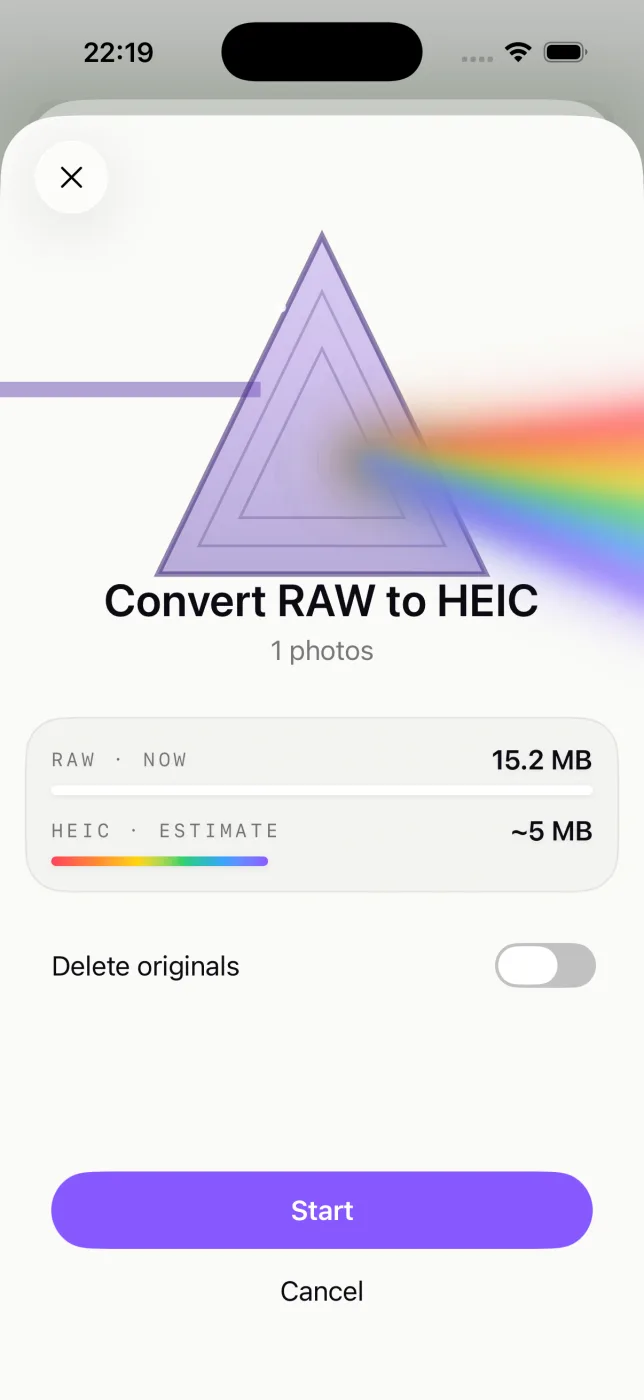
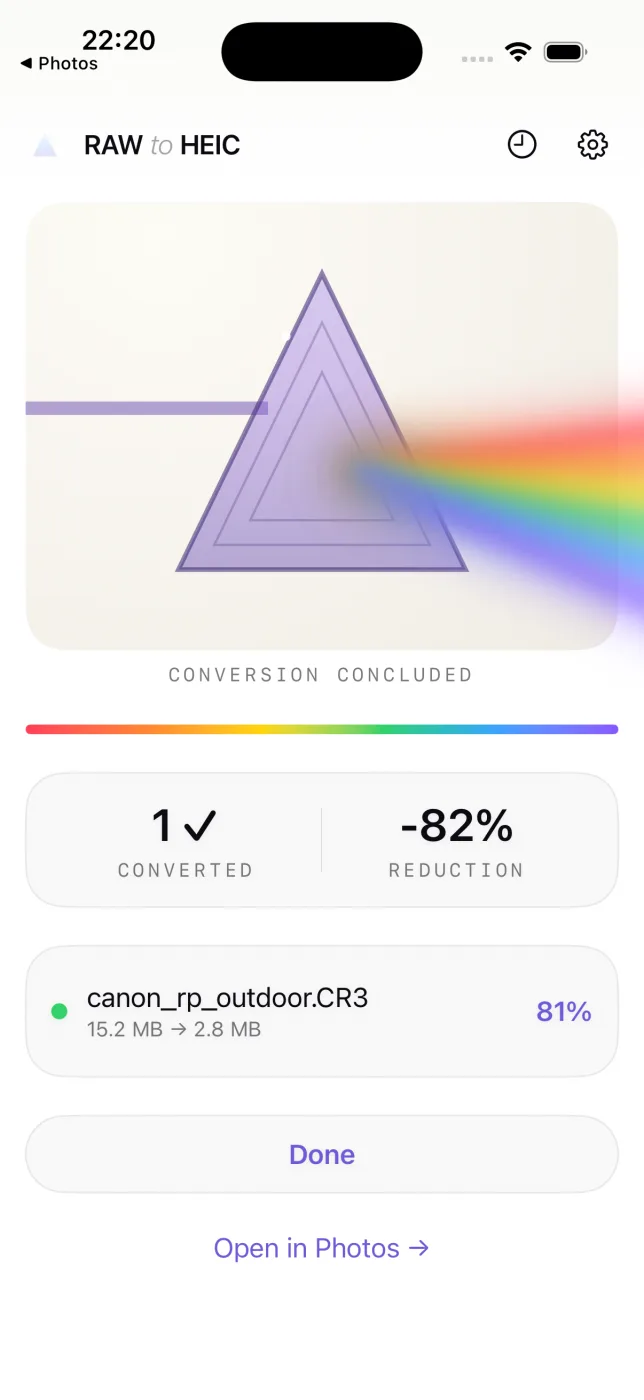
Third, look at your finished RAW work. This is where the biggest savings usually live. If a photo has already been selected, edited, organized into albums, favorited, captioned, and synced across devices, keeping the giant RAW original forever may not make sense. Converting completed RAW images into HEIC can cut storage dramatically while still preserving excellent quality for day-to-day use.

That is the part many Apple users get stuck on. Traditional conversion tools tend to force an export-import routine that creates loose files, breaks organization, and makes people nervous about losing metadata or edits. So they do nothing, and iCloud keeps filling up.

Reduce iCloud photo storage without wrecking Photos

This is the real trade-off. Yes, you can export files, batch-convert them on a desktop app, re-import them, then manually clean up the originals. But the process is messy, slow, and easy to get wrong. Albums can break. Dates can shift. Edits and captions may not survive the trip the way you expect.

For Apple users who live inside Photos, that workflow is the opposite of efficient. Your library is not just a folder of images. It is a system of albums, favorites, locations, keywords, edits, and memories built over time. Any strategy to reduce iCloud photo storage should respect that structure.

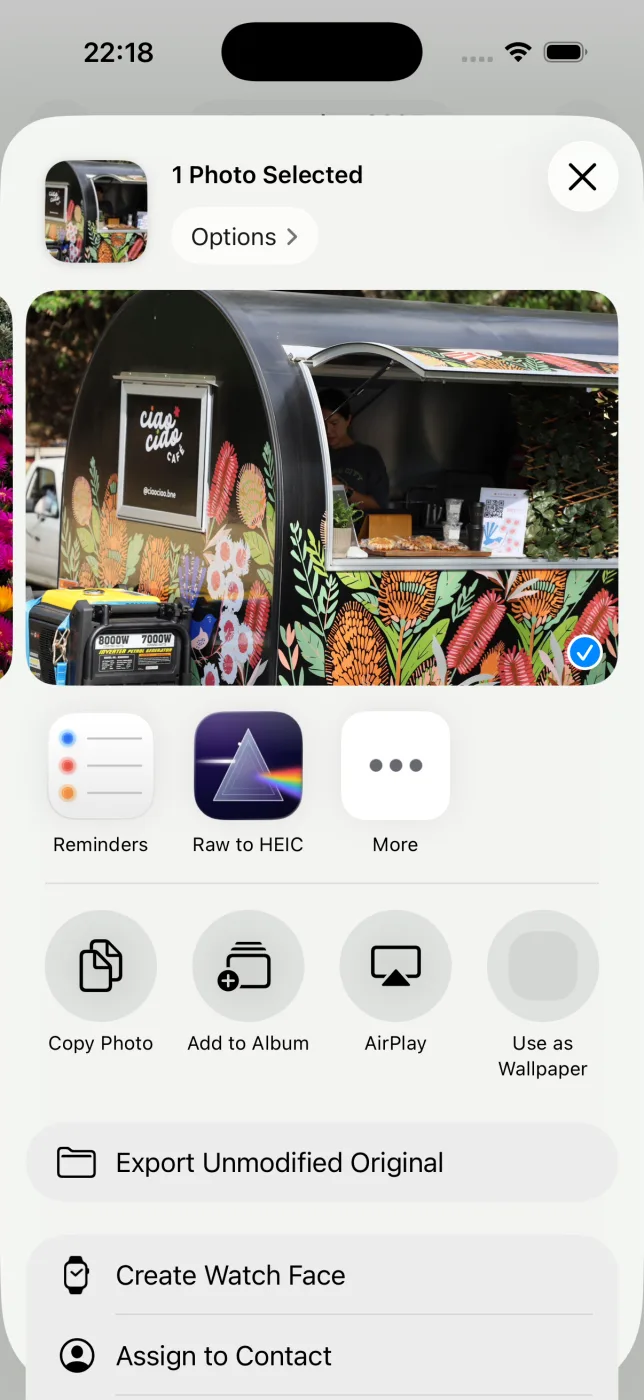
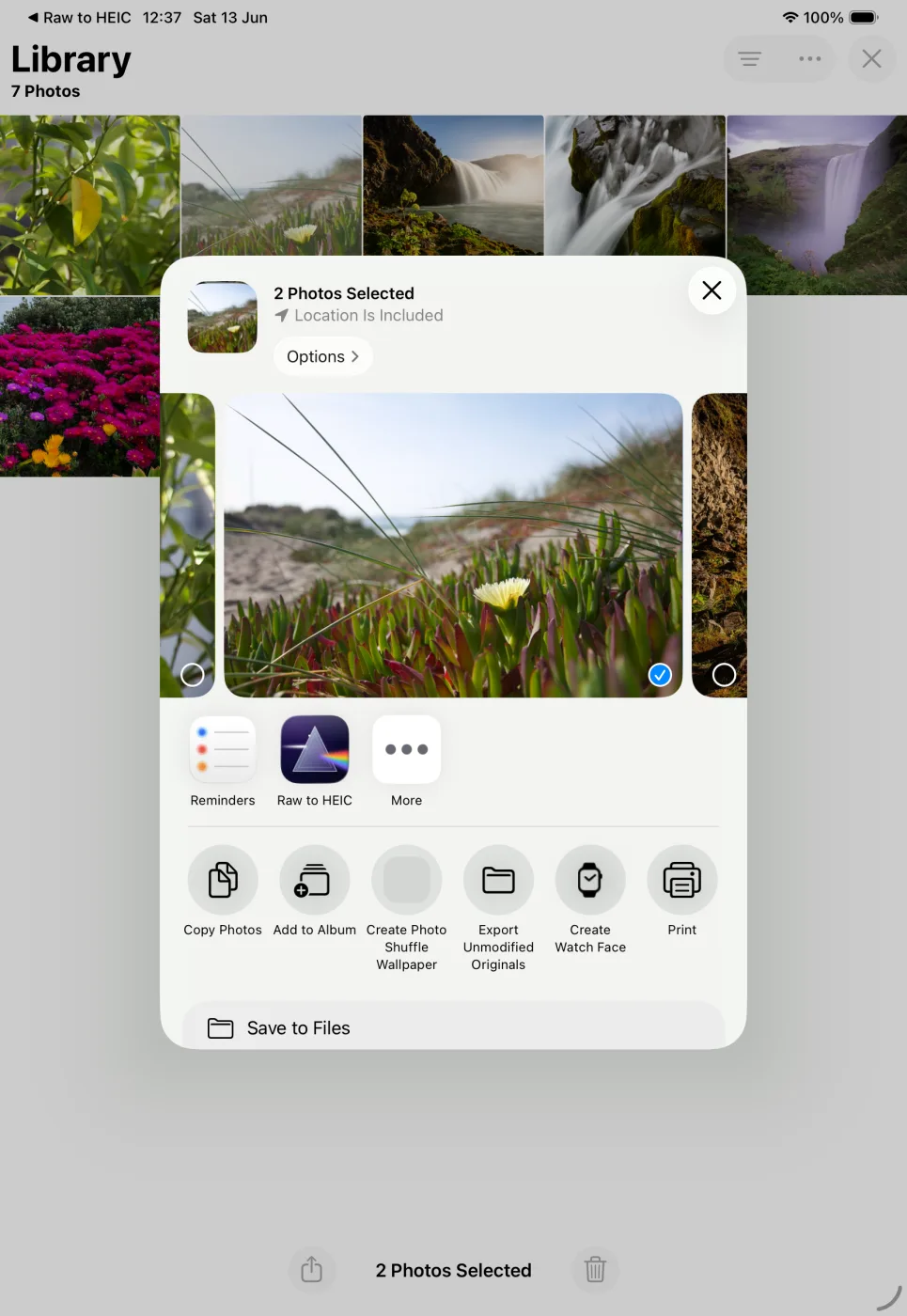
That is why native, on-device conversion is the cleanest option when RAW images are the main problem. Instead of moving files in and out of the library, you convert inside Photos and keep the context that already exists. The result is smaller files without turning your library into a side project.

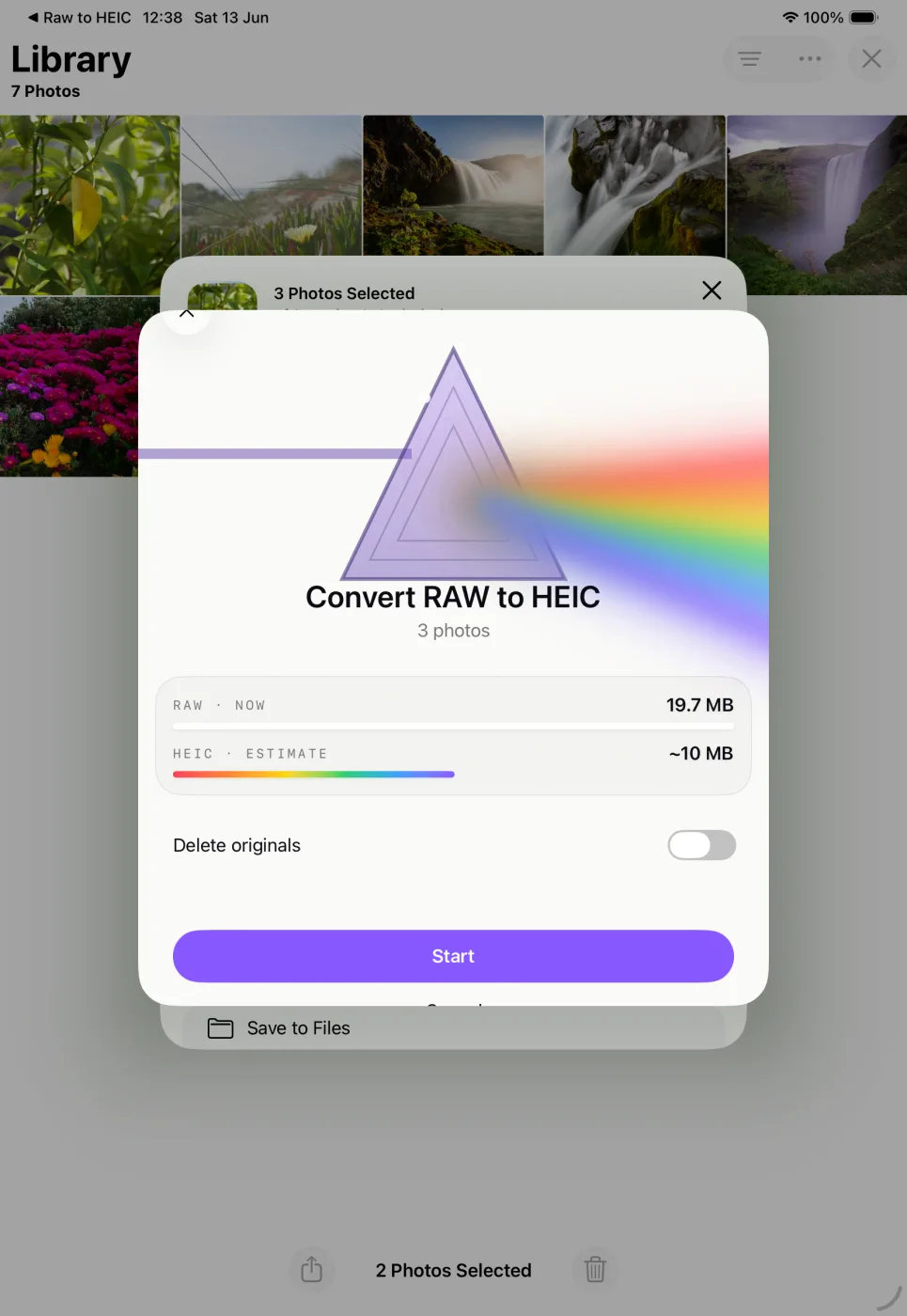
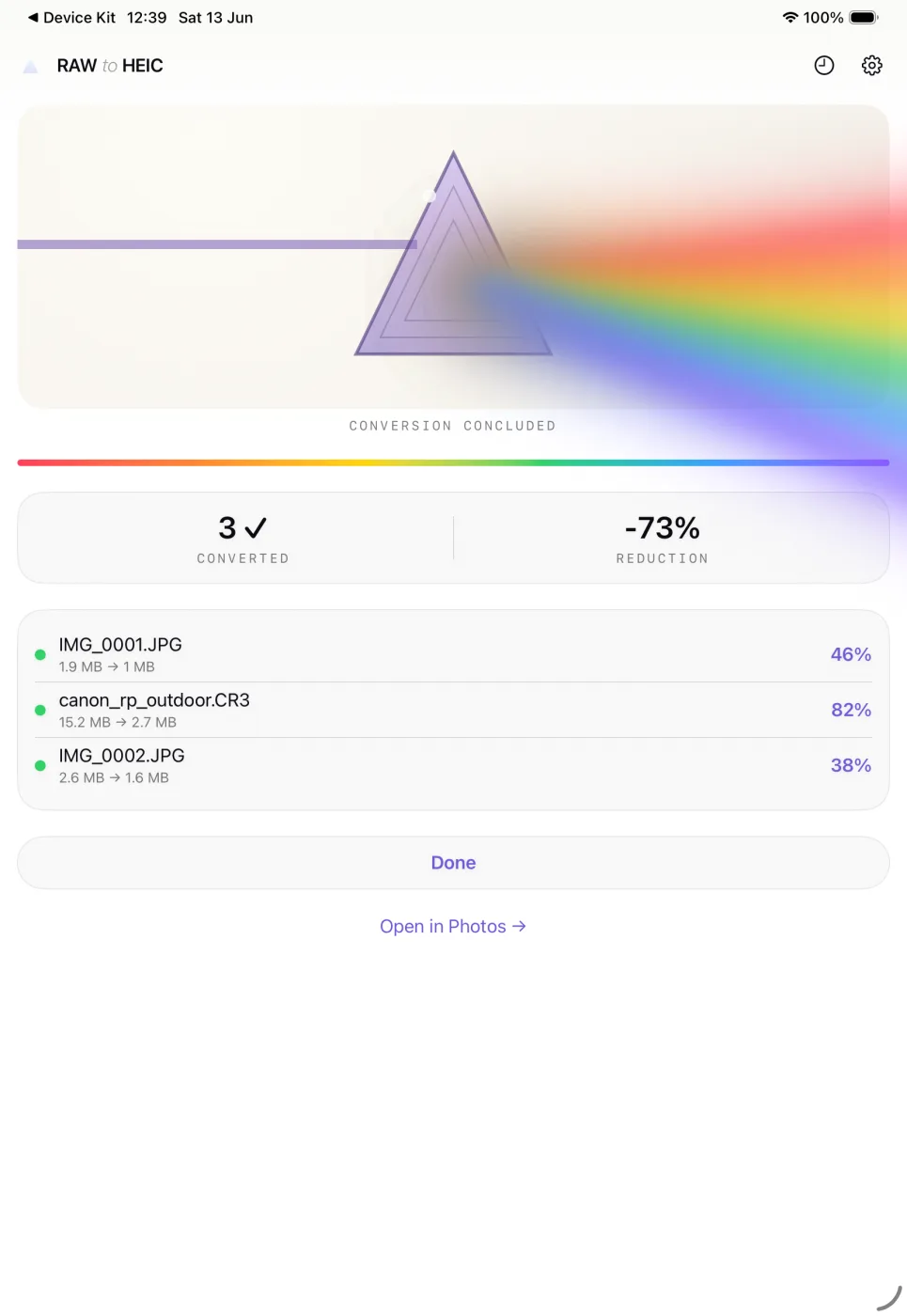
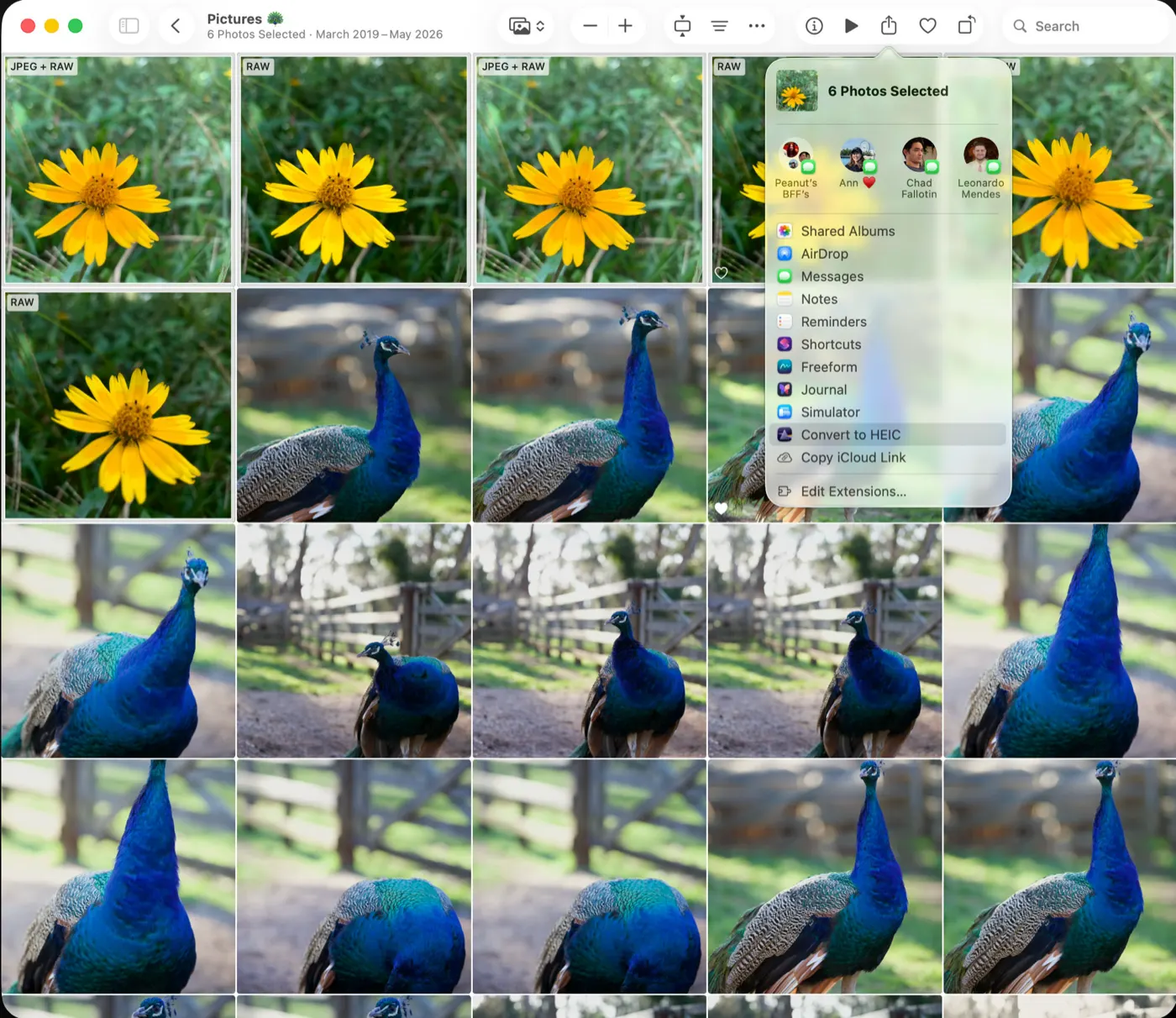
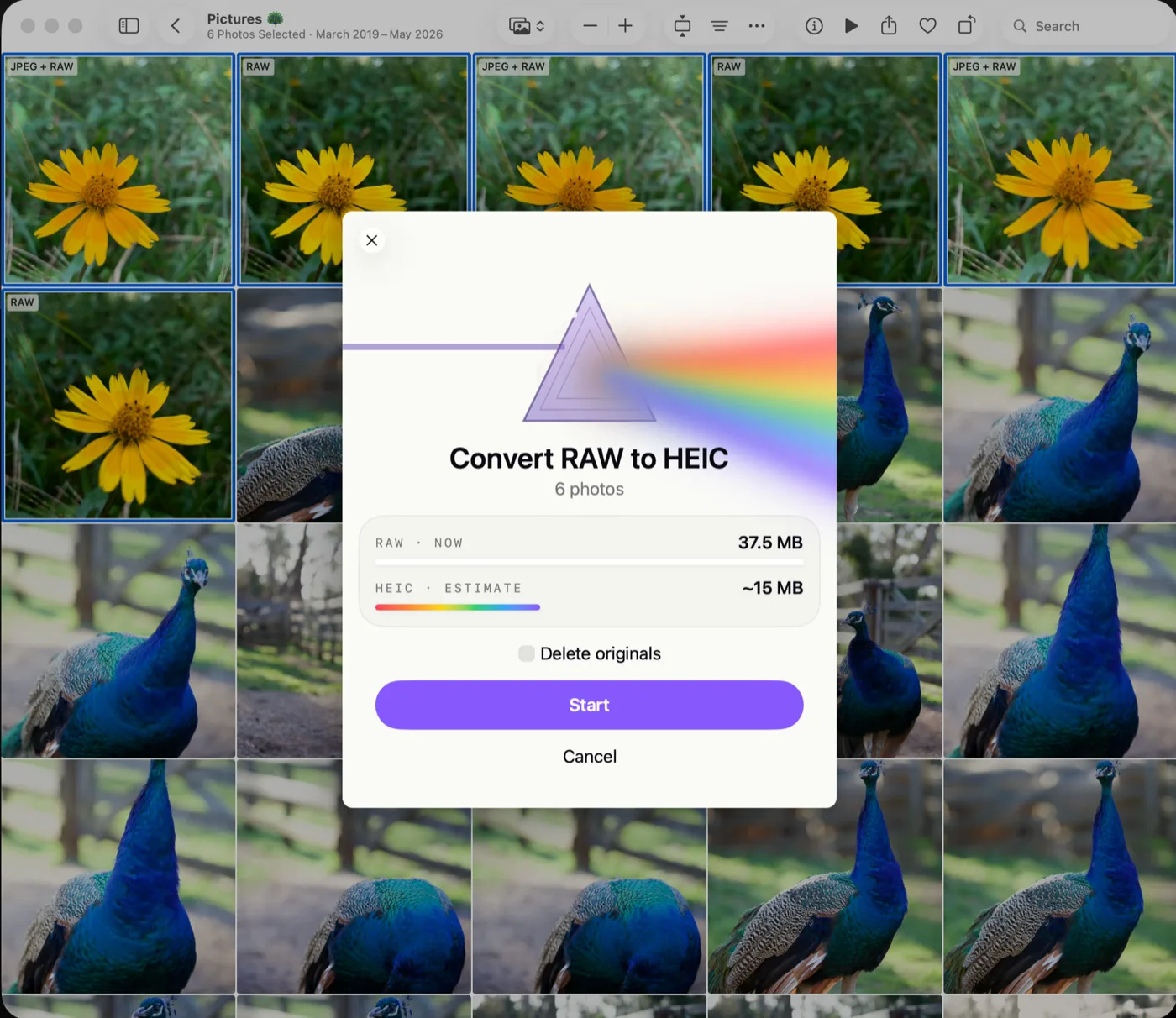
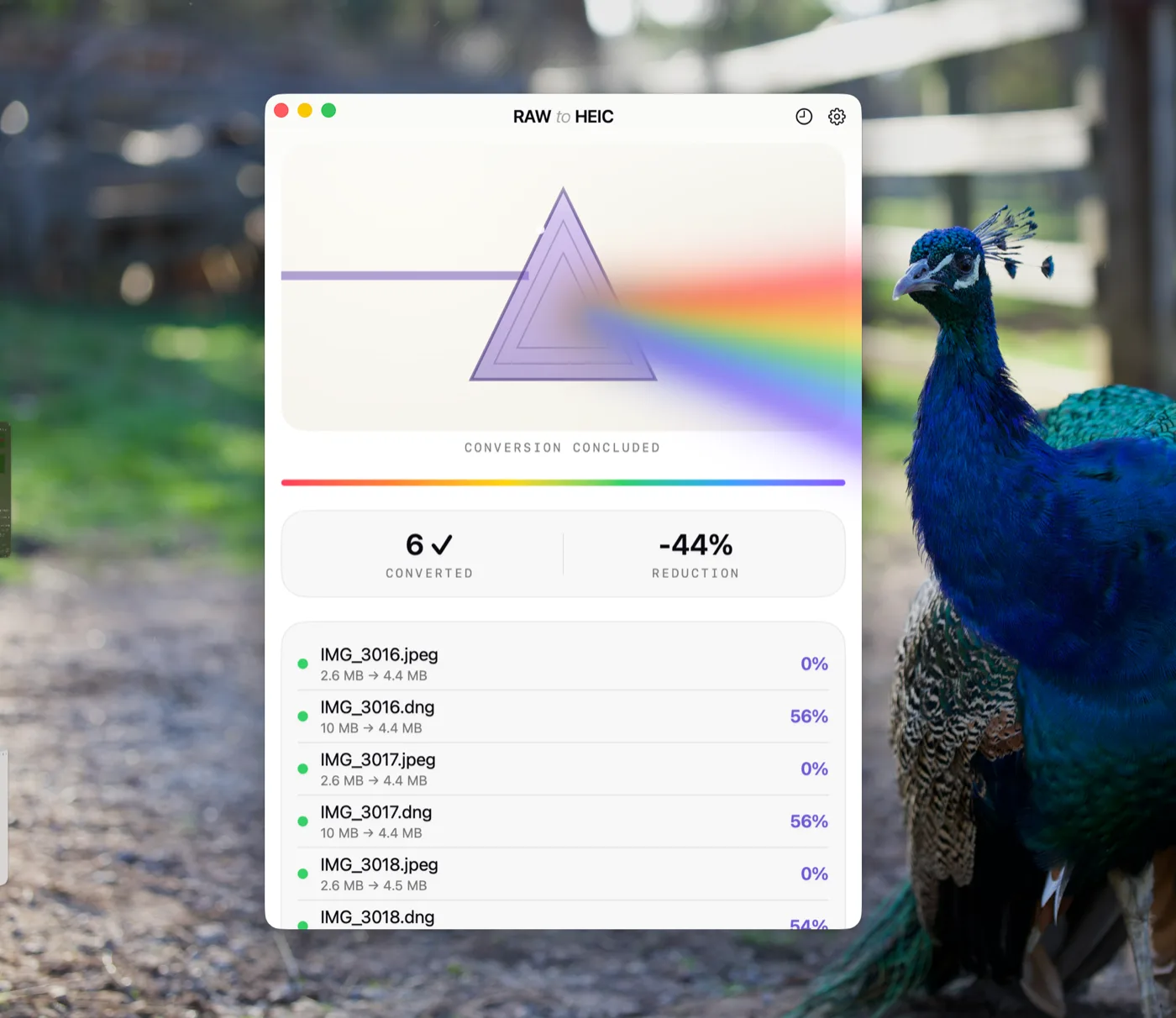
RawToHEIC is built around exactly that use case. It converts RAW files to HEIC directly inside Apple Photos on iPhone, iPad, and Mac, with no loose-file workflow, on-device processing, and verified deletion safeguards. For users sitting on a large RAW or ProRAW library, that can mean major storage savings without sacrificing the way the library is already organized.

When converting RAW to HEIC makes sense

RAW is valuable at the editing stage. It gives you more latitude for exposure, white balance, and color recovery. But once you are done editing, the question changes from what is technically possible to what is practical to keep.

If you are actively revisiting a file for professional retouching or large-format printing, keeping RAW may still be worth it. If the image is finished and now serves as part of your everyday synced library, HEIC is often the better storage format. It is dramatically smaller, supports modern image quality, and fits the Apple ecosystem well.

This is especially useful for older RAW archives. Many photographers have thousands of camera RAW files imported from Canon, Sony, Nikon, Fujifilm, Olympus, or Panasonic that are no longer in active editing rotation. They still want those photos in Photos, searchable and organized, but they do not need the original storage weight attached to every image forever.

The same logic applies to iPhone ProRAW. ProRAW is excellent when you want maximum editing flexibility. It is overkill once the image is final and living in your synced library as a finished photo.

What not to do if you want long-term sanity

The cheapest-sounding solution is often the one that creates the most friction later.

Exporting folders of originals to an external drive can work, but it adds another archive to manage. You now have to remember what lives in Photos, what was removed, and where the originals ended up. That is fine for some advanced users, but most people want fewer moving parts, not more.

Deleting originals blindly is worse. If you remove files before confirming the converted versions are in place and intact, you can create gaps that are painful to fix. Safety matters more than speed here.

You should also be skeptical of tools that require cloud processing for private photo libraries. For a storage task this sensitive, on-device conversion is simply the better fit. Your images stay on your hardware, and your workflow stays under your control.

A practical decision framework

If you are trying to decide what to keep in RAW, think in tiers.

Keep RAW for active projects, portfolio images you may re-edit, and shots where maximum post-processing flexibility still matters. Convert RAW to HEIC for completed photos you mainly want to view, share, search, and keep organized in Photos. Delete obvious junk outright. And for future capture, use RAW more selectively.

That approach is usually better than chasing tiny gains elsewhere. You can spend an hour deleting screenshots and free up a modest amount of space, or you can convert a batch of completed RAW images and free up a meaningful chunk of iCloud storage quickly.

Why this saves more than money

Yes, reducing iCloud usage can help you avoid moving to a higher storage plan. But the bigger benefit is that your library becomes easier to live with. Syncing is lighter. Device storage pressure eases. Backups feel less fragile. And you stop treating Photos like a closet you are afraid to open.

That is the part many storage articles miss. This is not just about reclaiming gigabytes. It is about keeping a high-quality Apple-native photo workflow sustainable over time.

If you shoot RAW because you care about image quality, you do not need to give that up. You just need a smarter end point for finished work. The best way to reduce iCloud photo storage is not random deletion. It is keeping the files that still earn their size, and shrinking the ones that do not.

A good photo library should feel organized, light, and dependable – not like a monthly bill waiting to grow.

Shrink your RAW library, right inside Photos.

RawToHEIC converts camera RAW and iPhone ProRAW to HEIC up to 10× smaller — keeping every edit, album, favorite, and location. On-device, no account, one purchase for iPhone, iPad, and Mac.

Not sure yet? Convert a few sample photos free — no install, nothing uploaded.

Try it free — no install →

Free to start · Unlimited $19.99 once · iPhone · iPad · Mac