
Skip to content

HEIC vs JPEG for Archiving Your Photo Library

HEIC vs JPEG for Archiving Your Photo Library

A finished shoot should not keep consuming RAW-level storage forever. That is the practical question behind HEIC vs JPEG for archiving: once you have edited, selected, and organized your keepers, which smaller format belongs in your long-term photo library?

For Apple Photos users, HEIC is usually the stronger everyday archive format. It can deliver comparable visual quality at much smaller file sizes, supports modern photography features well, and works natively across iPhone, iPad, and Mac. JPEG still earns a place when universal access matters more than storage efficiency.

The right answer is rarely “convert everything and delete every original.” It depends on whether an image is a final keeper, a client deliverable, a family record, or a photograph you may want to re-edit years from now.

HEIC vs JPEG for archiving: the core difference

HEIC is the file container Apple commonly uses for HEIF images. In Photos, it is the modern default for many iPhone photos because it stores high-quality images more efficiently than JPEG. A HEIC file typically uses HEVC compression, which is far more advanced than the older JPEG compression method.

JPEG is the compatibility standard. Nearly every camera, operating system, browser, email client, printer, and photo service can open it without a second thought. Its format is older, simpler, and exceptionally well supported.

For archiving, that creates a clear trade-off. HEIC reduces the cost and friction of keeping a large library available on your Apple devices. JPEG reduces the chance that someone using an older device or unfamiliar software cannot open a file. Neither format is a replacement for a real backup strategy.

Why HEIC is often better for an Apple Photos library

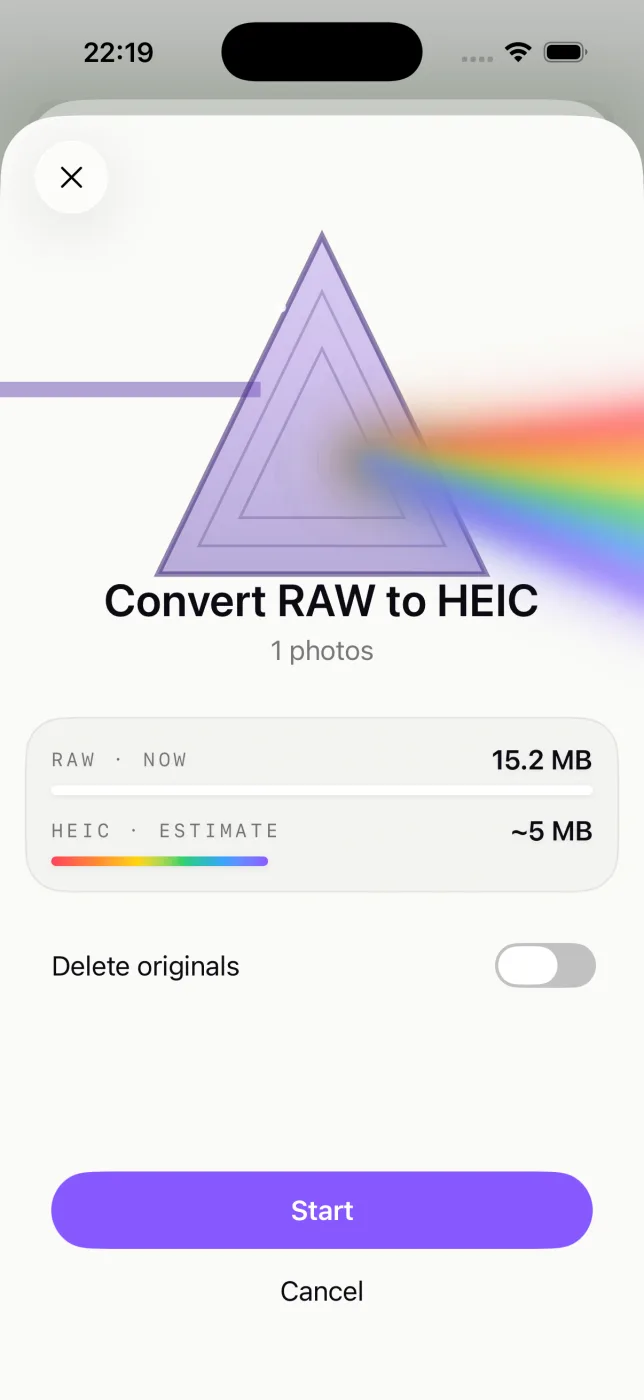
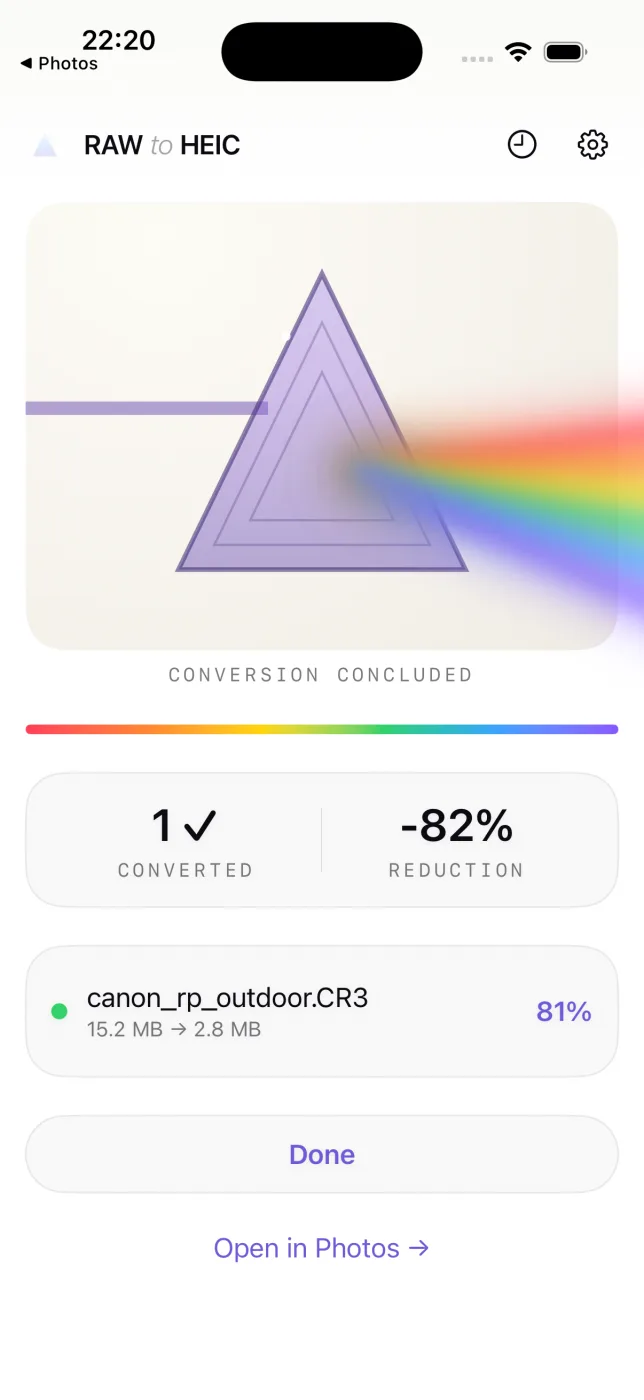
Storage is the first reason. A high-quality HEIC can often be substantially smaller than a similar-quality JPEG, and it can be dramatically smaller than a RAW or ProRAW original. Exact savings vary by scene, camera, and export settings, but the difference becomes meaningful across thousands of images.

That space matters twice. It affects the storage available on your iPhone, iPad, and Mac, and it affects the size of your cloud photo library. Smaller finished files make it easier to keep more of your actual library accessible instead of constantly offloading, exporting, or deleting images under pressure.

HEIC also fits the Apple ecosystem naturally. Photos understands it, previews it quickly, and handles it as a normal library asset. If your archive lives primarily in Photos and is viewed on Apple hardware, choosing JPEG only for broad theoretical compatibility can mean carrying larger files without receiving a practical benefit.

There is also image quality. Both HEIC and JPEG are lossy formats, meaning they discard some image data during compression. But HEIC generally preserves more visual detail for a given file size. At equivalent visual quality, it is usually smaller. At equivalent file size, it can look better, especially in detailed scenes, gradients, and areas where JPEG artifacts are easier to spot.

HEIC is not the same as keeping RAW

A HEIC archive is a final-image archive, not a negative archive. Once a RAW image is converted to HEIC, you no longer retain the same latitude for recovering highlights, changing white balance, or making major exposure adjustments later.

That does not make conversion a bad idea. It makes selection matter. Keep RAW files for portfolio work, paid work, irreplaceable photographs, difficult lighting situations, or images you expect to revisit creatively. Convert completed, lower-priority, or high-volume images when the value of keeping the RAW no longer justifies the storage cost.

A practical setup is to retain RAW for your strongest and most flexible images while using HEIC for finalized keepers. This preserves room for future editing without forcing every ordinary photo to occupy RAW-level space indefinitely.

Where JPEG remains the safer choice

JPEG is still the better archival delivery format when you need to hand files to people, systems, or services outside the Apple ecosystem. A grandparent’s older Windows computer, a print lab with outdated upload tools, a local organization’s website, or a client’s content management system may accept JPEG immediately while rejecting HEIC.

JPEG also remains useful for files that must be readable with minimal assumptions decades from now. Its support is so widespread that it is hard to imagine it becoming inaccessible. HEIC is an established standard, not a proprietary Apple-only oddity, but support remains less universal in practice.

This does not mean JPEG is automatically the superior preservation format. An archive is only useful if you can find it, understand it, and maintain copies of it. A well-organized HEIC library in Photos with reliable backups is more useful than a collection of JPEGs scattered across external drives with incomplete metadata.

For photos you expect to share broadly, export JPEG copies as needed. There is little reason to make JPEG the permanent master of every finished image just because some recipients may need it someday.

Metadata, edits, and organization matter as much as format

A photo archive is more than pixels. Dates, locations, captions, favorites, albums, people, and editing history are what make a large library usable five or ten years later.

Loose-file conversion workflows often create the real archival problem. You export a photo, convert it in another app, import the result, then try to identify the duplicate and delete the original. Along the way, you can lose album placement, captions, favorites, or the connection to the version you carefully edited in Photos.

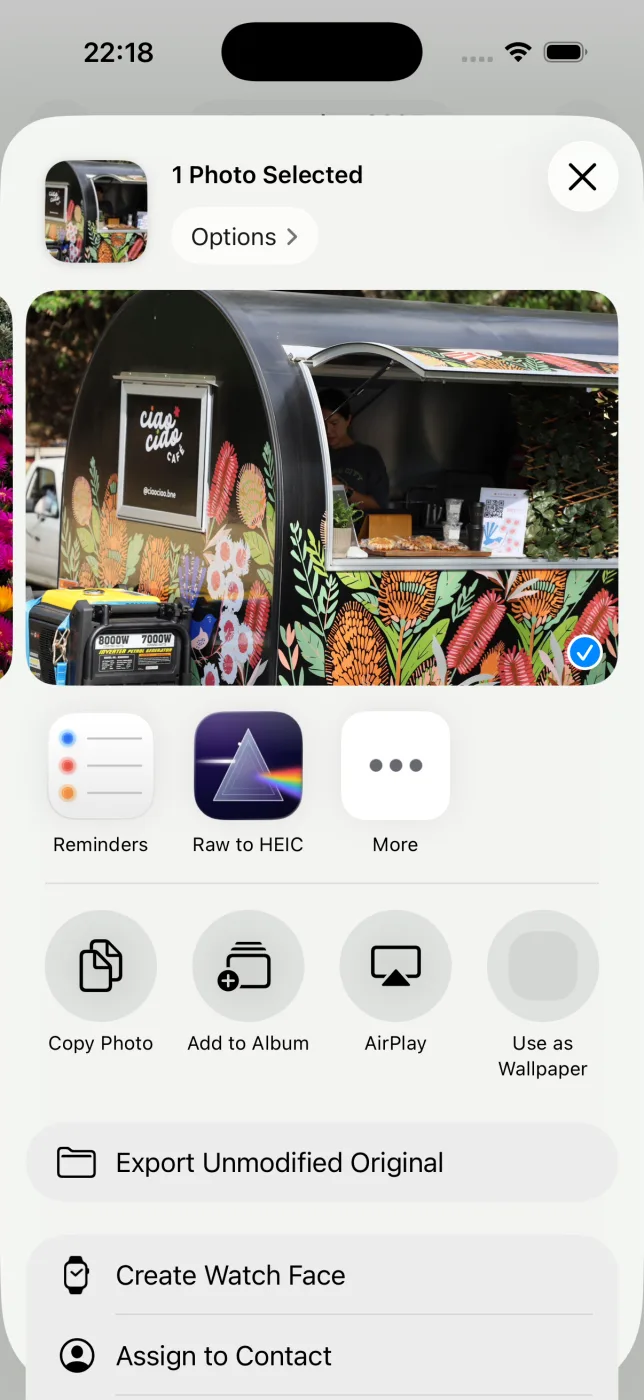
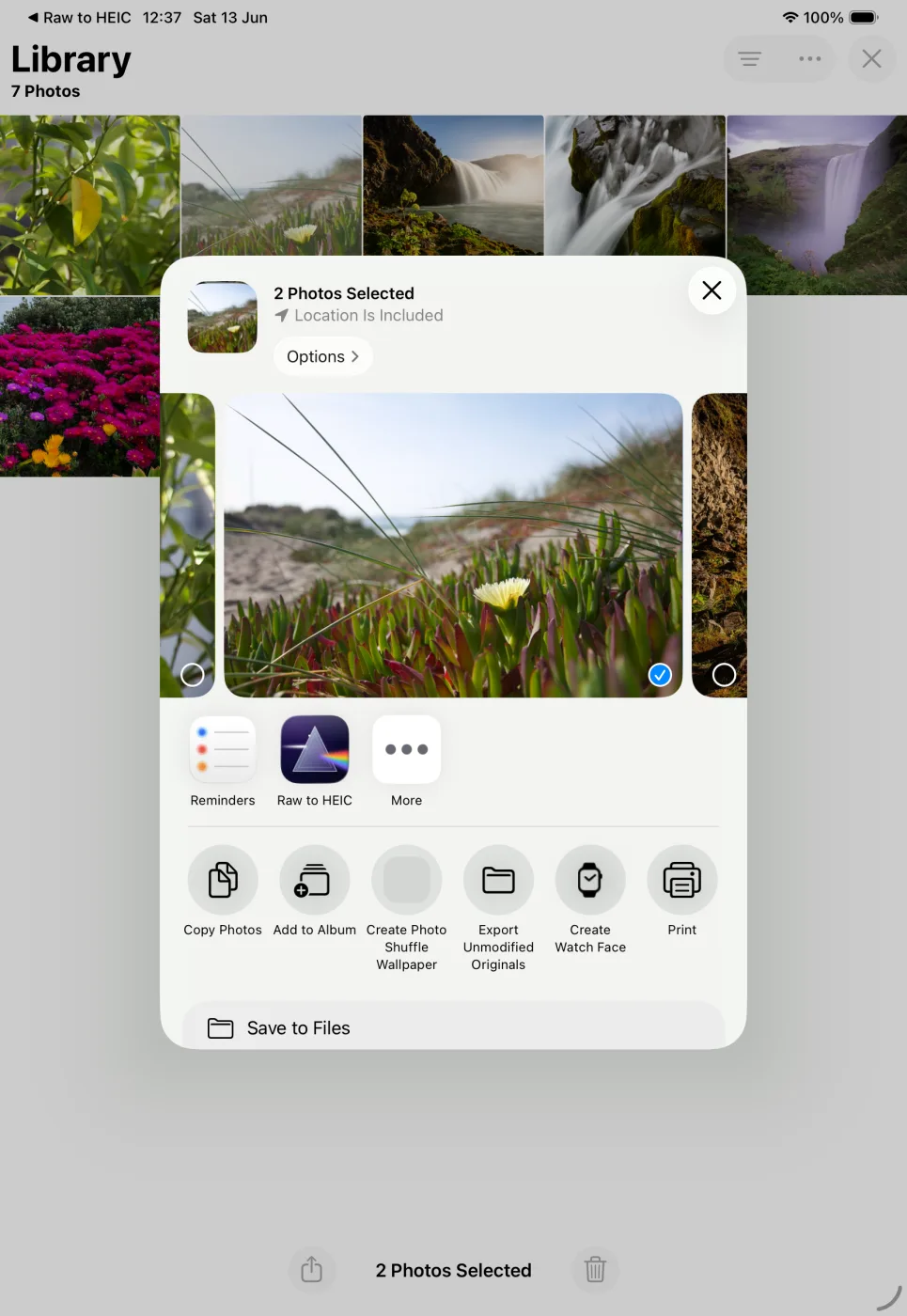
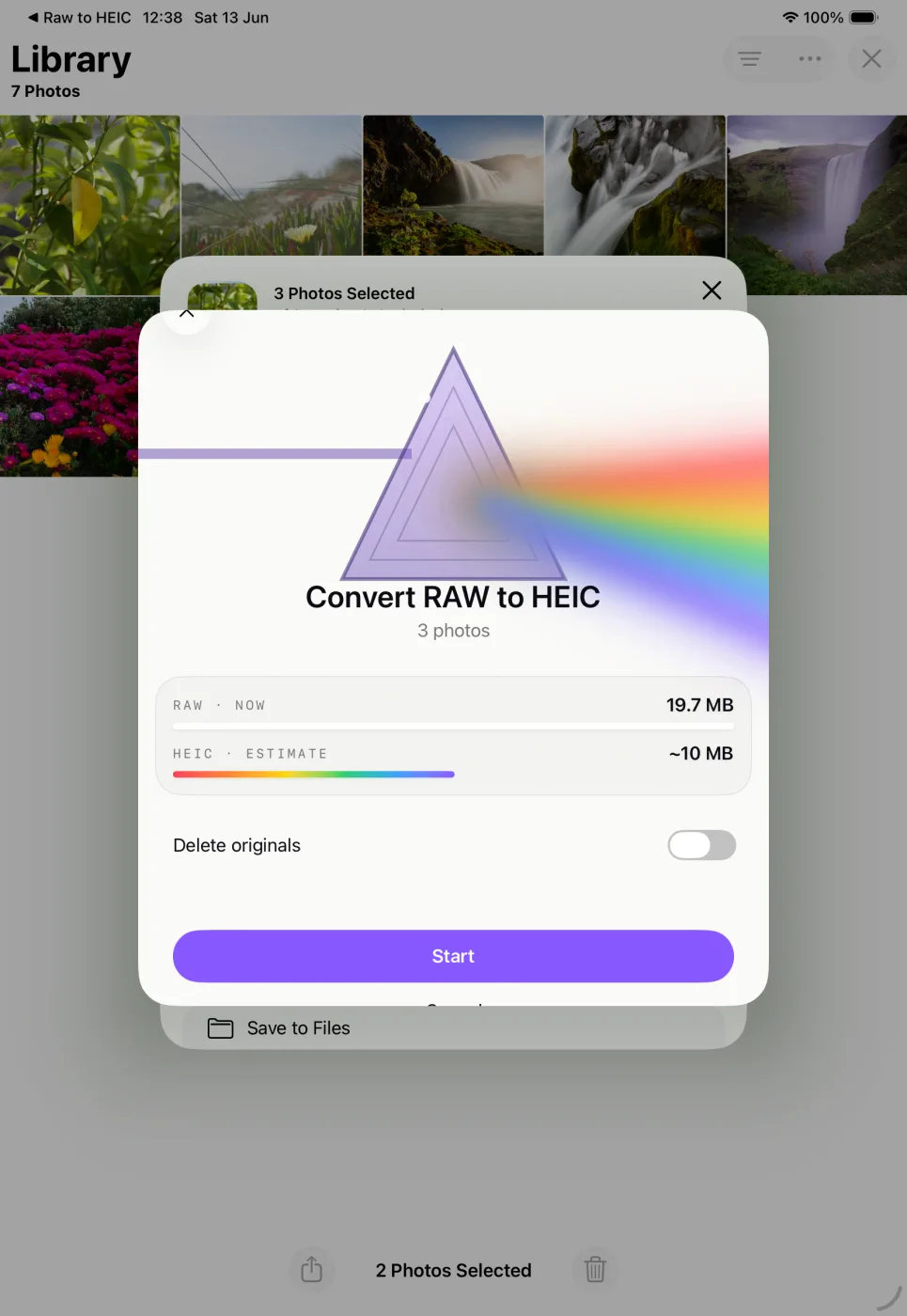
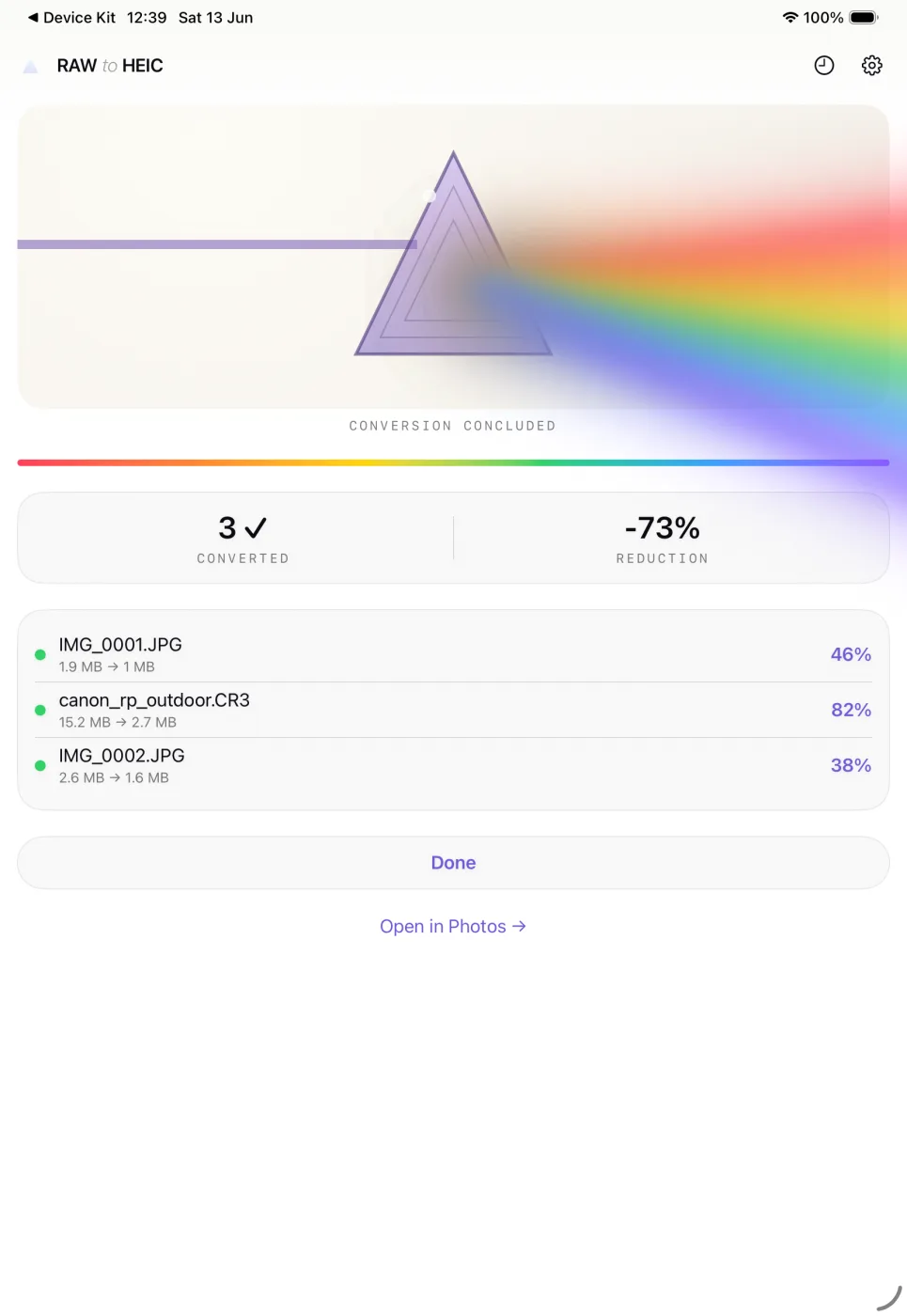
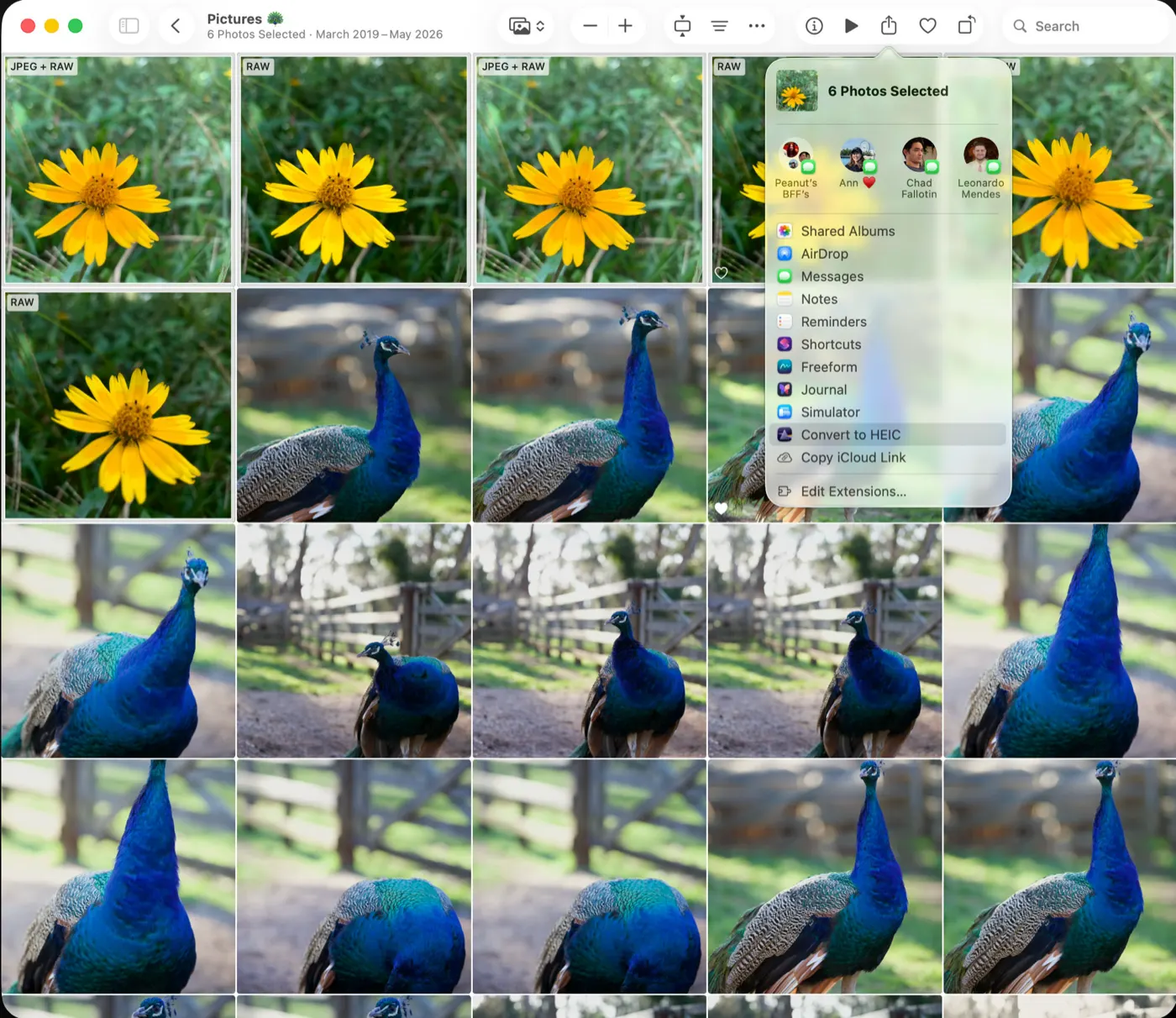
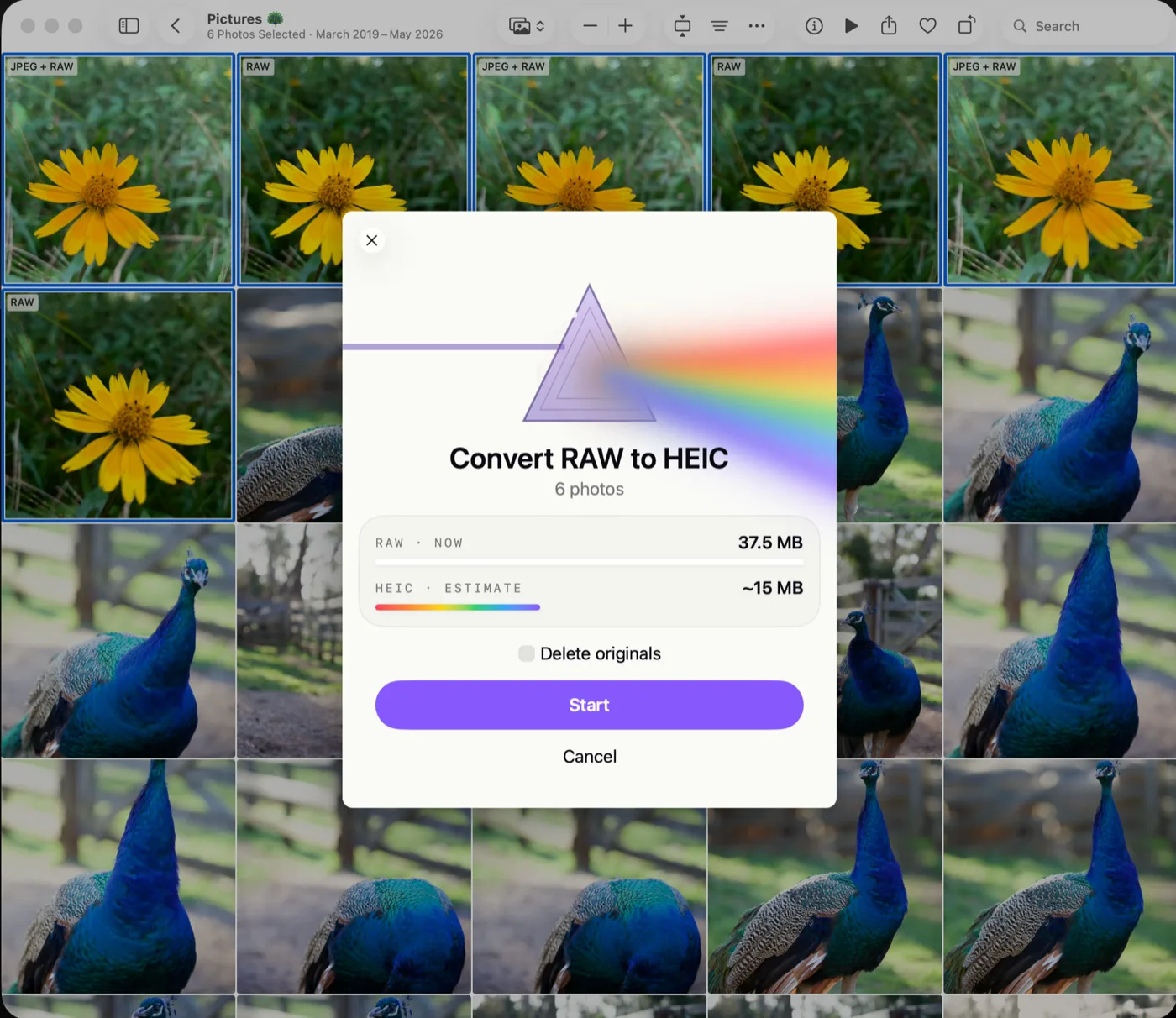
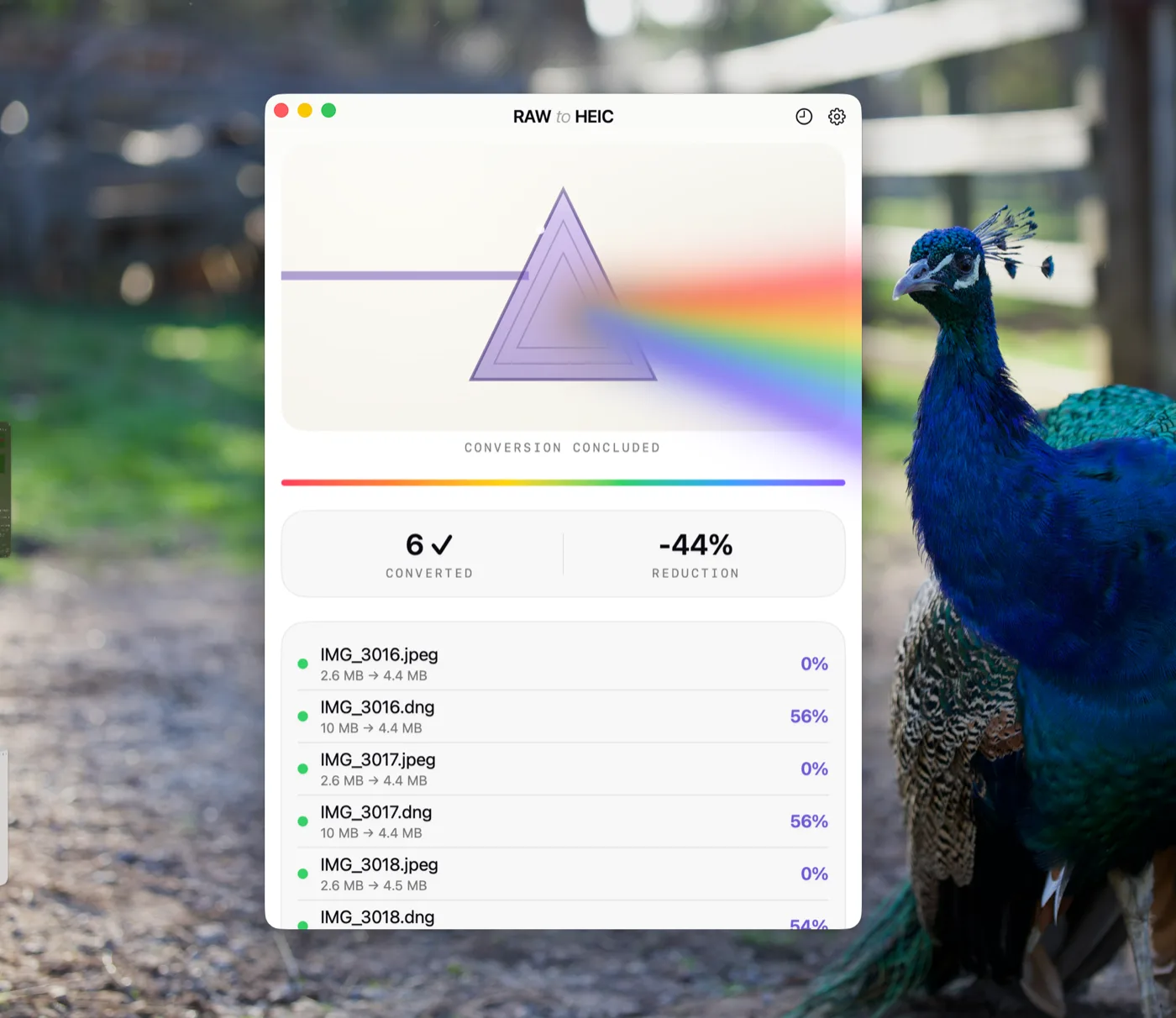
A Photos-native workflow avoids that disruption. The conversion should happen where your library already lives, with your existing organization intact. RawToHEIC is designed for this exact use case: convert supported camera RAW and iPhone ProRAW images to HEIC inside Photos, with on-device processing and safeguards before originals are removed.

That distinction is more valuable than it sounds. The best storage-saving format does not help if adopting it turns your photo library into a cleanup project.

A practical decision framework

Start with the role of the photograph, not the file extension. For images you may re-edit substantially, keep the RAW. For finished images you want to keep close at hand in Apple Photos, HEIC is usually the best balance of quality and size. For images intended for broad distribution, maintain or export JPEG copies.

Consider these four questions before converting a group of photos:

  • Will I need RAW-level editing flexibility again?
  • Is this photo primarily viewed on Apple devices?
  • Do I need to send this file to people or systems with unknown HEIC support?
  • Does the converted image retain the metadata and organization I rely on?

If the answer is “no” to the first question and “yes” to the second and fourth, HEIC is a strong archival choice. If broad sharing is central to the image’s purpose, JPEG is the safer handoff format. If the image has lasting professional or personal value, keep the RAW too.

Build an archive that can survive format changes

No single image format guarantees permanence. Long-term preservation depends on redundancy, verification, and occasional maintenance. Keep more than one copy of your photo library, ideally on separate storage systems. Confirm that your backups actually contain full-resolution originals and can be restored.

It is also wise to keep your most important images in more than one form. That may mean retaining the RAW plus a finished HEIC in Photos, then creating JPEG exports for a small set of images you want to be easy to share anywhere. You do not need three versions of every vacation snapshot. Reserve that level of redundancy for photographs that cannot be replaced.

Every few years, open a sample of older files on current devices. Check that metadata still appears correctly, that backups are readable, and that you can retrieve the photos you expect. Format risk is manageable when you notice changes early rather than after an old drive fails.

The better archive is the one you will keep using

HEIC is usually the smarter choice for reducing the footprint of a finished Apple Photos library without accepting a major quality compromise. JPEG remains the compatibility fallback and the practical format for sharing beyond Apple devices. RAW remains the source material worth protecting selectively.

Treat file format as part of a larger library decision: keep the originals that deserve future flexibility, convert finished images that are costing unnecessary space, and preserve the organization that gives those images meaning. A photo you can find, view, and back up reliably is far more valuable than a larger file you are reluctant to keep.

Shrink your RAW library, right inside Photos.

RawToHEIC converts camera RAW and iPhone ProRAW to HEIC up to 10× smaller — keeping every edit, album, favorite, and location. On-device, no account, one purchase for iPhone, iPad, and Mac.

Not sure yet? Convert a few sample photos free — no install, nothing uploaded.

Try it free — no install →

Free to start · Unlimited $19.99 once · iPhone · iPad · Mac