Will HEIC Save iPhone Space? The Real Answer

A 256 GB iPhone can feel generous until ProRAW shots, camera imports, and years of favorites all land in Photos. So, will HEIC save iPhone space? Yes – often dramatically – but the size of the win depends on what you are converting, how you shoot, and whether you need to keep the original RAW files.
HEIC is one of the most practical ways to reduce photo-library storage without reducing your images to low-quality throwaways. For everyday photos, Apple already uses it by default through the High Efficiency camera setting. The bigger opportunity comes later: converting finished RAW and ProRAW images into high-quality HEIC copies once you no longer need the full editing latitude of the original.
Will HEIC Save iPhone Space Compared With JPEG and RAW?
HEIC, also called HEIF, is Apple’s preferred modern photo format. It uses more efficient compression than JPEG, which means it can preserve comparable visual quality in a smaller file. It also supports useful Apple-specific capabilities, including wide color and HDR workflows.
Compared with JPEG, the savings are meaningful but variable. A HEIC file may be roughly half the size of a similar-quality JPEG, though image detail, noise, resolution, and editing all affect the final number. A clean daylight photo compresses differently from a detailed night scene full of grain.
Compared with RAW, the difference is much larger. RAW files hold extensive sensor data so photographers can recover highlights, adjust white balance, and make deeper edits later. That flexibility has a cost. A RAW image from a mirrorless camera may occupy 20 MB, 40 MB, or much more. iPhone ProRAW images can also consume tens of megabytes each, especially at higher resolutions.
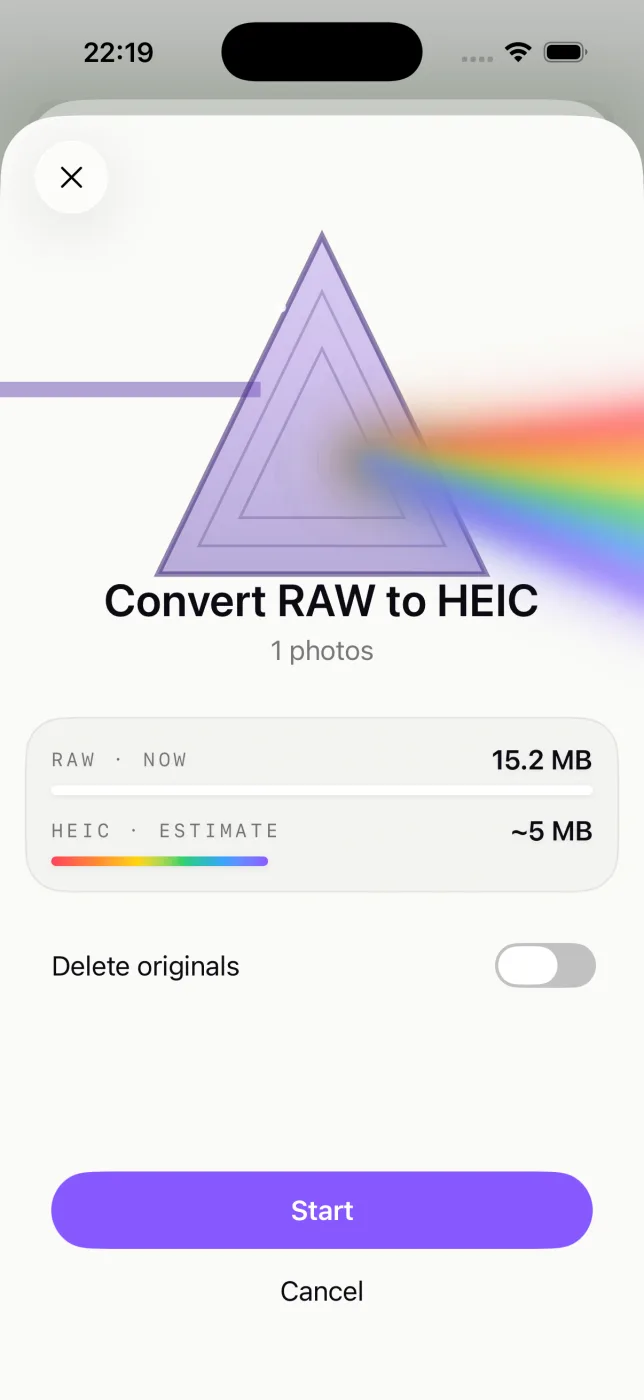
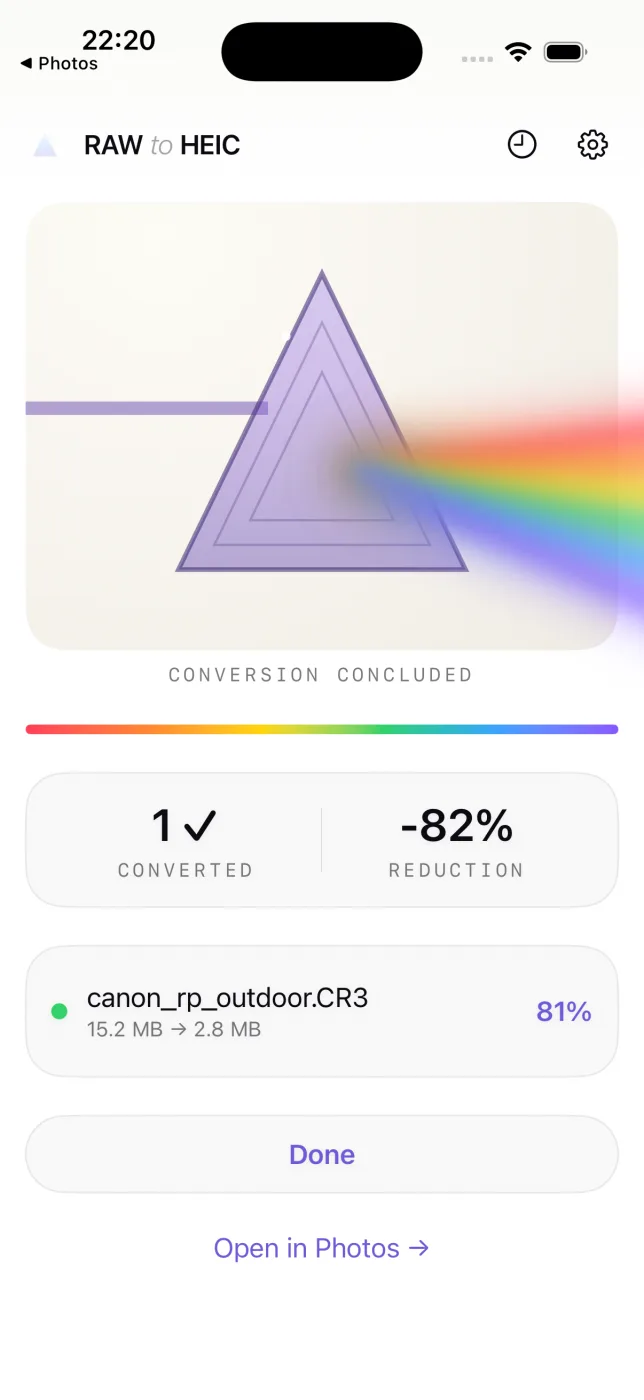
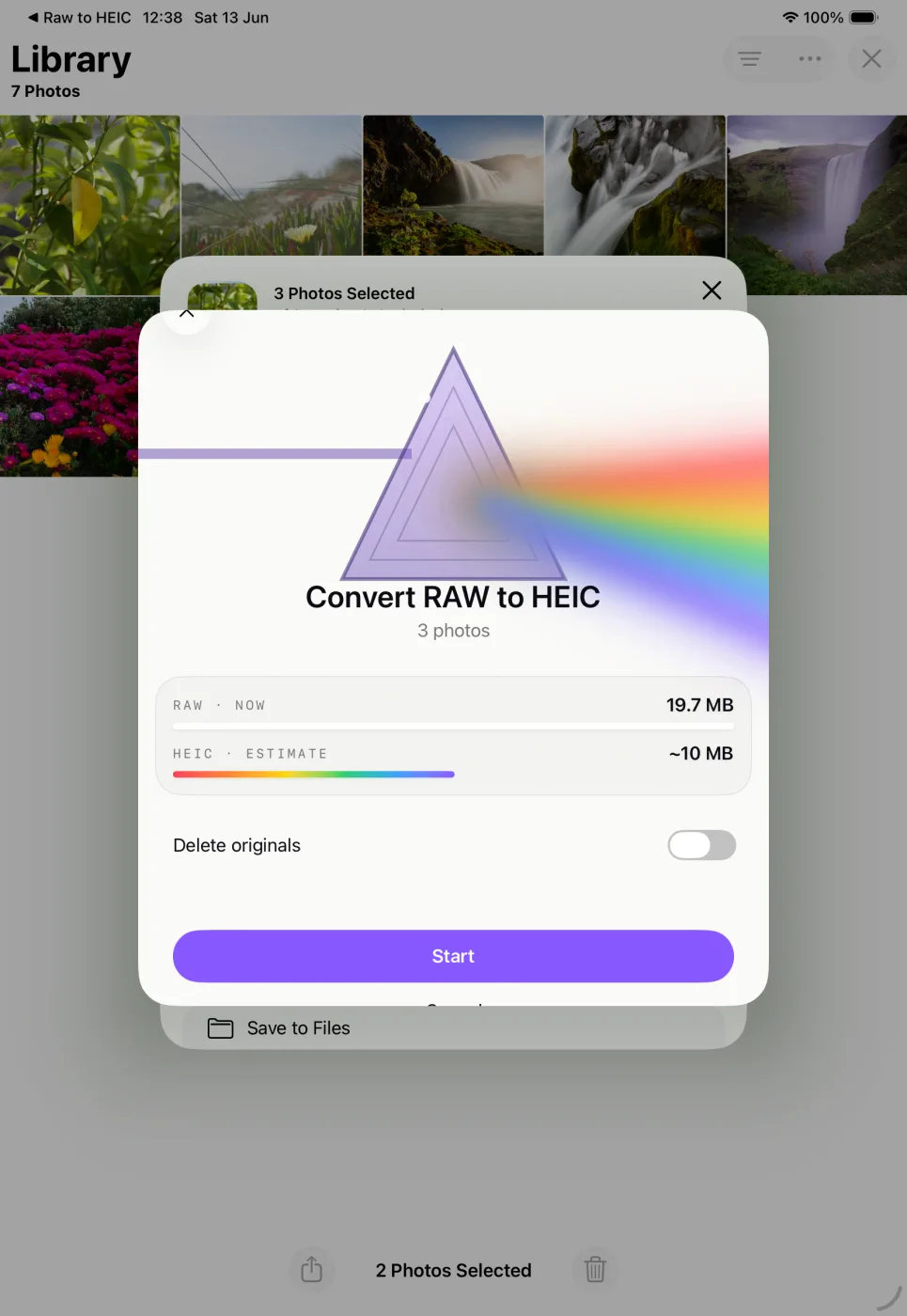
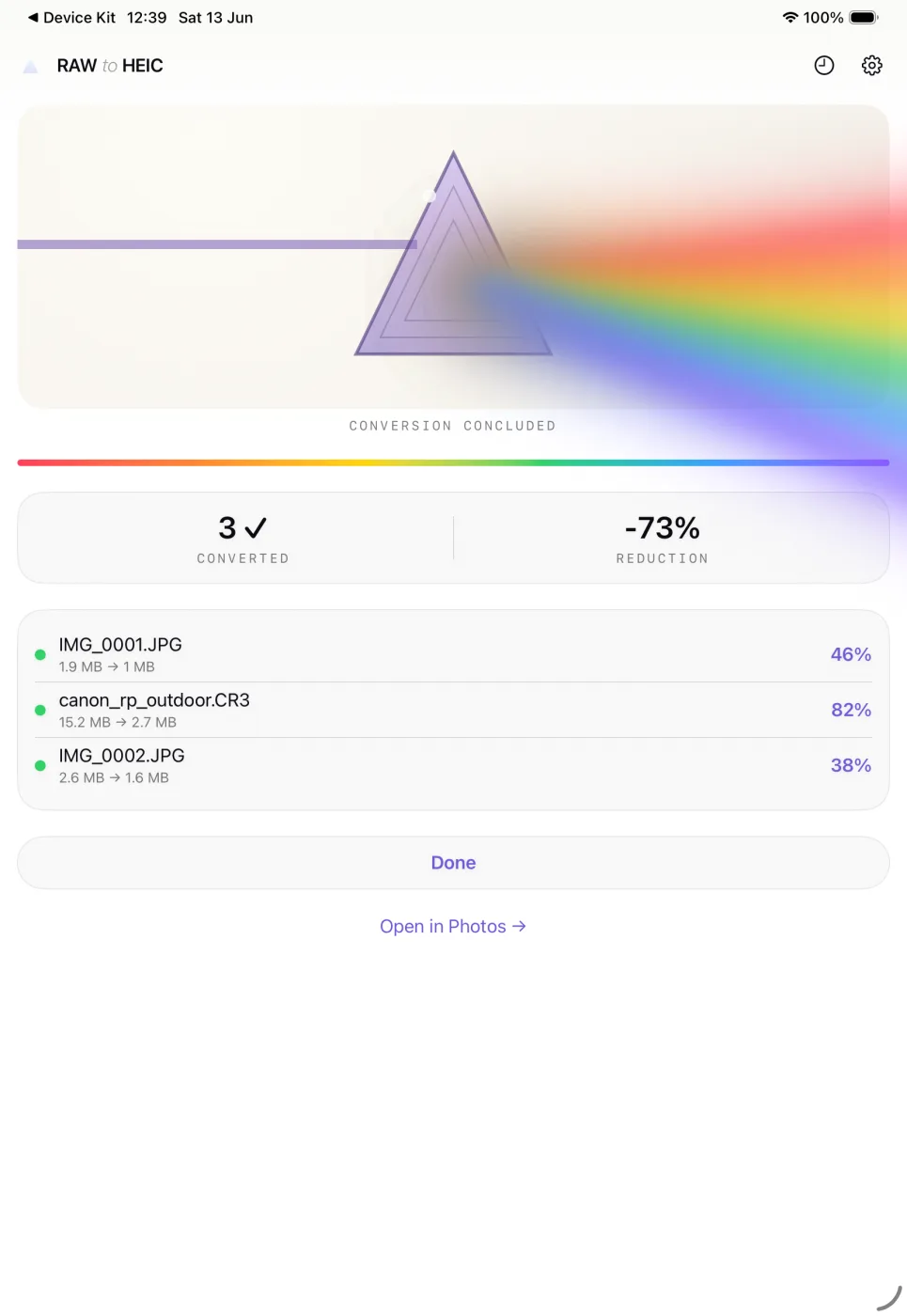
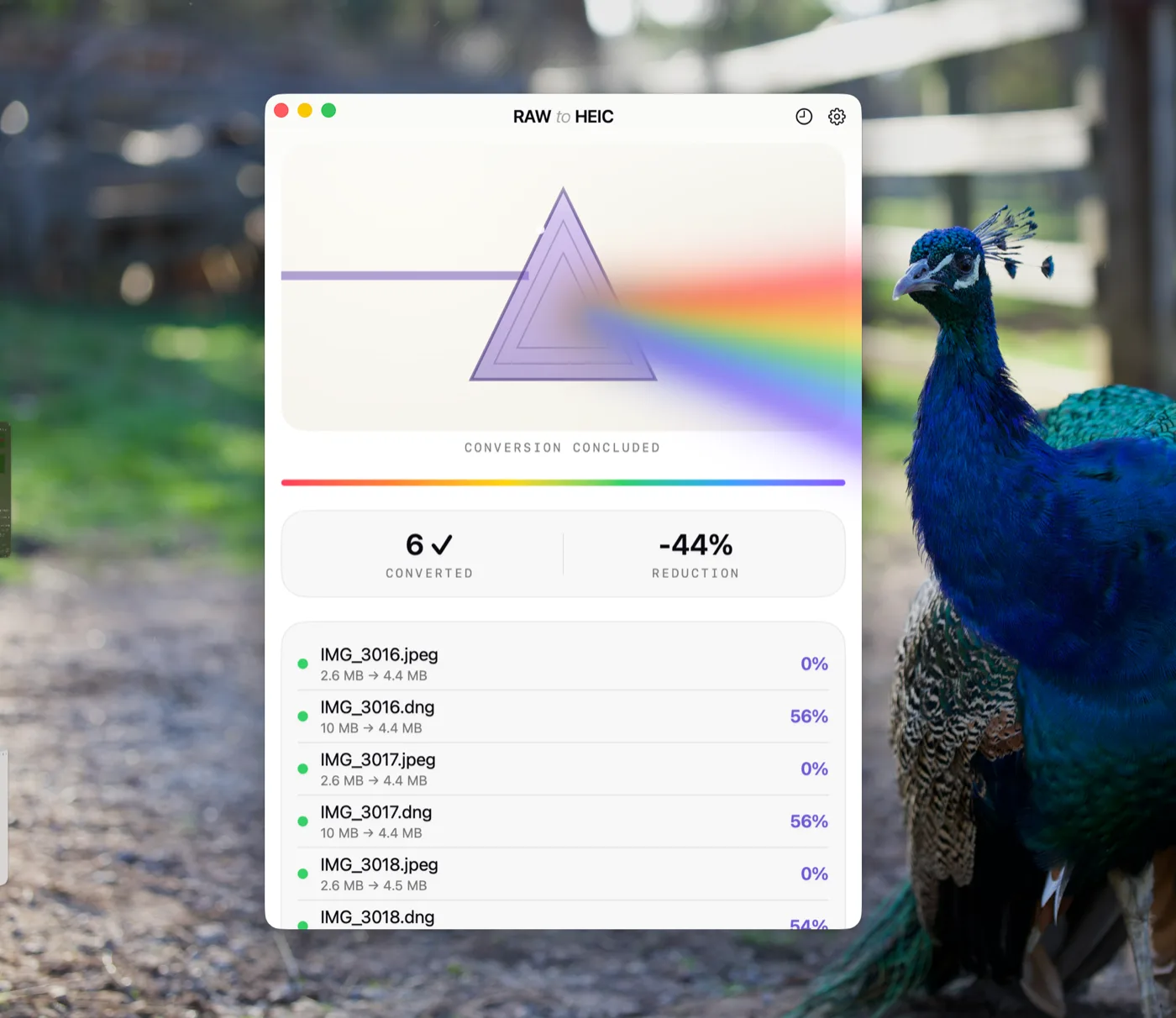
A carefully exported HEIC version of that finished image can often be up to 10x smaller than the RAW original. That does not mean HEIC replaces RAW in every situation. It means a library of completed work does not always need to carry RAW-sized storage overhead forever.
The Storage Math That Actually Matters
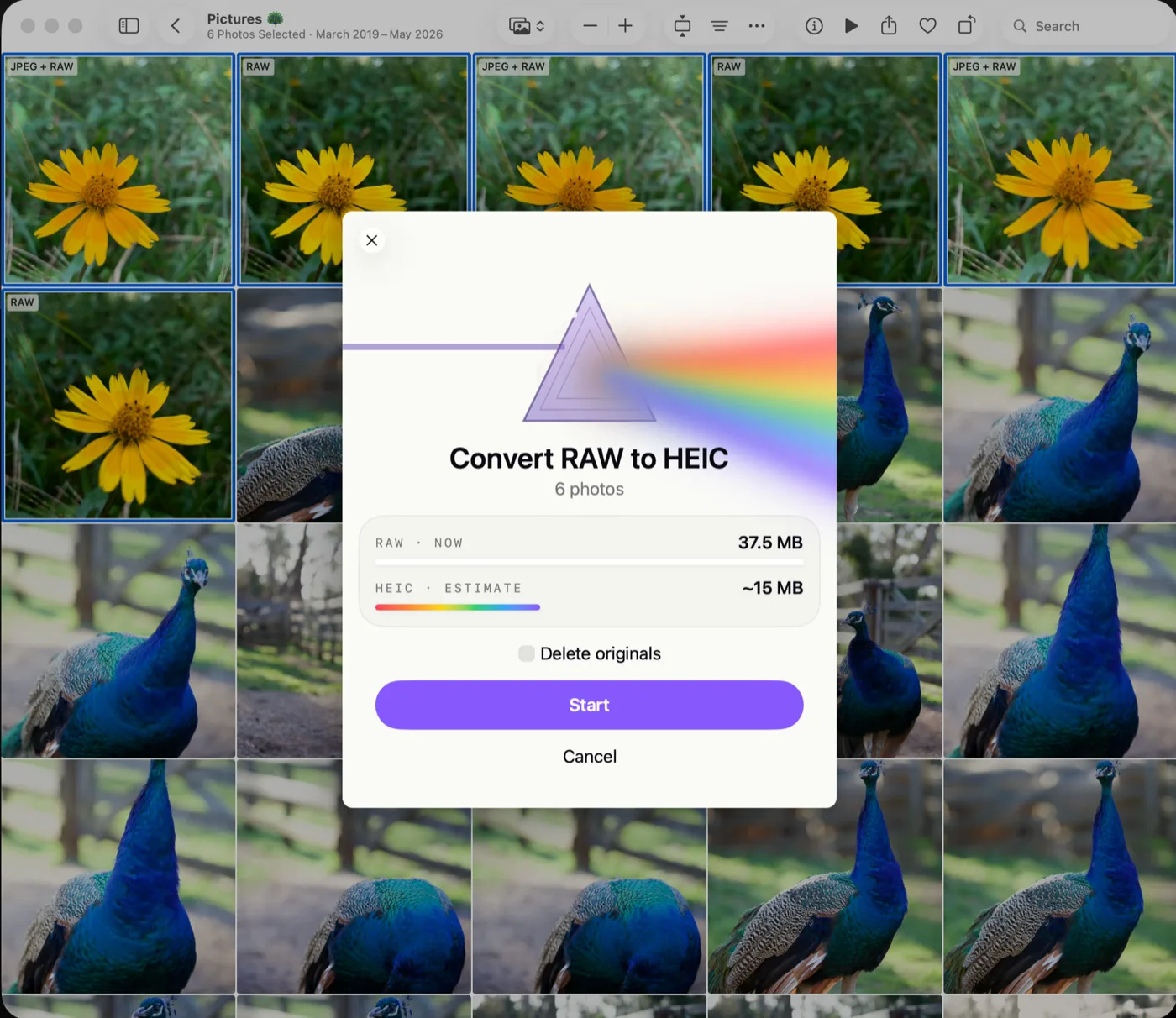
The fastest way to understand the benefit is to look at your own library. If you have 2,000 edited RAW files averaging 30 MB each, those originals occupy about 60 GB. If their HEIC versions average 3 to 6 MB, the converted library may need roughly 6 to 12 GB instead.
That can return dozens of gigabytes to your iPhone, iPad, Mac, or iCloud Photos library. It can also reduce the pressure to upgrade device storage or pay for a larger cloud tier solely because finished photos remain in heavyweight capture formats.
Still, file-size estimates are not promises. A 24-megapixel RAW from one camera will not behave exactly like a 48-megapixel ProRAW image from another. HEIC quality settings matter too. Higher-quality output uses more space, but it is usually still far smaller than RAW.
The useful question is not, “Is HEIC always tiny?” It is, “Do I need RAW flexibility for this image anymore?” For photos that are finished, shared, printed at normal sizes, or simply kept as memories, the answer is often no.
HEIC Is Not a RAW Archive
RAW and HEIC serve different jobs. RAW is a digital negative. It keeps more image information for future adjustment, but it is larger and less convenient for everyday sharing. HEIC is a finished, efficient photo format designed for viewing, storing, syncing, and sharing within Apple’s ecosystem.
That distinction should guide your conversion decisions. Keep RAW when the photo is commercially valuable, likely to be re-edited, needed for a large print, or technically difficult to reproduce. Keep it for work you may revisit with better editing tools or a different creative direction.
Convert to HEIC when an image is complete and its current look is the one you want to preserve. Family photos, travel selects, delivered personal projects, and older edited images are common candidates. You retain a high-quality photo while making room for the next shoot.
A sensible approach is to maintain a smaller RAW keeper set and convert the broader library of completed work. This avoids the false choice between keeping every RAW forever and deleting images you care about.
New iPhone Photos vs. Existing Photos
For new photos taken with your iPhone, confirm that your camera is using High Efficiency. In Settings, open Camera, then Formats, and choose High Efficiency. New standard photos will generally be saved as HEIC rather than JPEG.
This setting does not shrink photos already in your library. It also does not automatically solve the storage impact of ProRAW. If ProRAW is enabled, your iPhone is intentionally capturing larger files with more editing data.
Existing photos need a deliberate conversion workflow. This is where many photographers run into an annoying choice: export files, convert them in another app, import the new copies, then manually restore albums, favorites, captions, locations, and other organization. The file may get smaller, but the library gets messier.
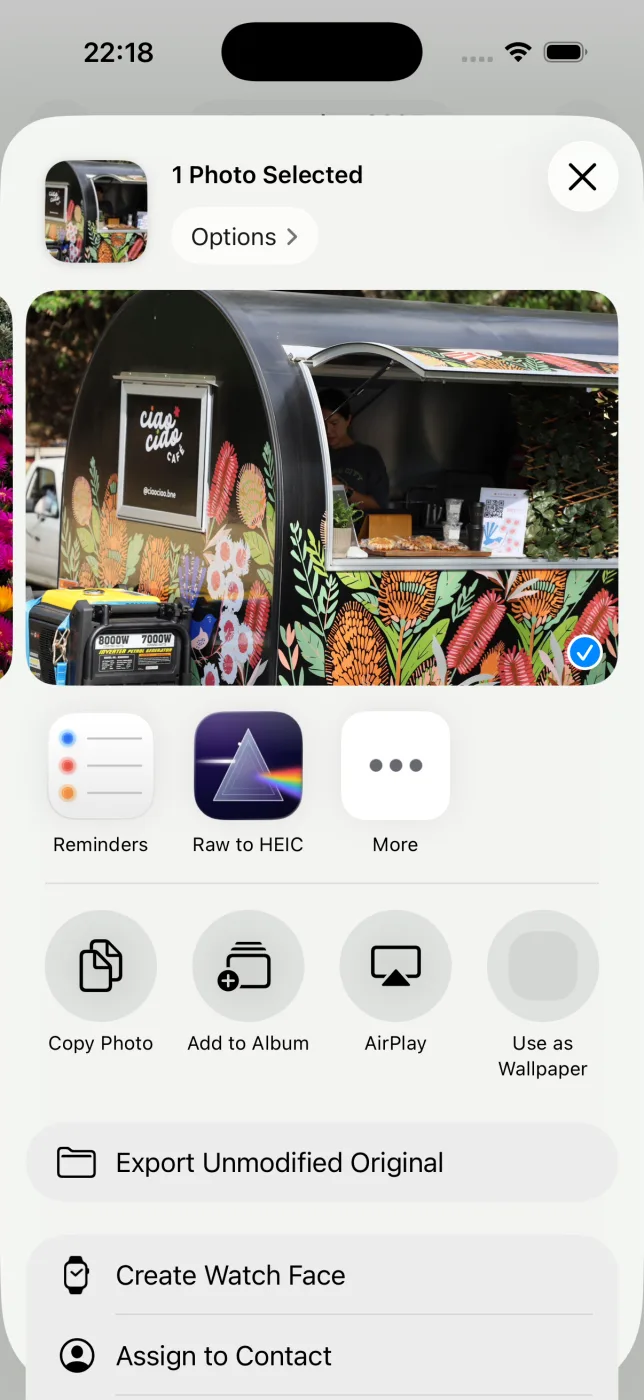
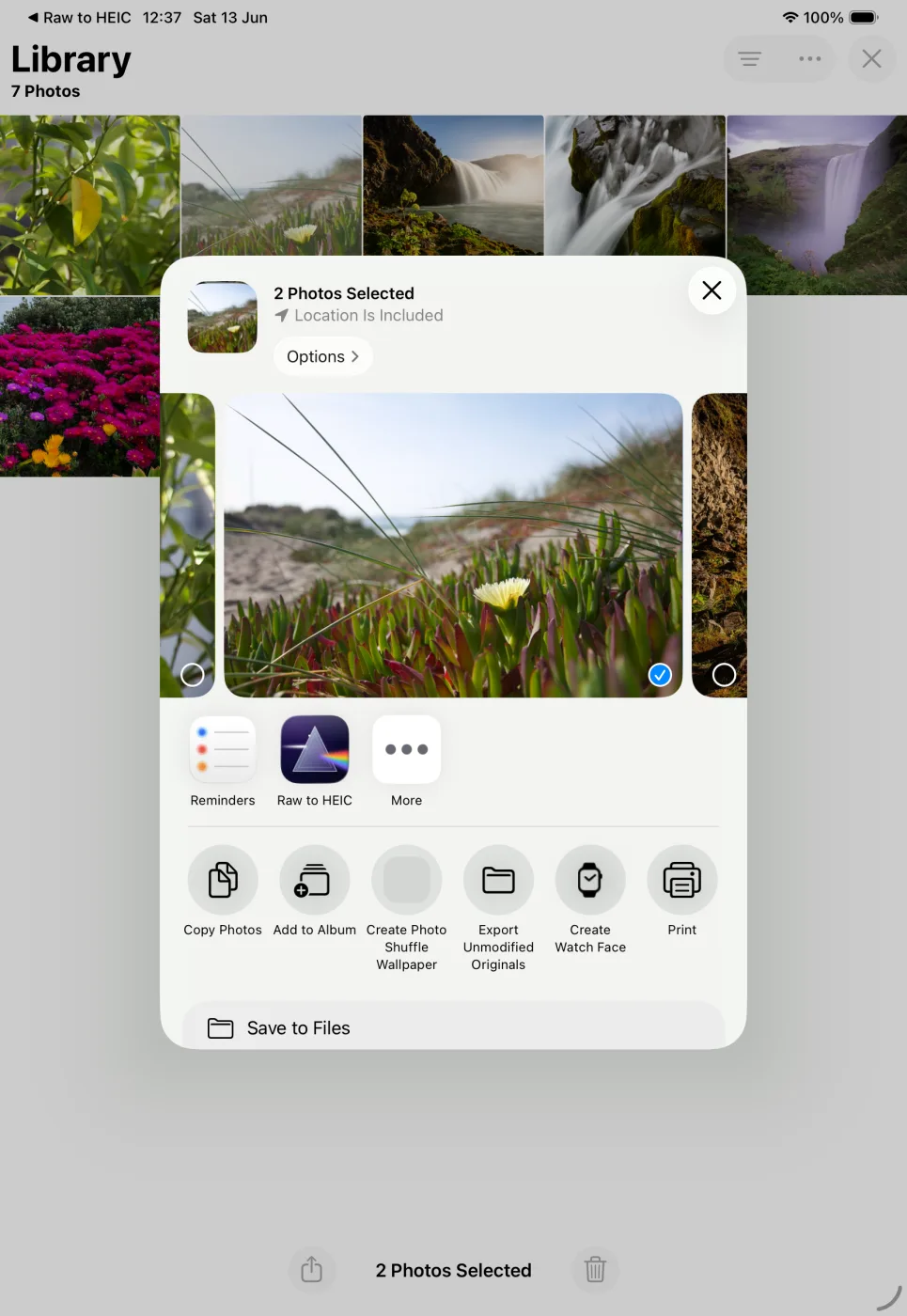
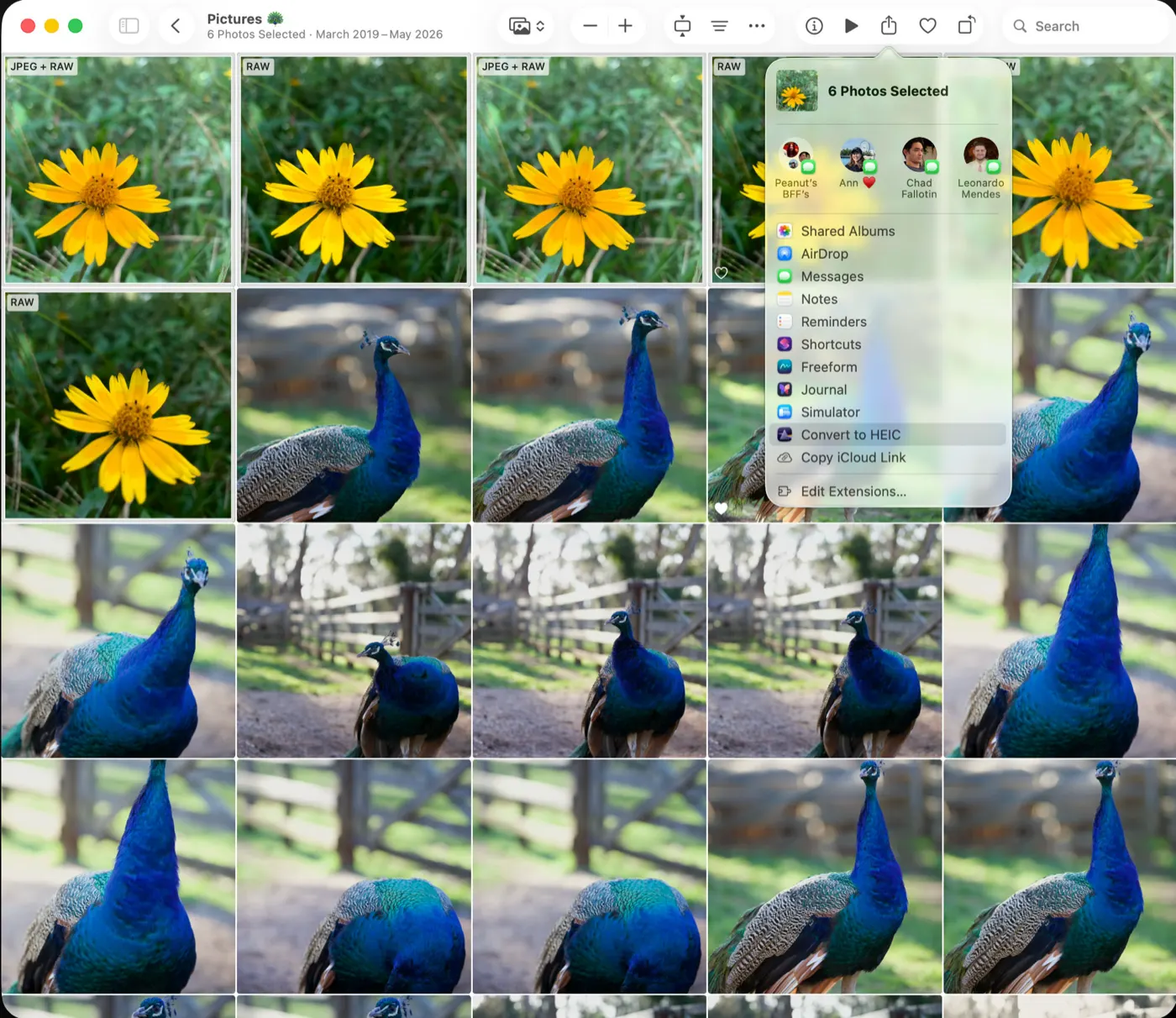
A Photos-native workflow is different. RawToHEIC converts supported camera RAW files and iPhone ProRAW directly within Apple Photos, so the result can stay connected to the context you already created. The goal is simple: reduce storage without turning your carefully organized library into a pile of loose files.
What Should Stay Intact During Conversion?
Storage savings are only useful if your photo library remains usable. Before converting a meaningful set of images, look beyond pixels and file size. Check the information and organization you rely on every day.
Your converted photo should retain the practical context that makes Photos work: capture date, location, captions, favorites, albums, and applicable metadata. If you have edited an image in Photos, the conversion should preserve the finished look you chose rather than force you to rebuild it from scratch.
HDR deserves the same attention. If you shoot and view HDR images on Apple displays, a flat-looking export defeats part of the purpose. A conversion workflow built for Apple Photos should respect compatible HDR content, not silently reduce it to an ordinary SDR image.
Privacy matters as well. Your personal photo library contains more than photographs. Locations, faces, family moments, and work images do not need to pass through a third-party server just to become smaller files. On-device processing keeps conversion local to your Apple device, with no upload queue and no reason to collect your photo data.
Delete Originals Only After a Safety Check
The biggest risk in any space-saving workflow is not conversion. It is deleting the original too early.
First, open several converted images and inspect the details that matter to you: sharpness, color, HDR appearance, date, location, captions, and album placement. View them on the device where you normally edit or share. If a photo was important enough to shoot in RAW, it is important enough to verify before deletion.
Next, decide whether the original belongs in your RAW keeper set. For the images you do intend to remove, use a workflow that verifies the HEIC output exists successfully before offering deletion. Then remember that Photos moves deleted files to Recently Deleted, where they may continue to consume storage until permanently removed.
If you use iCloud Photos with Optimize iPhone Storage, there is another nuance. HEIC conversion reduces the size of the photo asset in your overall iCloud library, but your iPhone’s immediate local savings may vary because iOS manages downloaded originals dynamically. The long-term storage benefit is still real, especially across devices and in iCloud storage, but it may not appear as a one-to-one drop in the iPhone Storage screen right away.
When HEIC Is the Right Space-Saving Choice
HEIC is an especially strong choice for Apple-first photographers who use Photos as their primary library. It keeps images easy to browse, sync, edit lightly, and share across iPhone, iPad, and Mac. Most modern Apple devices handle it natively, so there is no special viewer or separate archive system to maintain.
There are exceptions. Some older Windows software, legacy websites, and client delivery systems still expect JPEG. If you regularly send images outside the Apple ecosystem, keep that compatibility requirement in mind. You can also create JPEGs only when needed rather than storing every completed photo as a larger JPEG by default.
For most finished images, HEIC hits a useful balance: substantially less storage than RAW, better efficiency than JPEG, and native support in the Photos library you already use. Convert selectively, verify before deleting, and let your available storage go back to making room for the photos you have not taken yet.
Shrink your RAW library, right inside Photos.
RawToHEIC converts camera RAW and iPhone ProRAW to HEIC up to 10× smaller — keeping every edit, album, favorite, and location. On-device, no account, one purchase for iPhone, iPad, and Mac.
Not sure yet? Convert a few sample photos free — no install, nothing uploaded.
Try it free — no install →