7 Best Apple Photos Utilities for a Cleaner Library

A full Photos library is not just a folder of image files. It contains albums you built over years, favorites, captions, people, locations, edits, and memories you may not be able to recreate. The best Apple Photos utilities respect that work. They solve a specific problem without forcing your library through a loose-file export, desktop folder, and re-import cycle.
For RAW shooters, iPhone Pro users, and anyone paying attention to iCloud storage, the right tool is less about adding features and more about removing friction. Here are seven utilities and built-in capabilities worth using, organized by the job they do best.
1. Photos Duplicate Detection for Obvious Clutter
Apple Photos includes a Duplicates album that identifies exact or near-identical images and offers to merge them. It is one of the safest places to start when your library has grown through repeated imports, AirDrop transfers, or multiple device backups.
Merging duplicates preserves the version Photos considers highest quality while combining useful information such as captions, keywords, favorites, and album membership. That makes it a better first move than deleting images manually from a search result.
There is a limit: duplicate detection is not a cleanup tool for burst shots, slightly different edits, or five similar frames from the same scene. Review each suggested merge before confirming it. A technically duplicate photo may still be the copy with the crop or edit you prefer.
2. RawToHEIC for Finished RAW Photos
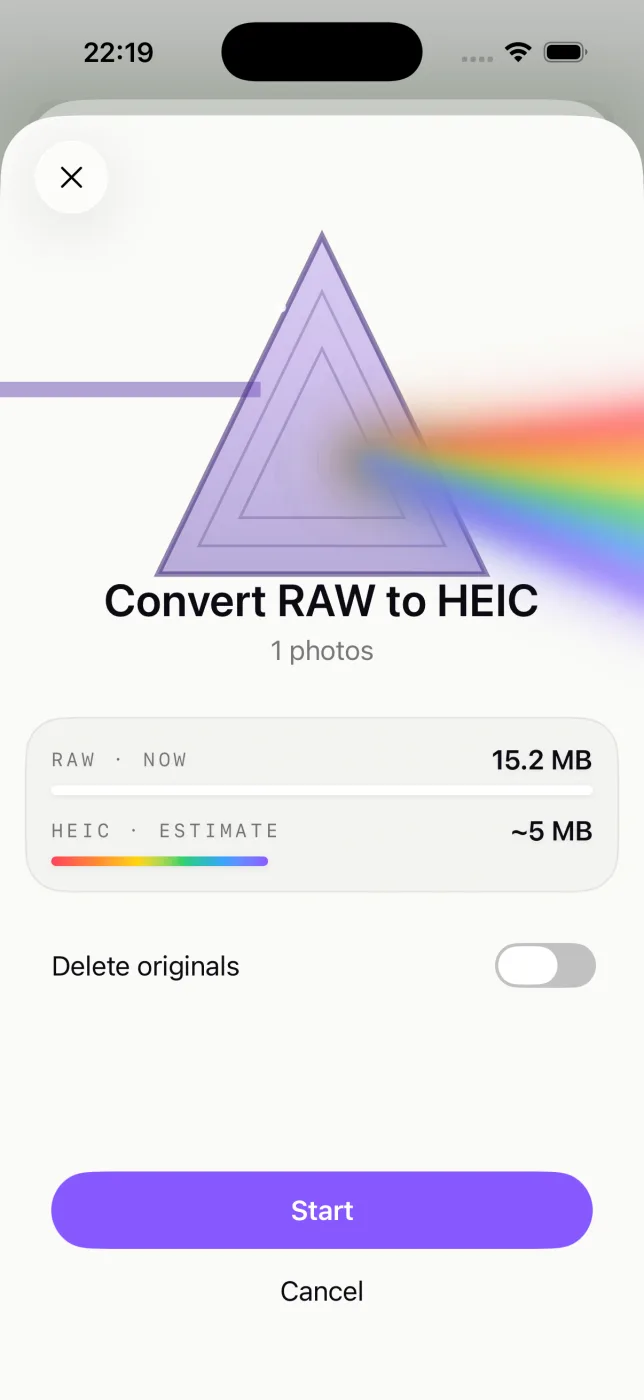
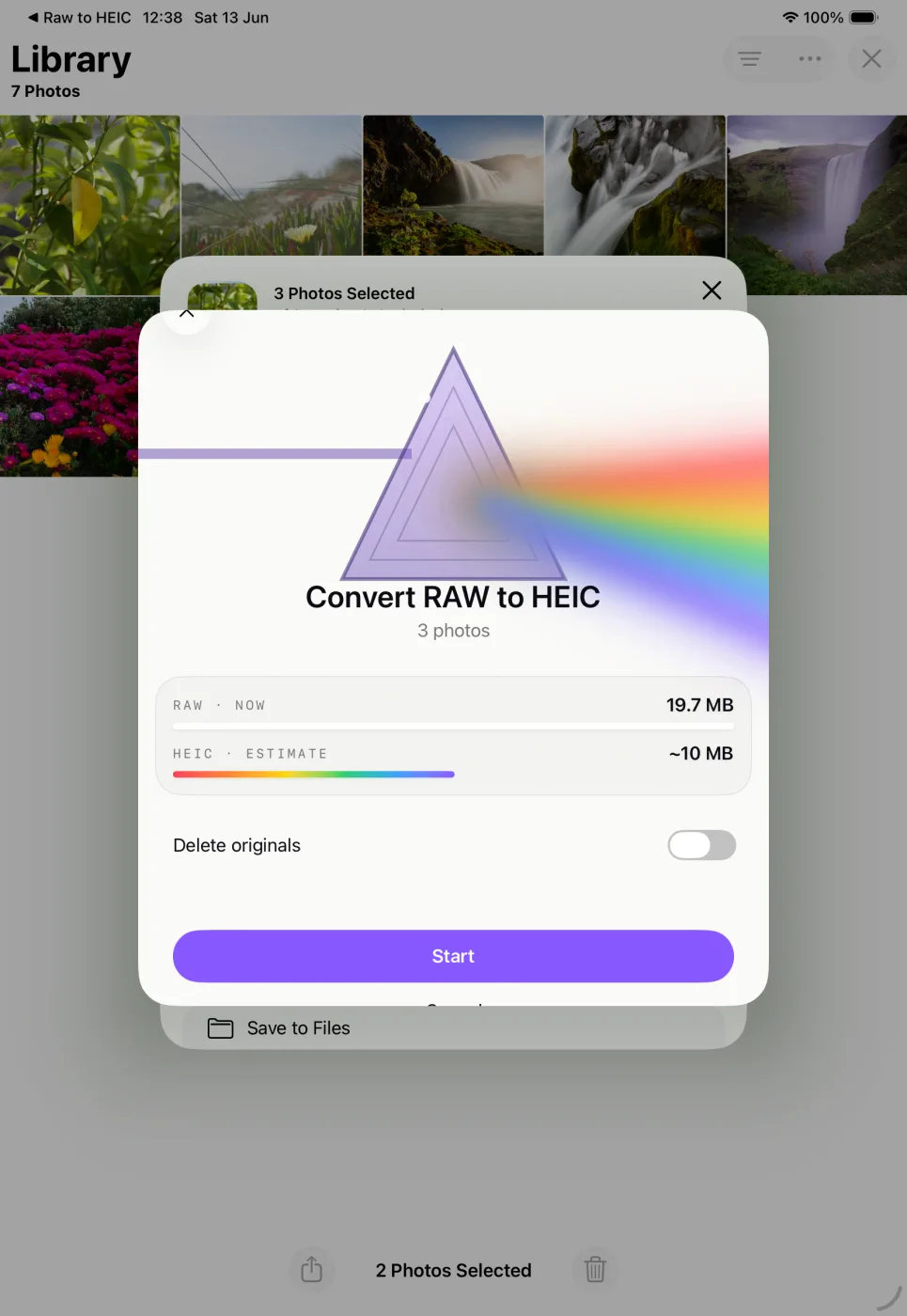
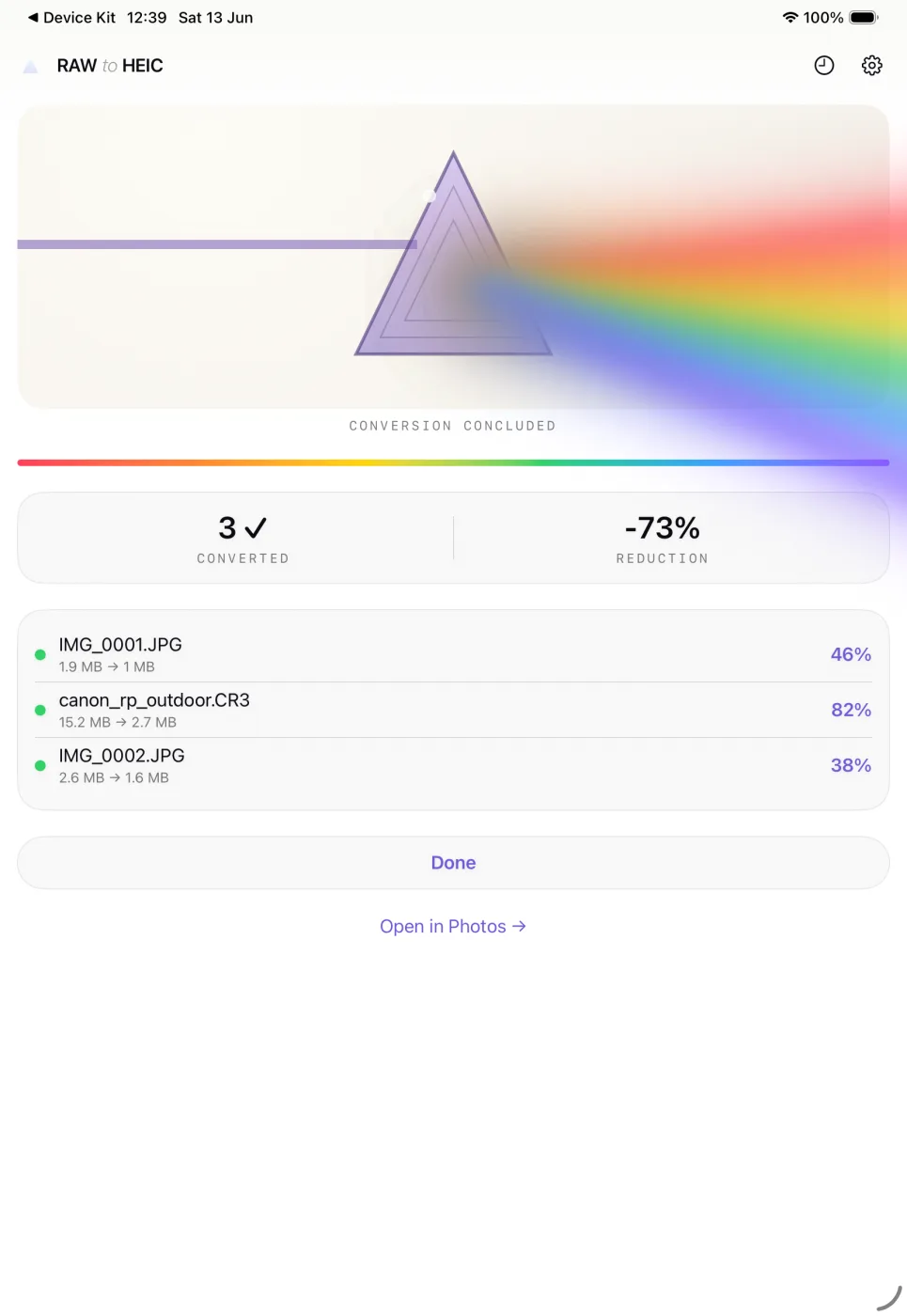
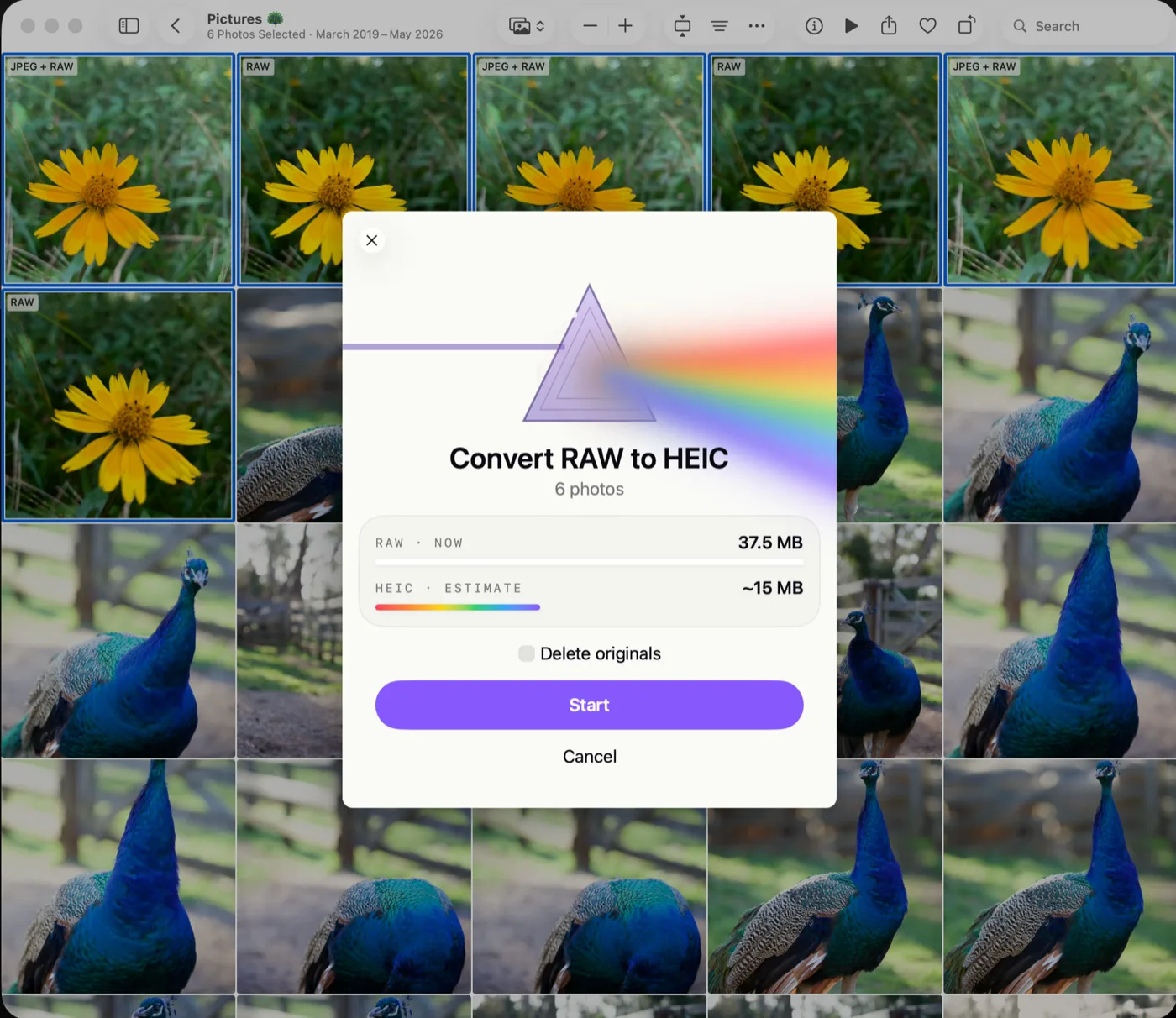
RAW files are valuable while you are editing, but they are expensive to keep forever. A single camera RAW or iPhone ProRAW image can take dramatically more space than an efficient HEIC version, especially across a large library. Once an edit is complete, converting selected keepers can be a practical way to reduce storage pressure without abandoning Photos as your primary library.
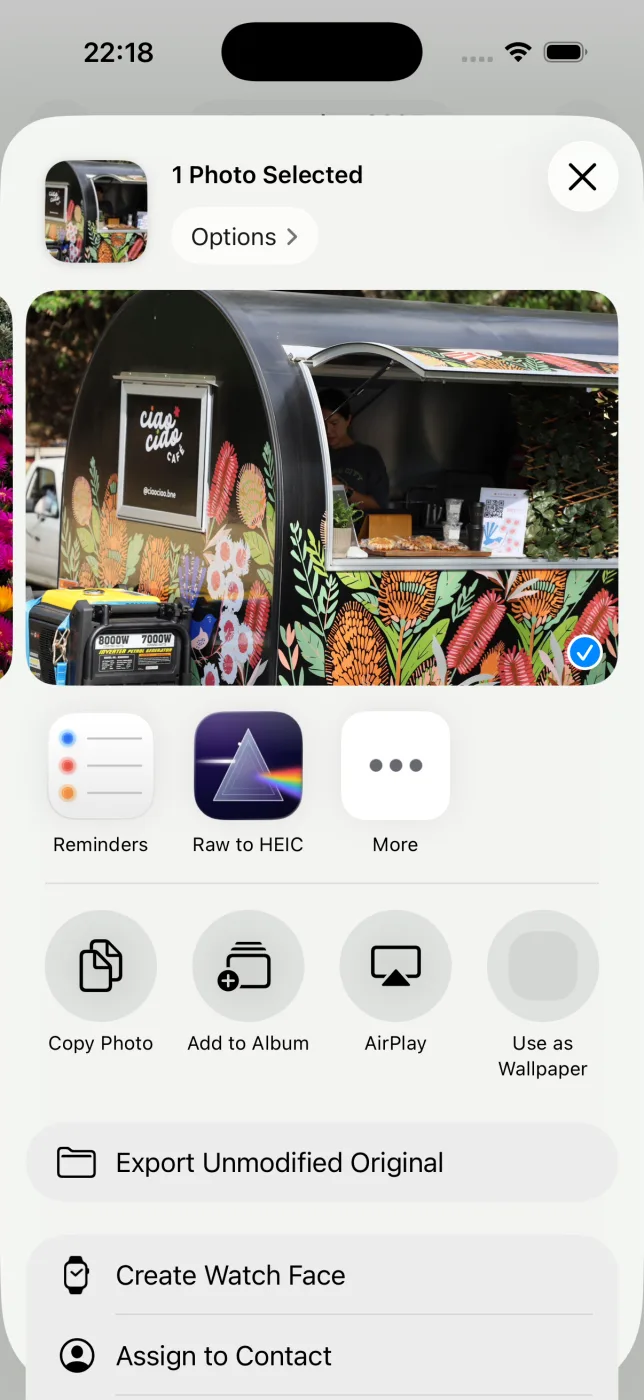
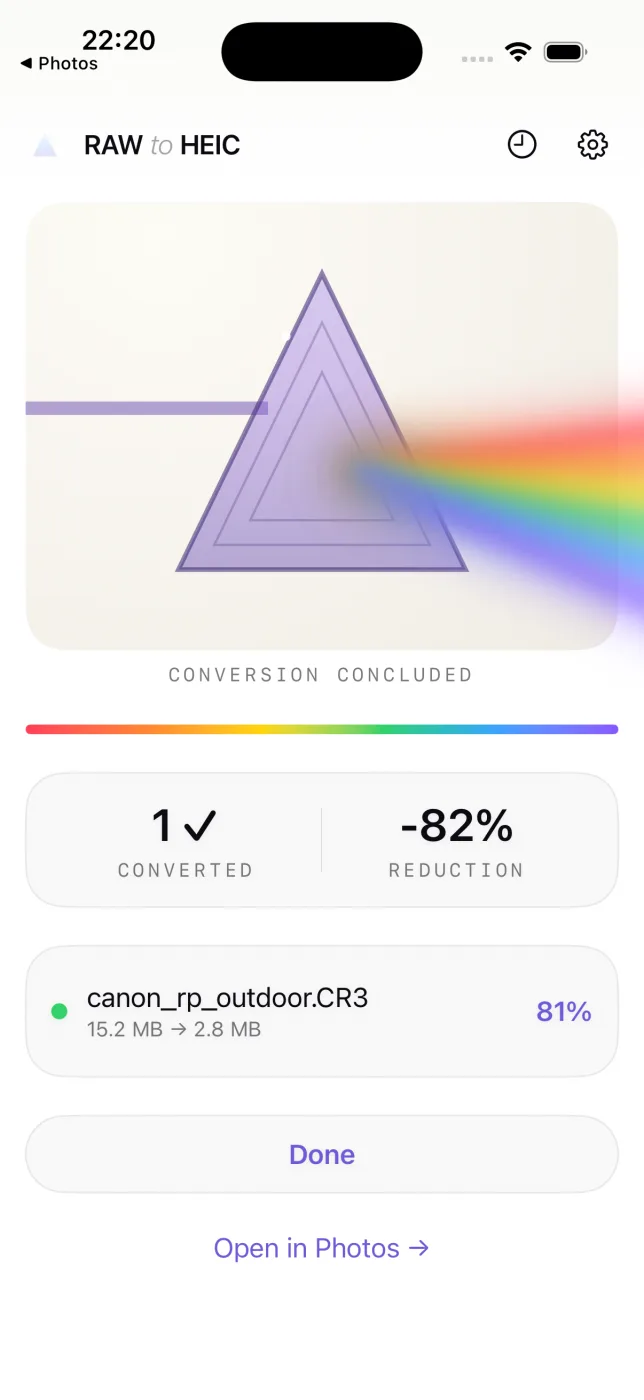
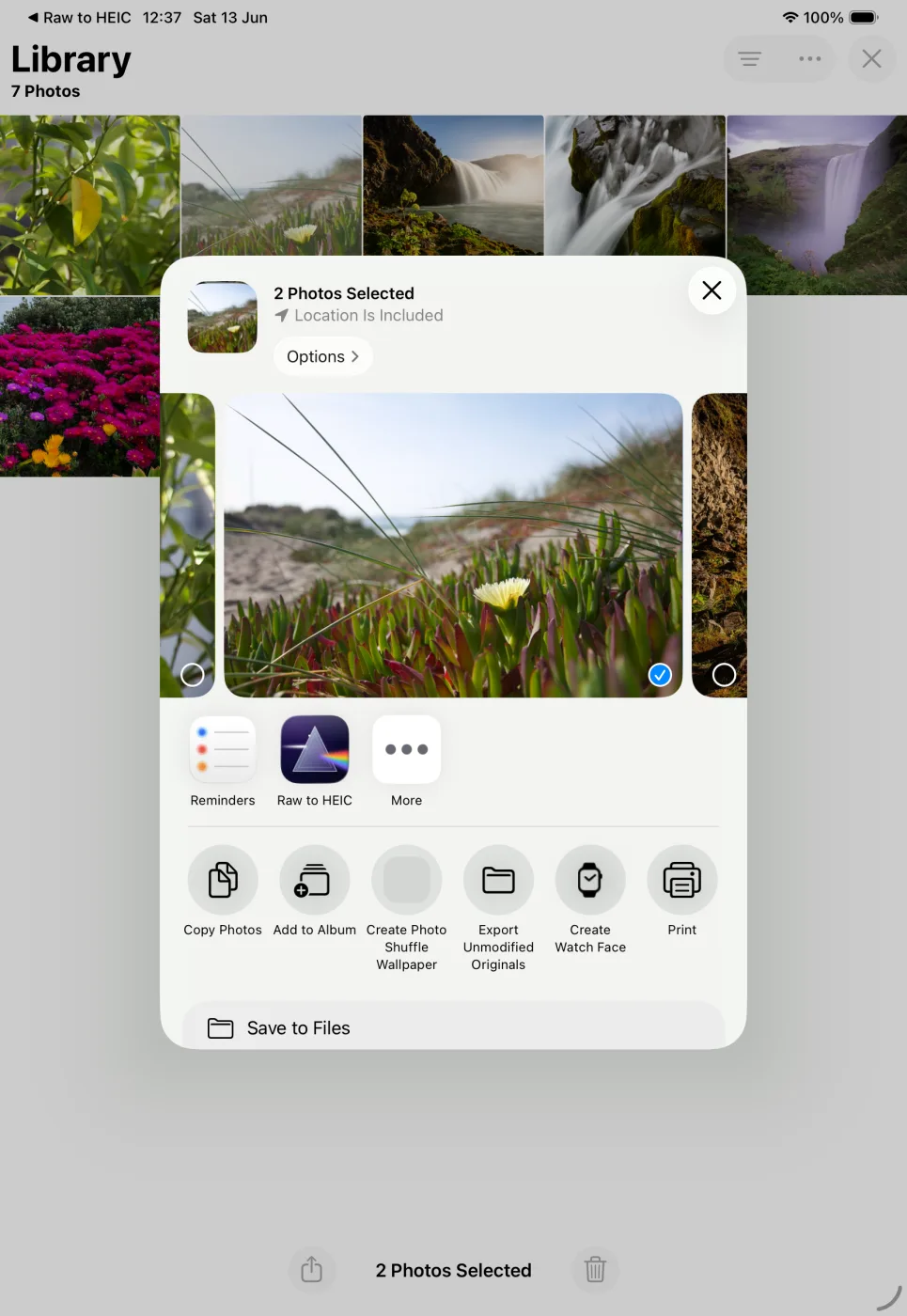
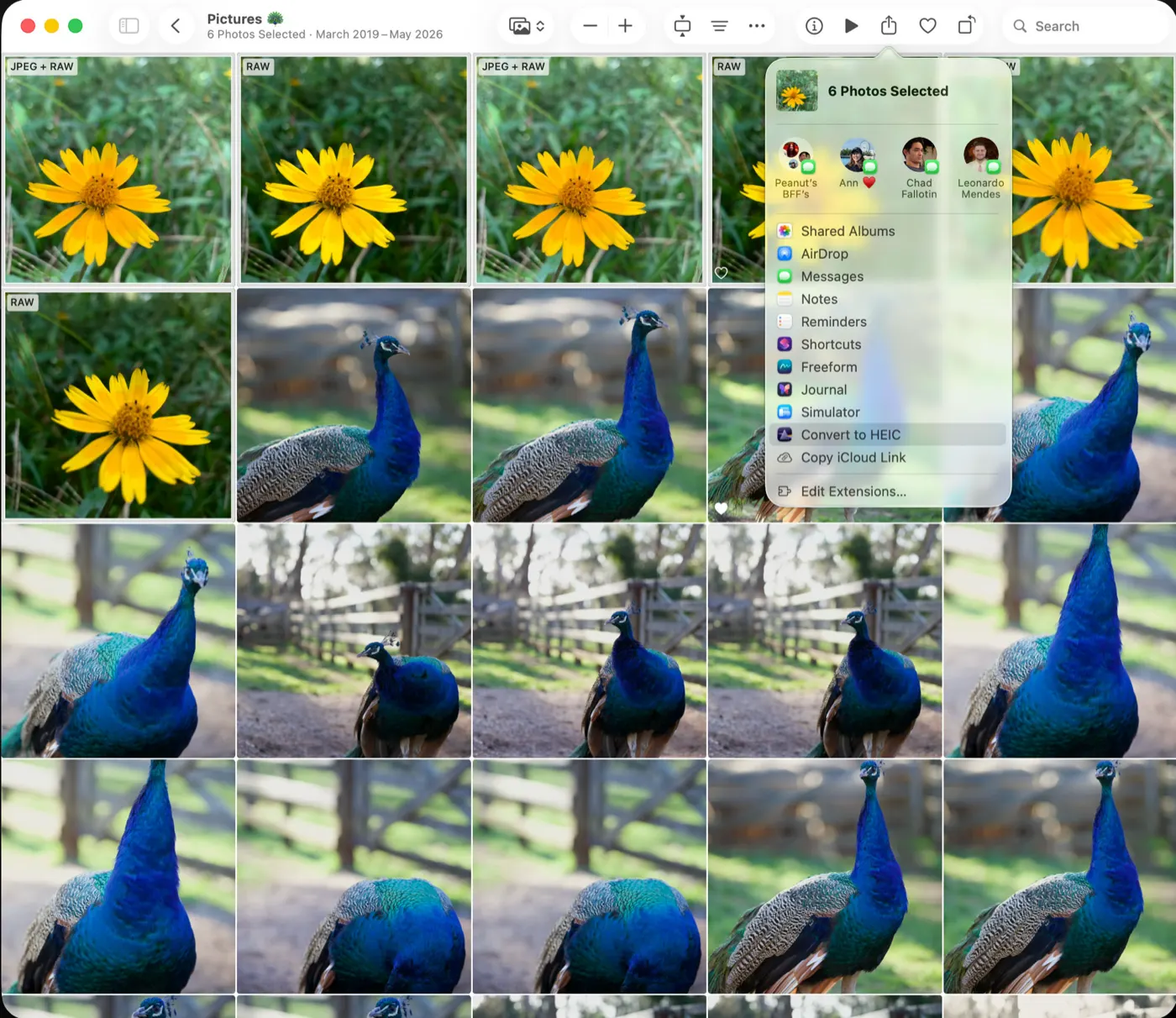
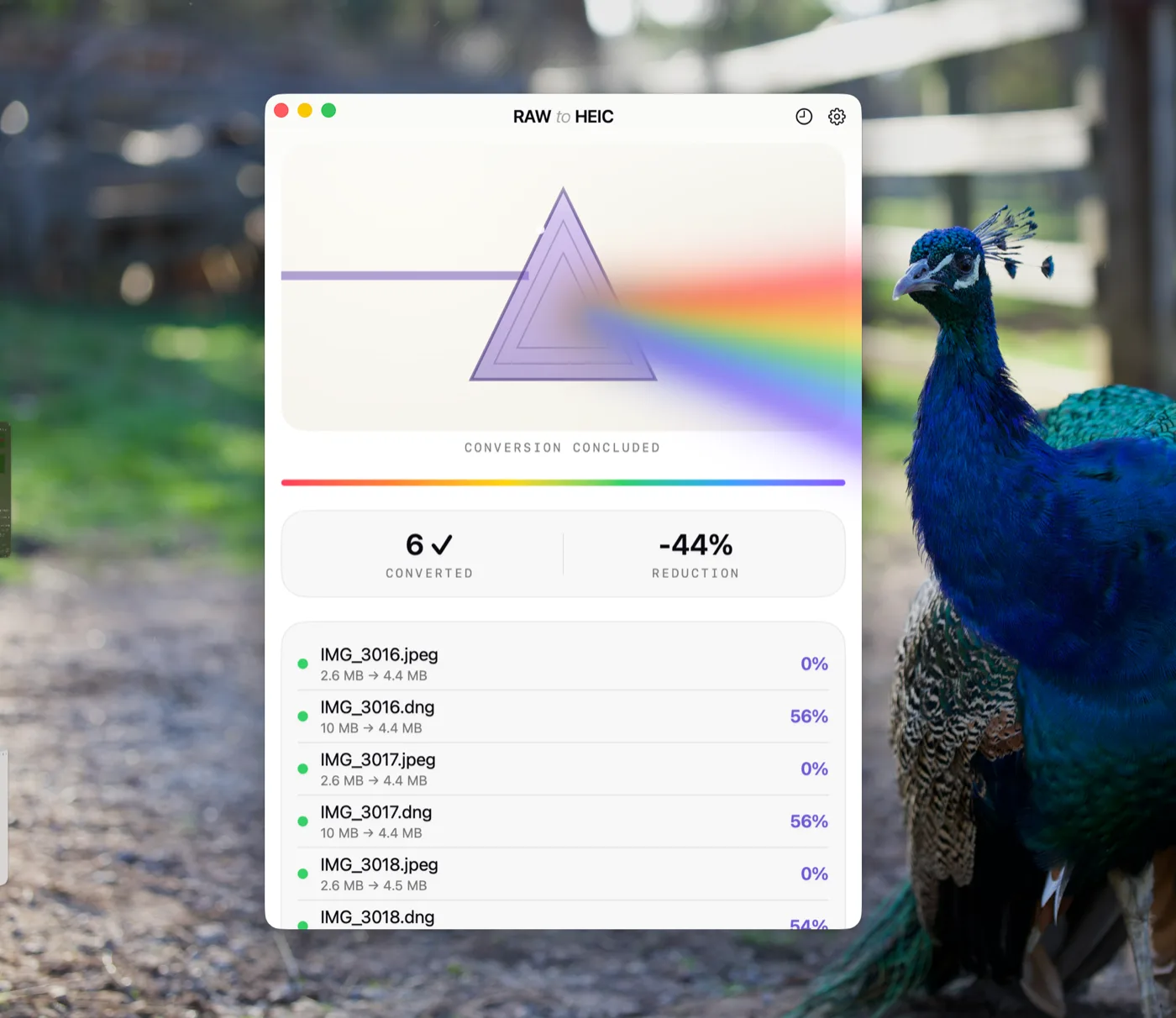
RawToHEIC is built for that exact job. It converts supported camera RAW formats and iPhone ProRAW to HEIC directly inside Photos on iPhone, iPad, and Mac. There is no loose-file workflow to manage, and the process is designed to preserve the organizational context already attached to the photo, including albums, favorites, captions, locations, metadata, and non-destructive edits.
The difference is meaningful. Rather than exporting a RAW image, converting it somewhere else, and trying to rebuild your organization after import, you work where the image already lives. Processing stays on device, with no analytics and no cloud upload requirement. Verified deletion safeguards also help prevent the most stressful conversion mistake: removing the original before confirming the new file exists as expected.
HEIC is not a substitute for every RAW. Keep originals for portfolio work, images you may heavily re-edit, or files with long-term client requirements. For completed personal work and everyday archive photos, HEIC can be up to 10x smaller while remaining high quality and highly compatible across Apple devices.
3. Metapho for Metadata You Can Actually Inspect
Photos displays useful details, but serious photographers often need more control over metadata. Metapho is a practical option for checking and editing fields such as dates, locations, filenames, camera details, and copyright information from an Apple-friendly interface.
This matters when a scan has the wrong capture date, a camera import lost location data, or an image needs a clearer title before it becomes part of a long-term archive. Good metadata makes Photos search more useful and keeps your library understandable years later.
Use metadata editing carefully. Correcting an inaccurate date is helpful. Rewriting capture details to make a library look cleaner can make it less trustworthy. For location data, consider your privacy before sharing images publicly, particularly photos taken at home, school, or regular travel locations.
4. Power Photos for Mac Library Organization
Apple Photos is excellent for day-to-day browsing, but large Mac libraries can benefit from a dedicated organization utility. Power Photos is designed for tasks such as working with multiple Photos libraries, finding duplicates, organizing albums, and moving content between libraries with more control than Photos alone provides.
It is particularly useful if you have a work library, a personal library, and an older archive that you do not want syncing to every device. Separating libraries can reduce noise and make backups easier to plan.
The trade-off is that multiple libraries create another decision point. You need to know which library is your System Photo Library and which one syncs with iCloud Photos. For most people, one well-maintained library is simpler. Power Photos earns its place when your collection is genuinely too large or too divided for a single-library workflow.
5. Clean Up for Small Visual Distractions
On supported Apple Intelligence devices, the Clean Up feature in Photos can remove distracting objects or people from an image. It is useful for a stray sign, background passerby, or small object that pulls attention away from the subject.
Its strength is convenience. You can make a quick correction without exporting to a separate editor or creating a complicated layer-based project. Because Photos edits are non-destructive, you can revert if the result does not hold up.
Still, treat Clean Up as a finishing tool, not a rescue tool. It works best on simple backgrounds and modest distractions. Complex removal around hair, architecture, shadows, or detailed patterns can produce artifacts. Zoom in before you decide an edit is final, especially if you plan to print the photo.
6. Pixelmator Pro for Edits That Need More Control
When a crop and a few sliders are not enough, Pixelmator Pro is a strong Mac companion for deeper image work. It is useful for selective adjustments, repair work, color correction, text, compositing, and more deliberate retouching.
The value is not that every photo needs a professional editor. Most do not. The value is having a capable tool ready for the few images that matter most: a print, a family portrait, a product photo, or a landscape with difficult exposure.
Protect your workflow by deciding where the final version belongs before you begin. If you want Photos to remain the source of truth, keep the finished image organized there and avoid scattering final exports across random Finder folders. A powerful editor is only helpful if it does not create a second, disconnected archive.
7. Image Capture for Direct, Predictable Imports
Image Capture is one of the most overlooked utilities on a Mac. It gives you a direct way to import photos from cameras, memory cards, and connected devices without relying on a vendor app or guessing where files are going.
For photographers who shoot with Canon, Sony, Nikon, Fujifilm, Olympus, or Panasonic cameras, this can be a clean intake point. You can bring files into Photos when that is where they belong, or save them to a temporary folder for review before importing selected keepers.
The key is consistency. Importing some shoots to Photos, some to Downloads, and some to a camera-maker app makes future cleanup harder. Pick an intake process, name any temporary folders clearly, and delete verified leftovers once the photos are safely in your intended library.
How to Choose the Best Apple Photos Utility
Choose utilities by the friction they remove, not by how many features they advertise. If storage is the problem, start with duplicate merging and convert finished RAW photos to HEIC. If the problem is a library that is hard to search, focus on metadata and album structure. If your problem is a small number of images that need careful polish, use a dedicated editor only for those images.
The best setup is usually small: Photos as the library, one tool for the job Photos does not handle well, and a workflow that keeps your images organized from capture through archive. Before making a large change, test the process on a small album. Confirm that edits, captions, favorites, locations, and sync behavior look right on every Apple device you use.
Your library should get lighter and easier to trust over time, not more complicated. Start with the utility that removes your most expensive point of friction, then keep the rest of your workflow pleasantly boring.
Shrink your RAW library, right inside Photos.
RawToHEIC converts camera RAW and iPhone ProRAW to HEIC up to 10× smaller — keeping every edit, album, favorite, and location. On-device, no account, one purchase for iPhone, iPad, and Mac.
Not sure yet? Convert a few sample photos free — no install, nothing uploaded.
Try it free — no install →