
Raw to HEIC Mac: The Cleanest Workflow

A Mac photo library can get expensive fast when it fills up with RAW files. If you shoot on an iPhone Pro, Sony, Canon, Nikon, Fujifilm, Olympus, or Panasonic camera and keep everything in Photos, the challenge is familiar: you want the flexibility of RAW while editing, but once those shots are finished, raw to heic mac becomes a storage problem as much as a format question.
The usual answer sounds simple until you actually do it. Export the image, convert it in another app, re-import it, then clean up the old file. That workflow breaks the part Apple users care about most – the library itself. Albums can get messy. Favorites may not carry over the way you expect. Captions, locations, and edits can become one more thing to double-check. Even when the conversion works, the process feels like stepping outside Photos just to come back in again.
Why raw to heic on Mac makes sense
HEIC is a practical format for finished photos inside the Apple ecosystem. It is dramatically smaller than RAW, it works naturally across Apple devices, and it preserves high visual quality for day-to-day viewing, sharing, and long-term library management. If your editing decisions are already made, keeping every image in RAW often stops being useful and starts becoming expensive.
That trade-off matters most when your library lives in iCloud Photos. Large RAW collections put pressure on both local storage and cloud storage, which can push users into bigger plans and fuller drives. For many people, the goal is not to stop shooting RAW. It is to keep shooting RAW when capture latitude matters, then convert selected images when they are done.
That is the real use case for raw to heic mac. Not replacing your camera workflow from the start, but giving finished photos a lighter format without tearing apart the organization you already built.
The problem with export-based conversion
Most RAW conversion tools were not designed around Apple Photos as the source of truth. They are file tools first. That sounds fine until your library is doing a lot more than storing pixels.
Photos tracks albums, favorites, keywords, captions, dates, locations, and edits. Your library may also include memories, shared access across devices, and iCloud sync behavior you do not want to disrupt. The moment a conversion requires loose files on the desktop or in Finder folders, you are now managing copies instead of just managing photos.
This is where many Mac users hit friction. You save space, but you create cleanup work. You convert a file, but you lose confidence in whether everything important stayed attached. You remove the RAW, but you wonder if you deleted the right original. None of that feels native, and none of it feels safe at scale.
There is also a quality question. Some conversion paths flatten more than you want, or they strip away details that matter later. Others preserve quality but add enough manual handling that the process becomes something you keep postponing.
What a better raw to heic Mac workflow should do
A better workflow stays inside Photos. That is the standard that matters.
If you are converting raw to heic on Mac, the ideal process should preserve the context of the photo, not just the image itself. That means the converted result should remain part of the same library life you already built around it. Albums should still make sense. Favorites should not need repair. Captions, dates, and metadata should remain intact. If you made non-destructive edits in Photos, those should not become collateral damage.
It should also be private by default. Photo libraries are personal. For many users, sending files through a cloud service or a web converter is not acceptable, especially for family archives, client previews, or location-tagged images. On-device processing is not a nice extra here. It is the requirement.
And finally, it should be safe. Deleting RAW files after conversion is where hesitation sets in. A good workflow should verify that the HEIC replacement is actually in place before asking you to remove the original. If that check is missing, the whole storage-saving promise feels risky.
Raw to HEIC Mac inside Photos
This is why a Photos-native utility makes more sense than a generic converter. Instead of treating your library like a pile of files to export, it works with the way Apple users already manage images.
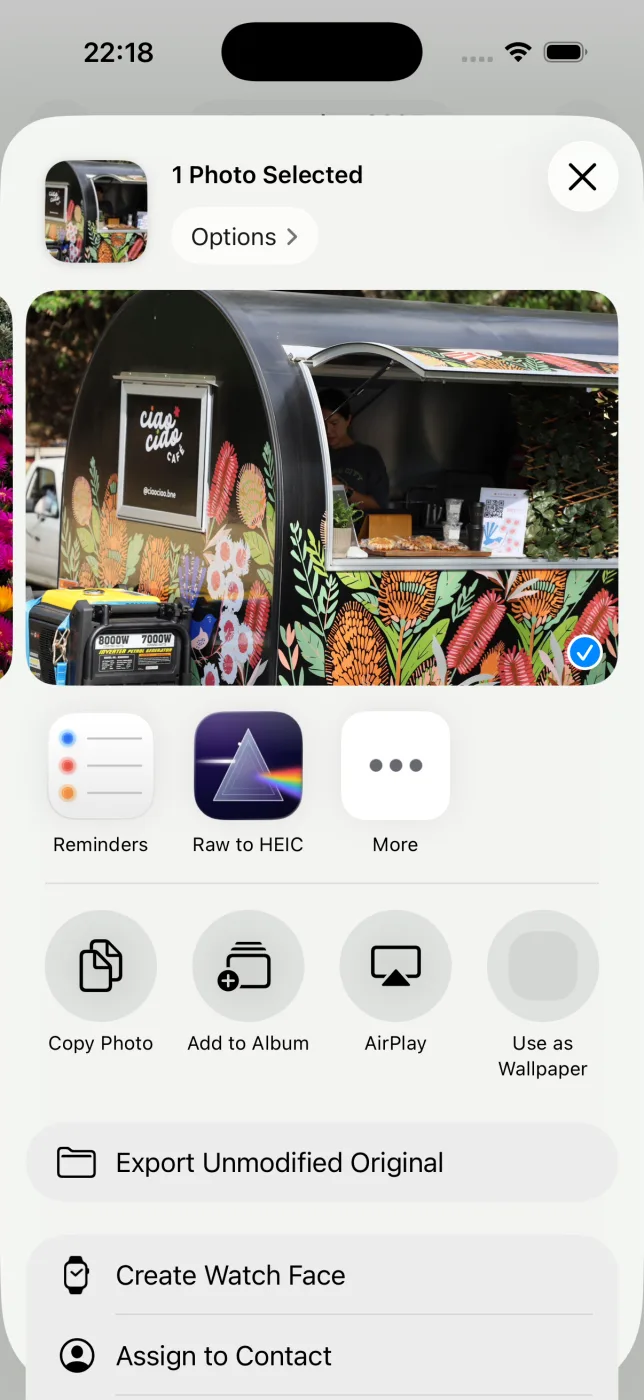
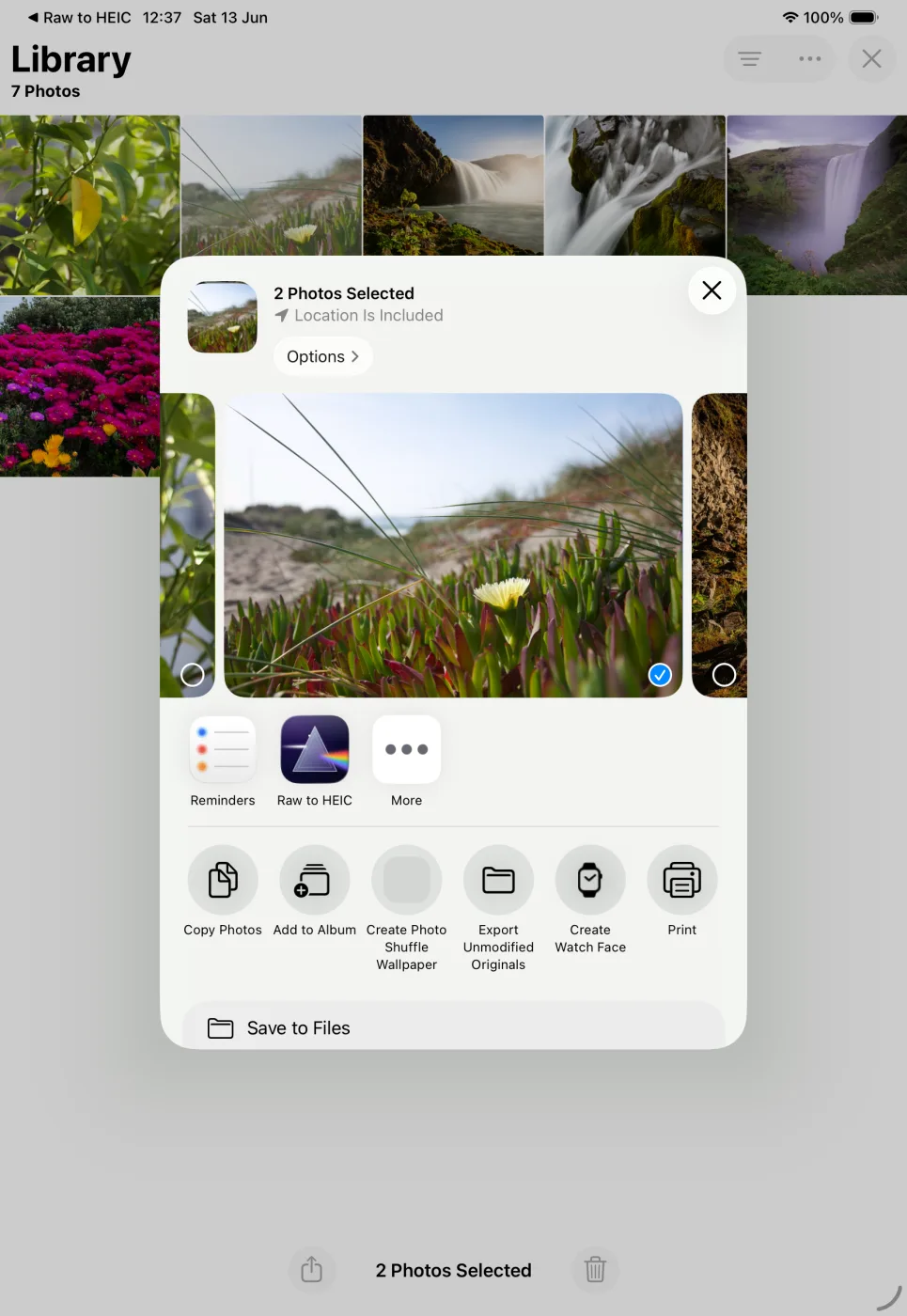
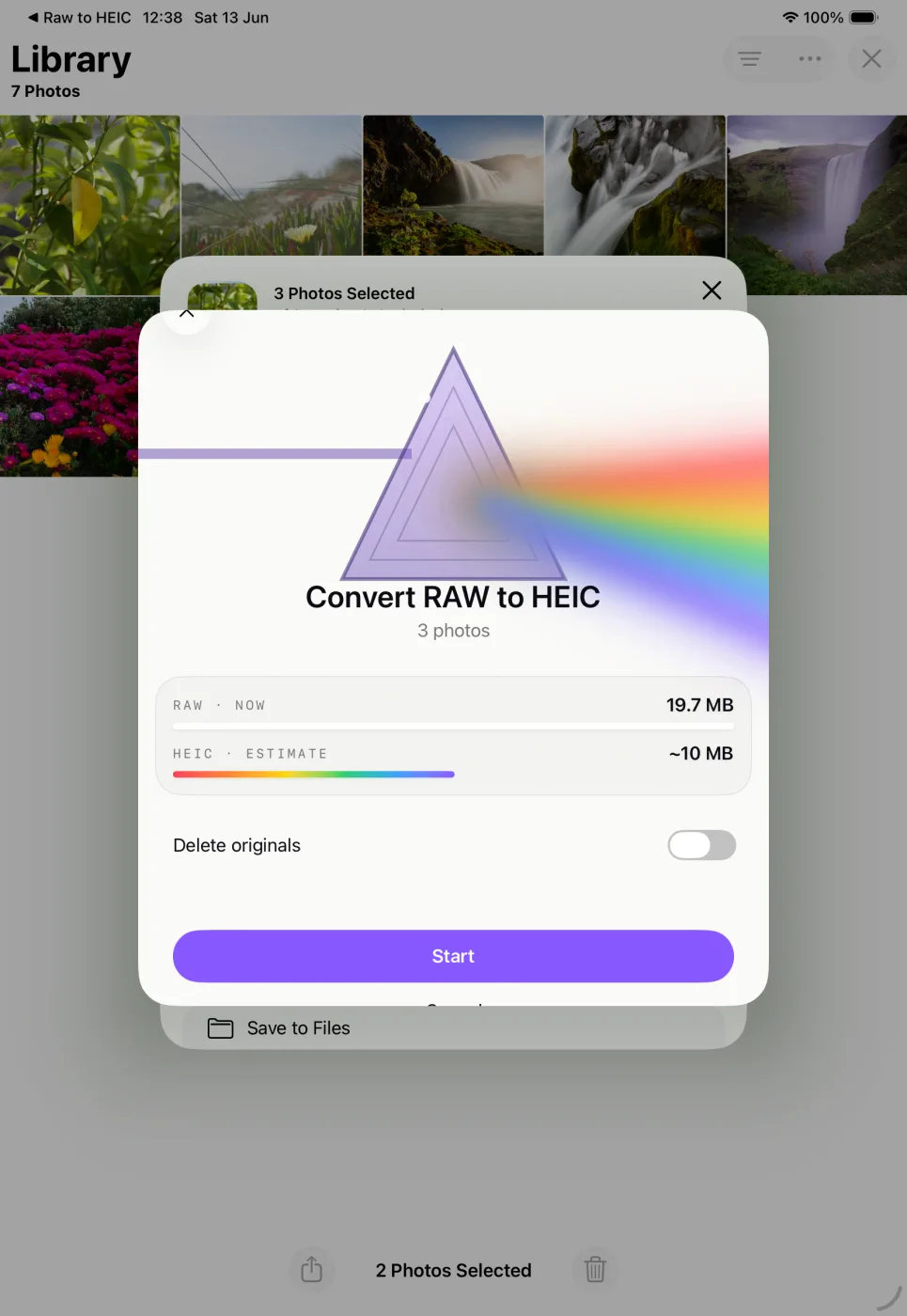
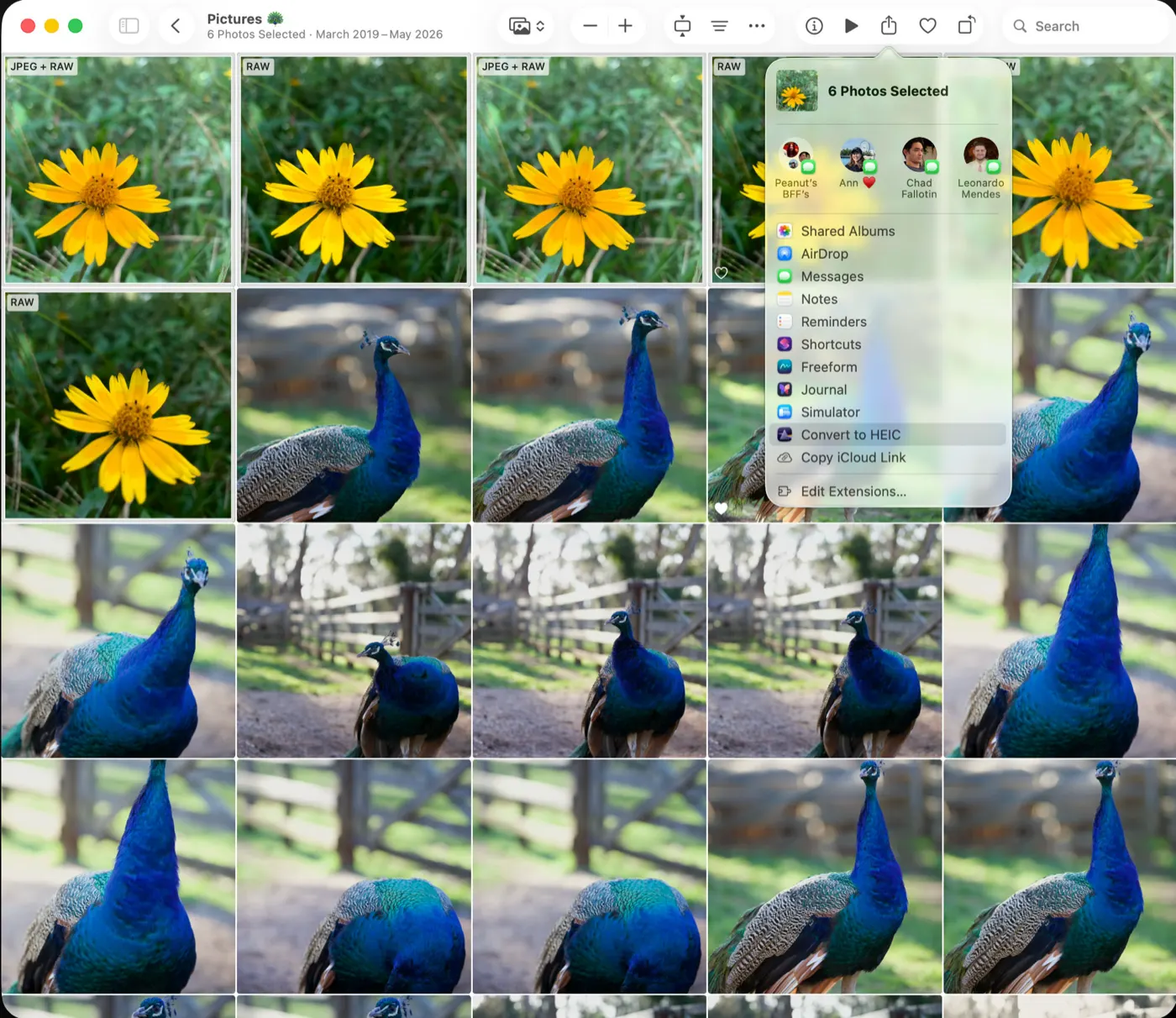
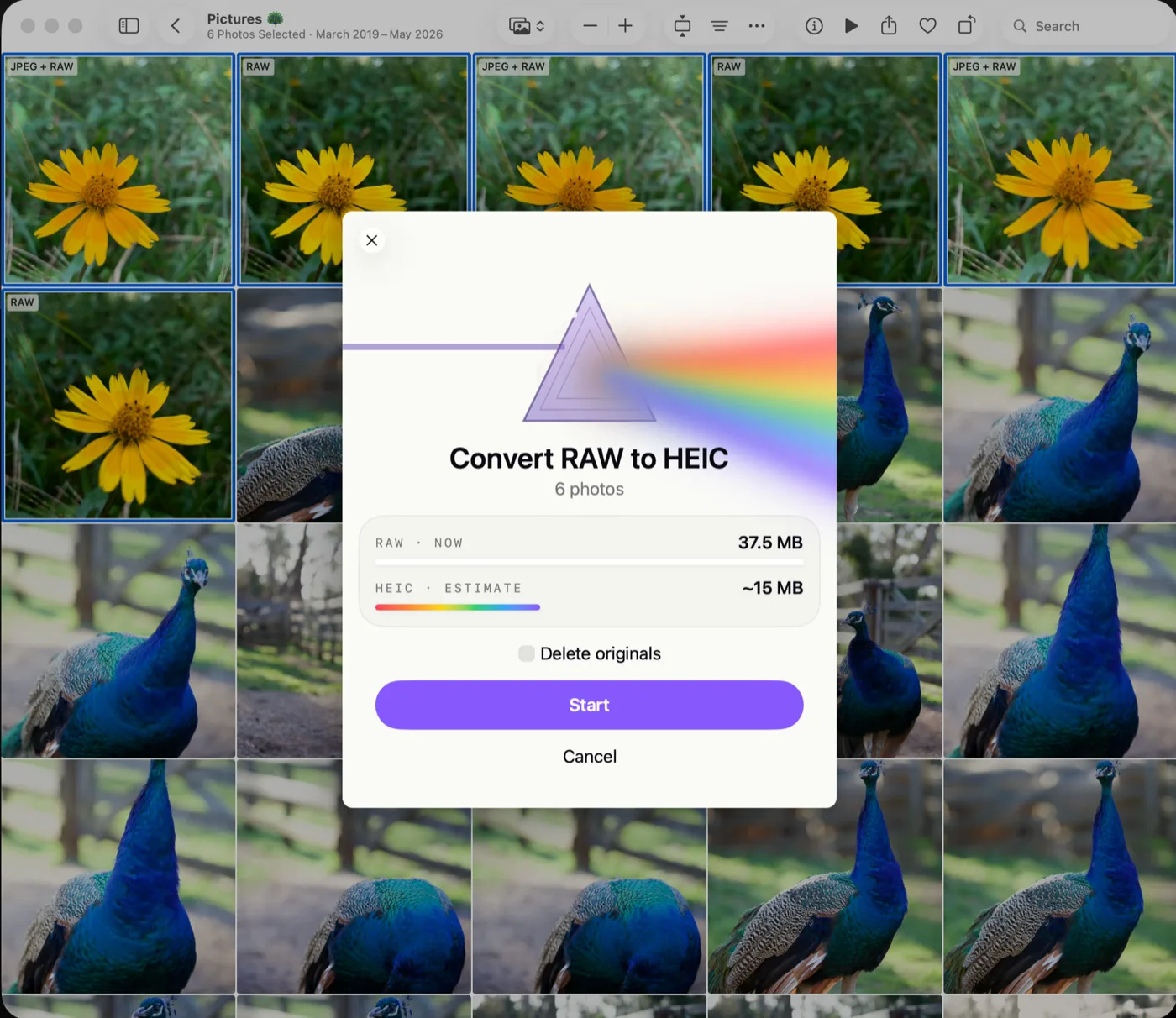
On Mac, that means selecting RAW photos in Photos, converting them on device, and keeping the result in the same environment where the images already live. No desktop export folder. No round-trip through another asset manager. No guessing which copy is current.
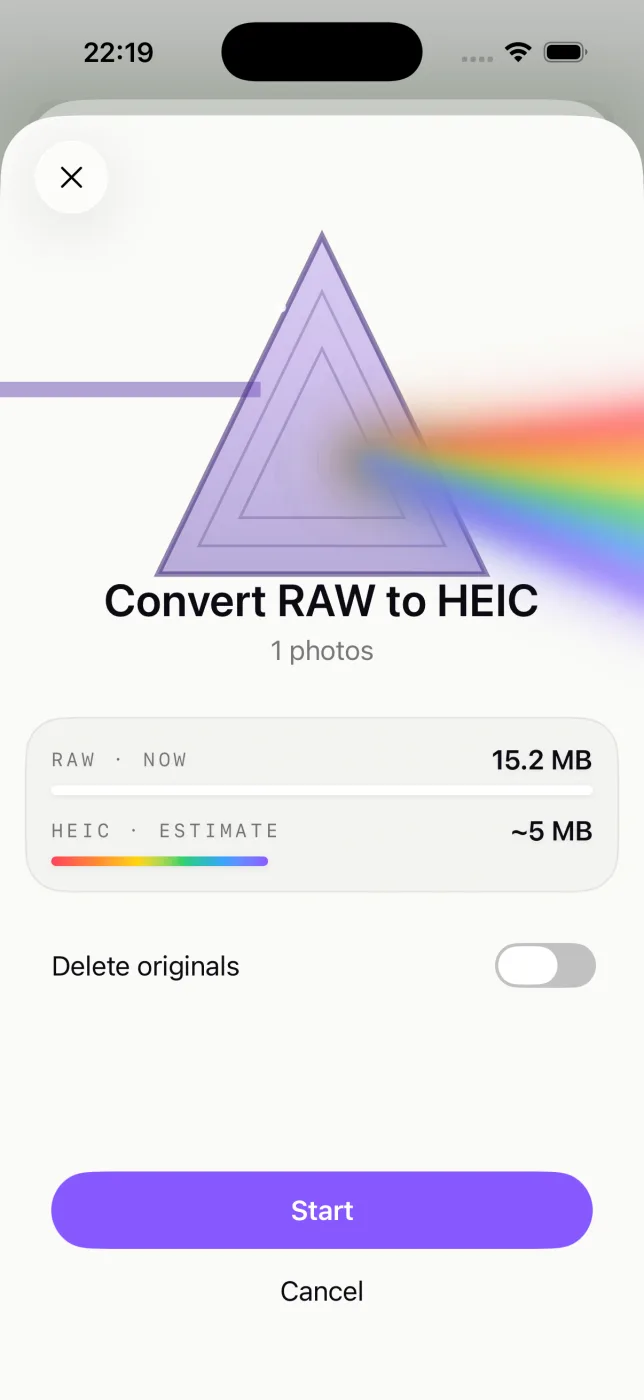
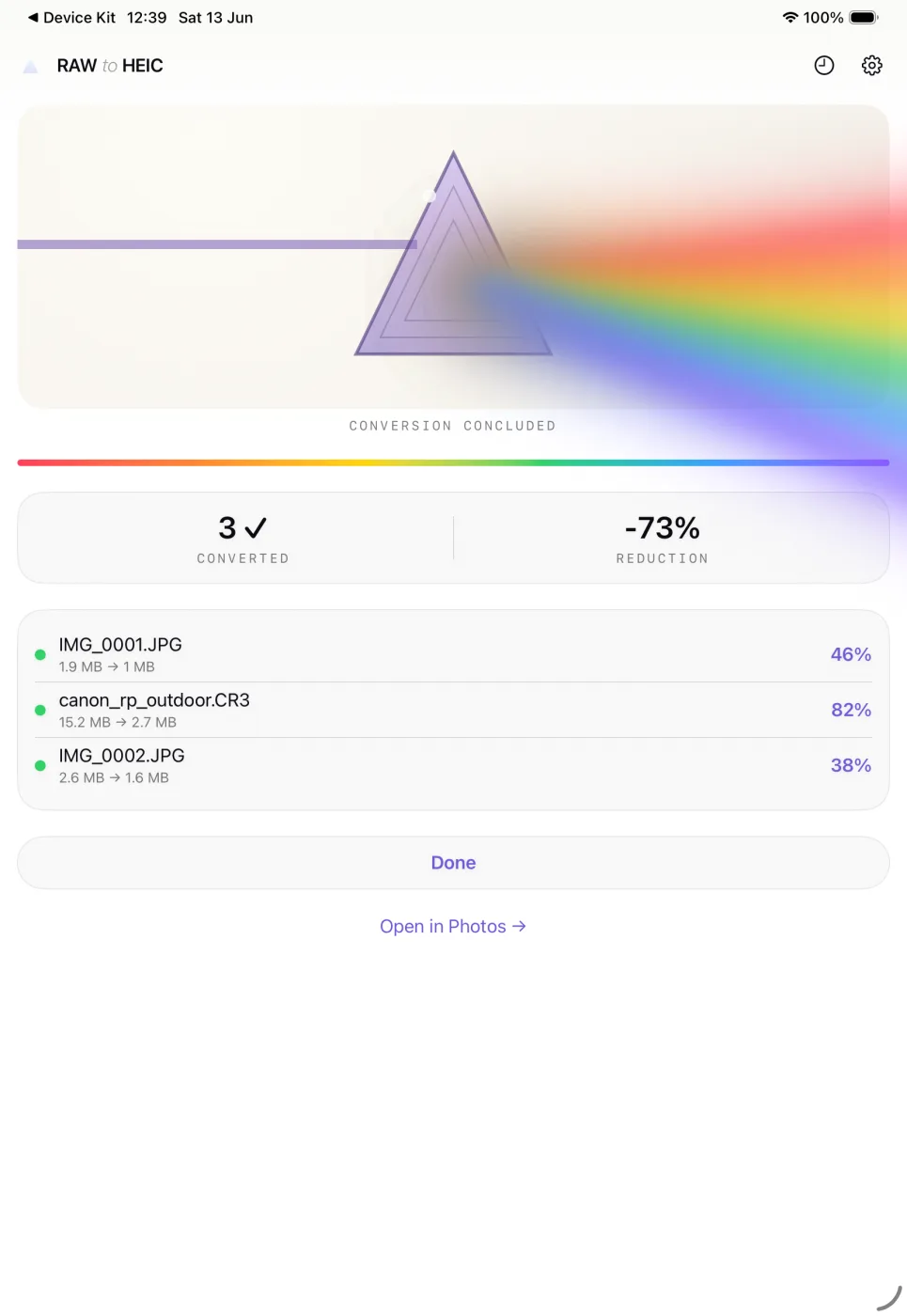
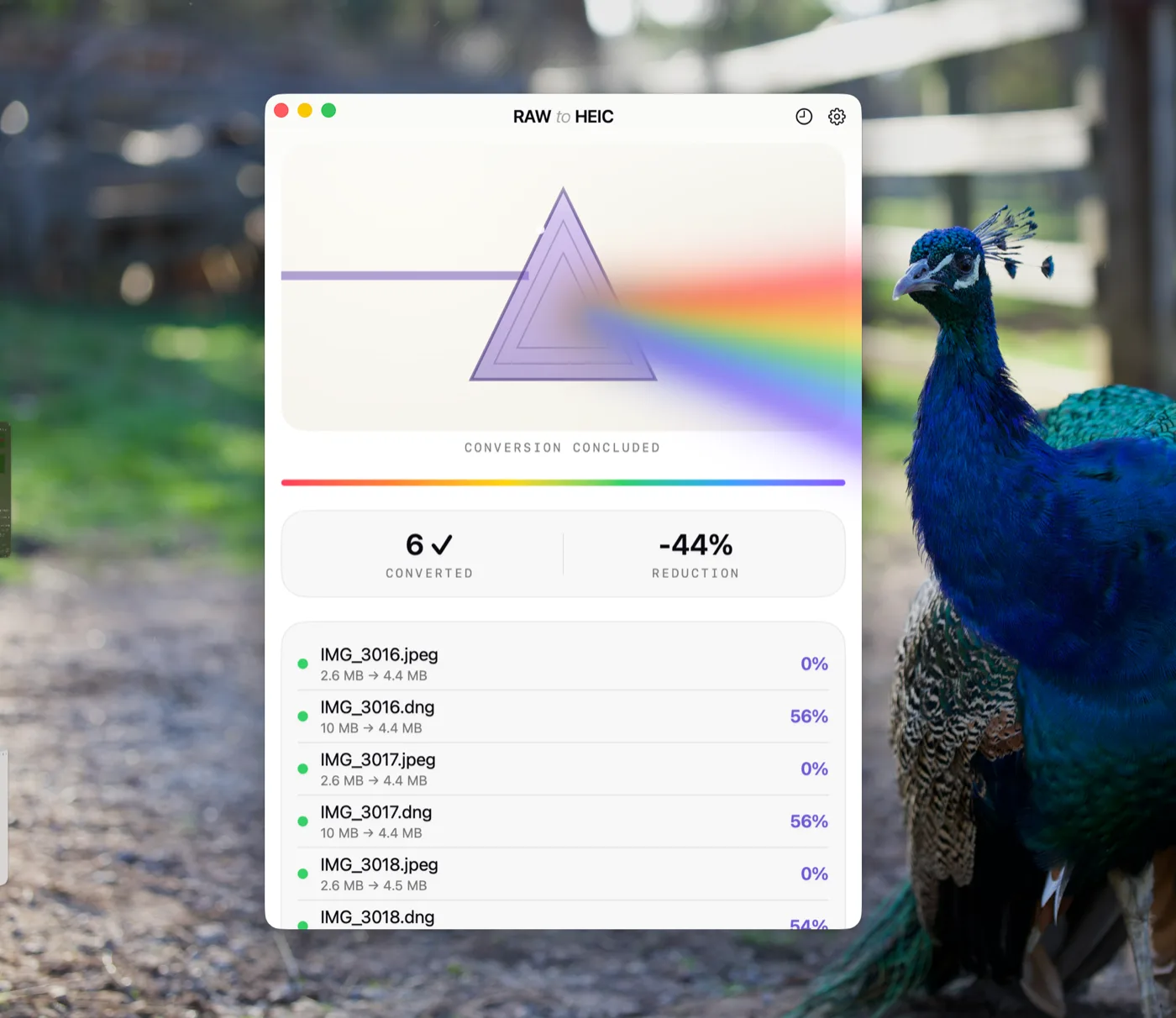
That is the core advantage of RawToHEIC. It is built for Apple Photos specifically, not adapted to it as an afterthought. The app converts supported RAW formats, including iPhone ProRAW and major camera RAW files, directly within the Photos workflow. The point is simple: save space without breaking the library.
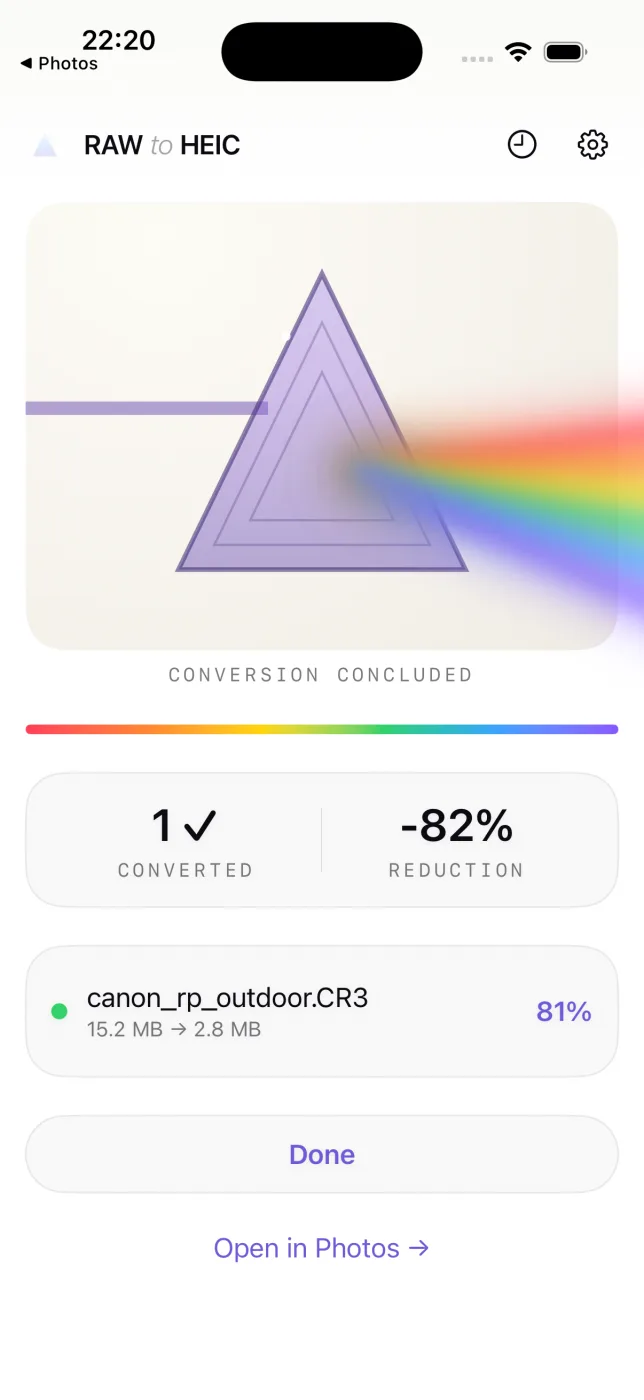
For users with large libraries, the storage impact is immediate. HEIC files can be up to 10 times smaller than RAW, depending on the source file and image content. That does not mean every photo should be converted. If you are still actively grading an image, delivering it for print-critical work, or relying on the extra latitude of RAW, keeping the original can still be the right move. But once a photo is done, keeping it as RAW often adds more cost than value.
What you keep when you convert
This is where the workflow either earns trust or loses it.
A proper raw to heic mac process should preserve the work around the photo, not only the photo itself. In practice, that means your existing organization remains usable. Albums still matter. Metadata still matters. Captions and locations still matter. If you have spent years building a Photos library that feels organized and searchable, conversion should reduce file size, not reset your system.
For Apple users, HDR support can also matter. Some modern photos, especially from iPhone workflows, benefit from preserving that visual range rather than collapsing everything into a flatter result. If your converter ignores that detail, the finished image can feel like a downgrade. The right tool respects the format expectations Apple users already have.
There is also the issue of edits. Many people shoot RAW, make their adjustments in Photos, then want a smaller final format without losing the editing state they already settled on. If a tool forces you into a new copy with uncertain behavior around those edits, it creates more questions than it solves.
Who should convert and who should not
Not every photo belongs in HEIC, and that is worth saying clearly.
If you regularly revisit white balance, recover difficult highlights, or produce alternate edits from the same source file, RAW is still the better archive format. If your work involves high-end retouching outside Photos or future-proofing for commercial reuse, keeping RAW files may be the smarter call.
But many Apple users are not trying to build a deep archival pipeline for every frame they shoot. They want to capture in RAW when conditions are tricky, edit the keepers, and then make their library practical again. Family photos, travel shots, hobby photography, and even a lot of prosumer work fall into that category. Once the image is approved and living happily in Photos, HEIC often becomes the better long-term format for that specific use.
The key is selective conversion. Keep RAW where flexibility still matters. Convert where the photo is finished and storage savings matter more.
The Mac advantage
Mac is a strong place to handle this because Photos already sits at the center of many Apple workflows. The same library often syncs across iPhone, iPad, and Mac, which means every oversized RAW file has ripple effects across your devices and your iCloud plan.
Converting on Mac is also just more comfortable for batch decisions. You can review larger sets, check edits, confirm that photos are truly done, and process them in a calmer environment than on a phone. For people with years of imported camera RAW files mixed with ProRAW images, that matters.
The best part is what does not happen. No loose-file workflow. No web upload. No subscription required just to maintain access to a utility function. No analytics-driven account layer sitting between you and your photo library. That kind of restraint is part of what makes a Mac-native, privacy-first workflow feel trustworthy.
If your Photos library is heavy with finished RAW images, raw to heic mac is less about conversion for its own sake and more about getting your library back under control without giving anything up that made it useful in the first place. The smart move is not always to keep every original forever. Sometimes it is to keep the photo, the edit, the organization, and the space you were wasting.
Shrink your RAW library, right inside Photos.
RawToHEIC converts camera RAW and iPhone ProRAW to HEIC up to 10× smaller — keeping every edit, album, favorite, and location. On-device, no account, one purchase for iPhone, iPad, and Mac.
Not sure yet? Convert a few sample photos free — no install, nothing uploaded.
Try it free — no install →