
Apple Photos versus Lightroom: Which Fits You?

If your photo library lives on an iPhone, iPad, or Mac, Apple Photos versus Lightroom is not a small software preference. It changes how you import, edit, store, search, and revisit years of images. For Apple users who care about RAW quality but do not want a loose-file workflow, the better choice often comes down to one question: do you want a powerful editing system first, or a native library that stays simple every day?
Apple Photos versus Lightroom at a glance
Apple Photos is the better fit for people who want their library to feel built into the device they already use. It is tightly integrated with iCloud, works naturally across Apple hardware, and keeps albums, people, places, favorites, captions, and edits in one familiar place. For many iPhone Pro users and hobbyist photographers, that matters more than having the deepest possible editing controls.
Lightroom is stronger when editing is the center of the workflow. Its RAW tools are more advanced, its masking and color controls go further, and it gives photographers more room to shape an image with precision. If you regularly work with large shoots, custom presets, selective adjustments, or a professional editing pipeline, Lightroom still earns its reputation.
That said, the gap is not just about features. It is about friction. Apple Photos asks less from you. Lightroom asks more, but rewards that effort with more control.
Where Apple Photos wins
Apple Photos is underrated because it does not feel like “pro” software. That is exactly why many people use it more consistently.
The first advantage is library management without overhead. Your photos are already there. On Apple devices, Photos is the default destination for iPhone shots, screenshots, shared images, and imported camera files. Search is fast. Faces, locations, dates, and objects are easy to find. If your goal is to keep your photo life organized without maintaining folders, catalogs, and export variations, Photos stays out of the way.
The second advantage is ecosystem fit. Photos works the way Apple users expect apps to work. It syncs across devices. It respects system-level privacy standards. It supports familiar sharing and album behavior. When you favorite an image, add a caption, or build albums around a trip, that organization becomes part of the library rather than a sidecar workflow.
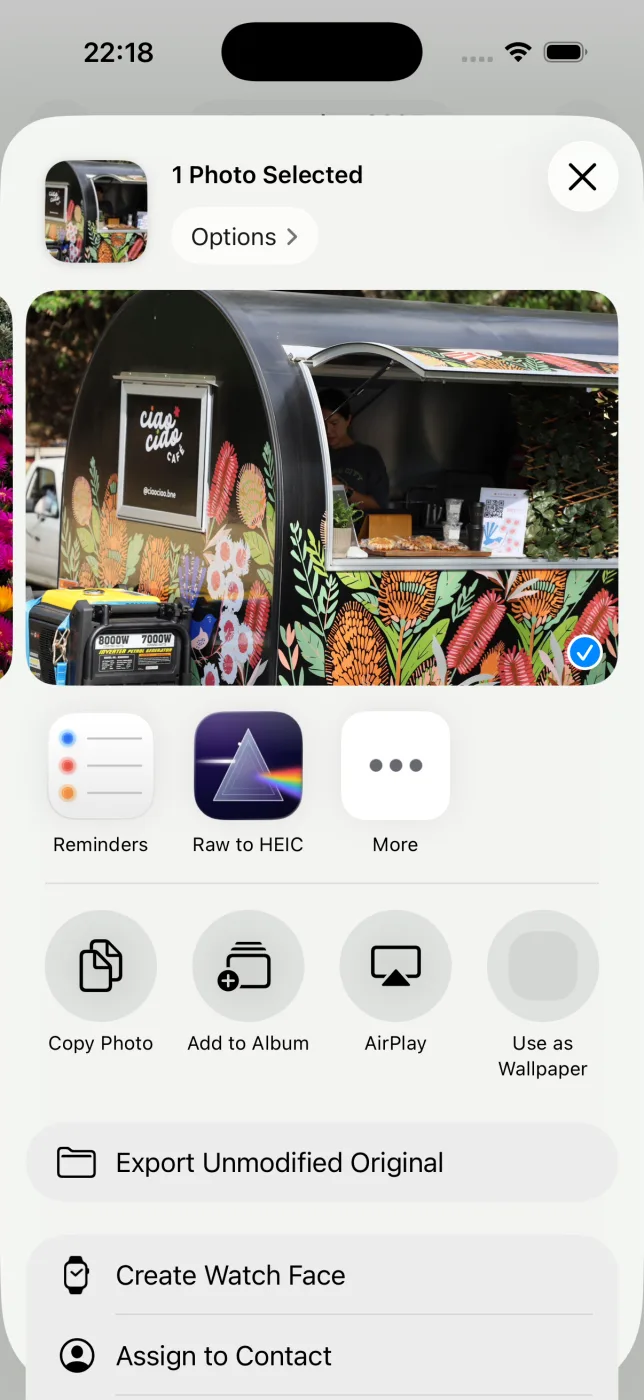
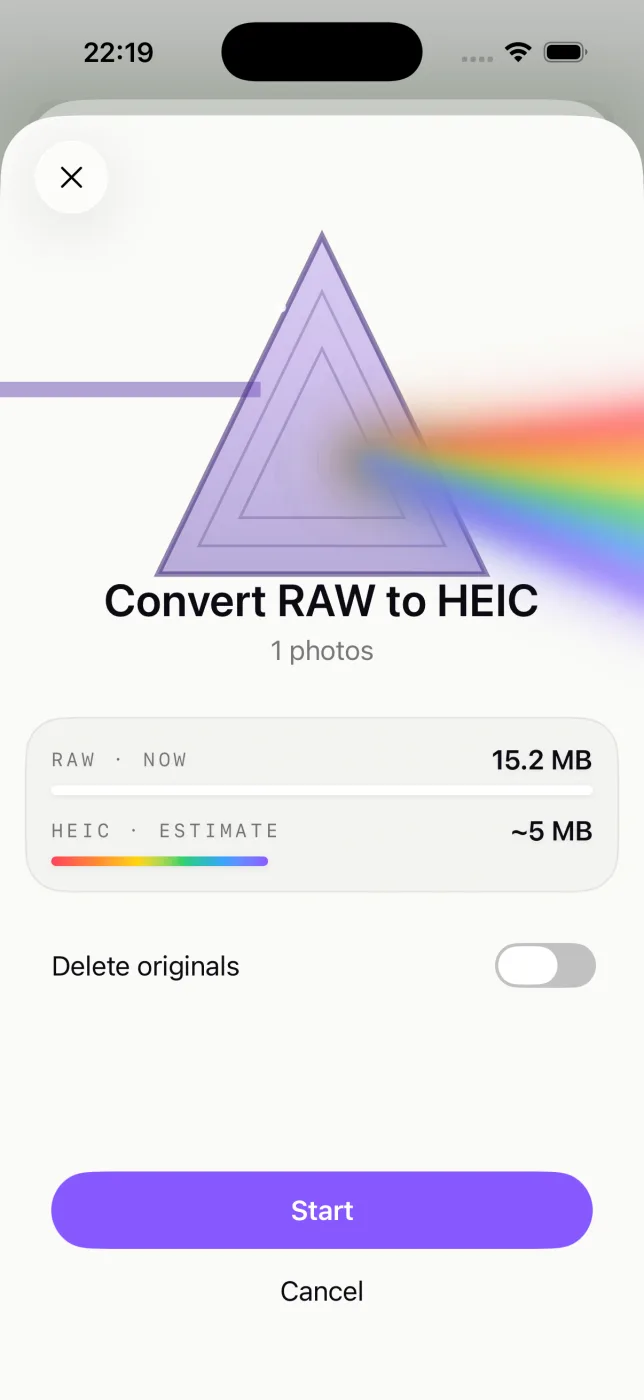
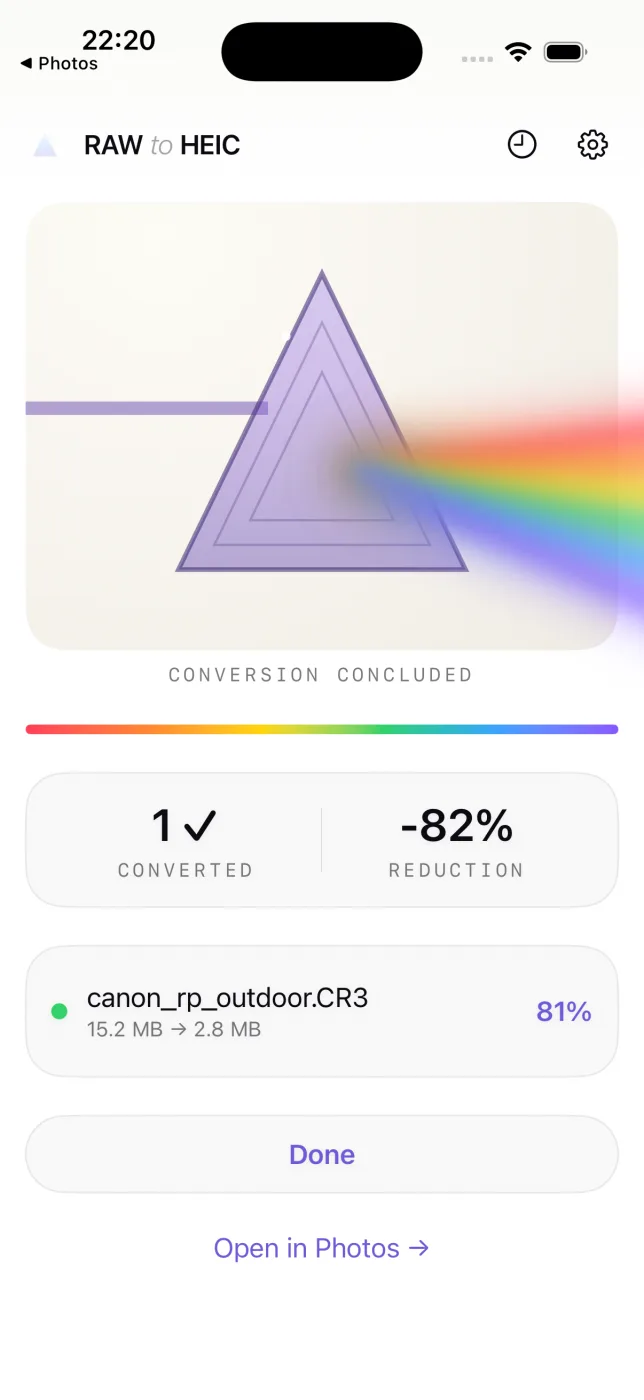
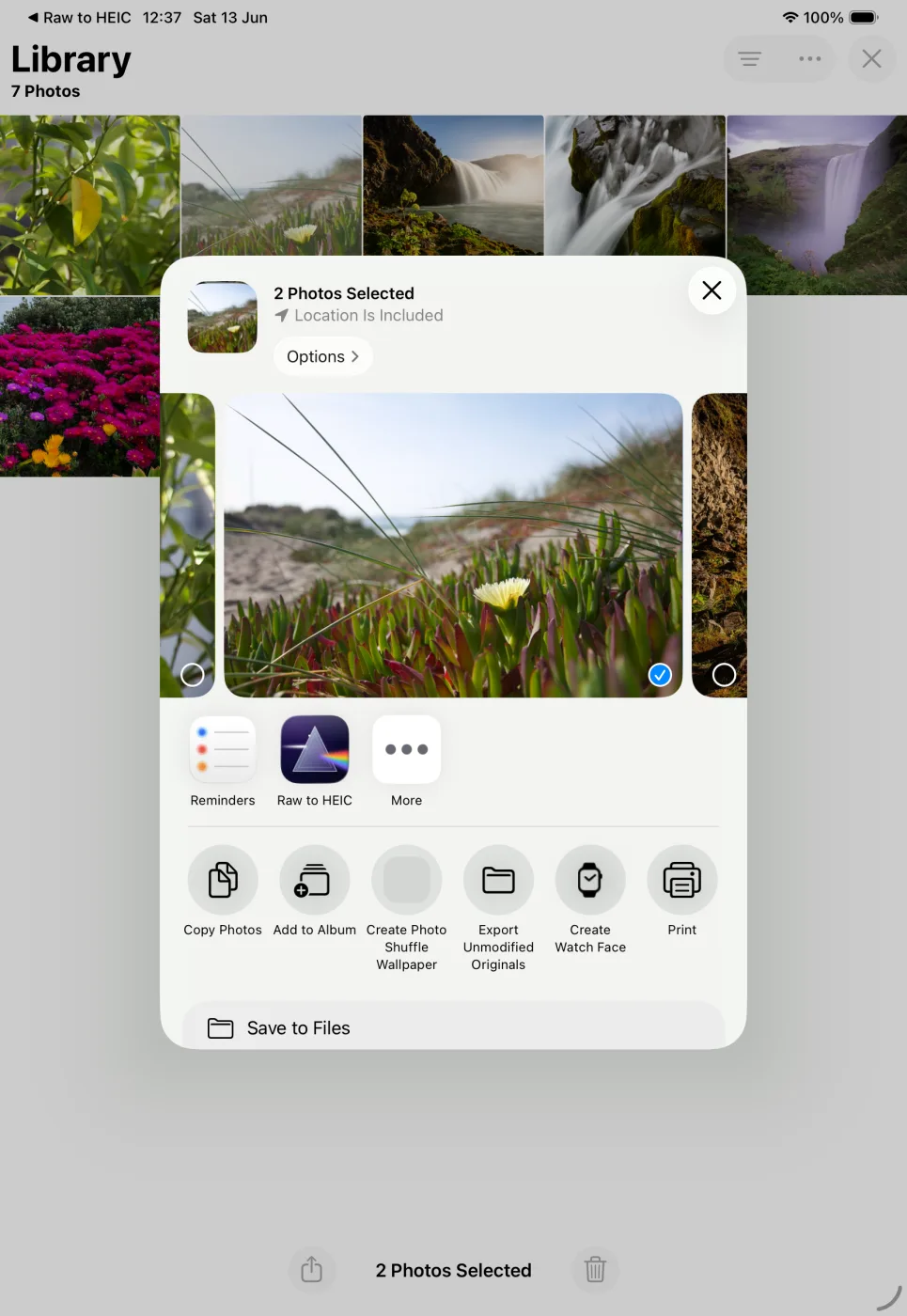
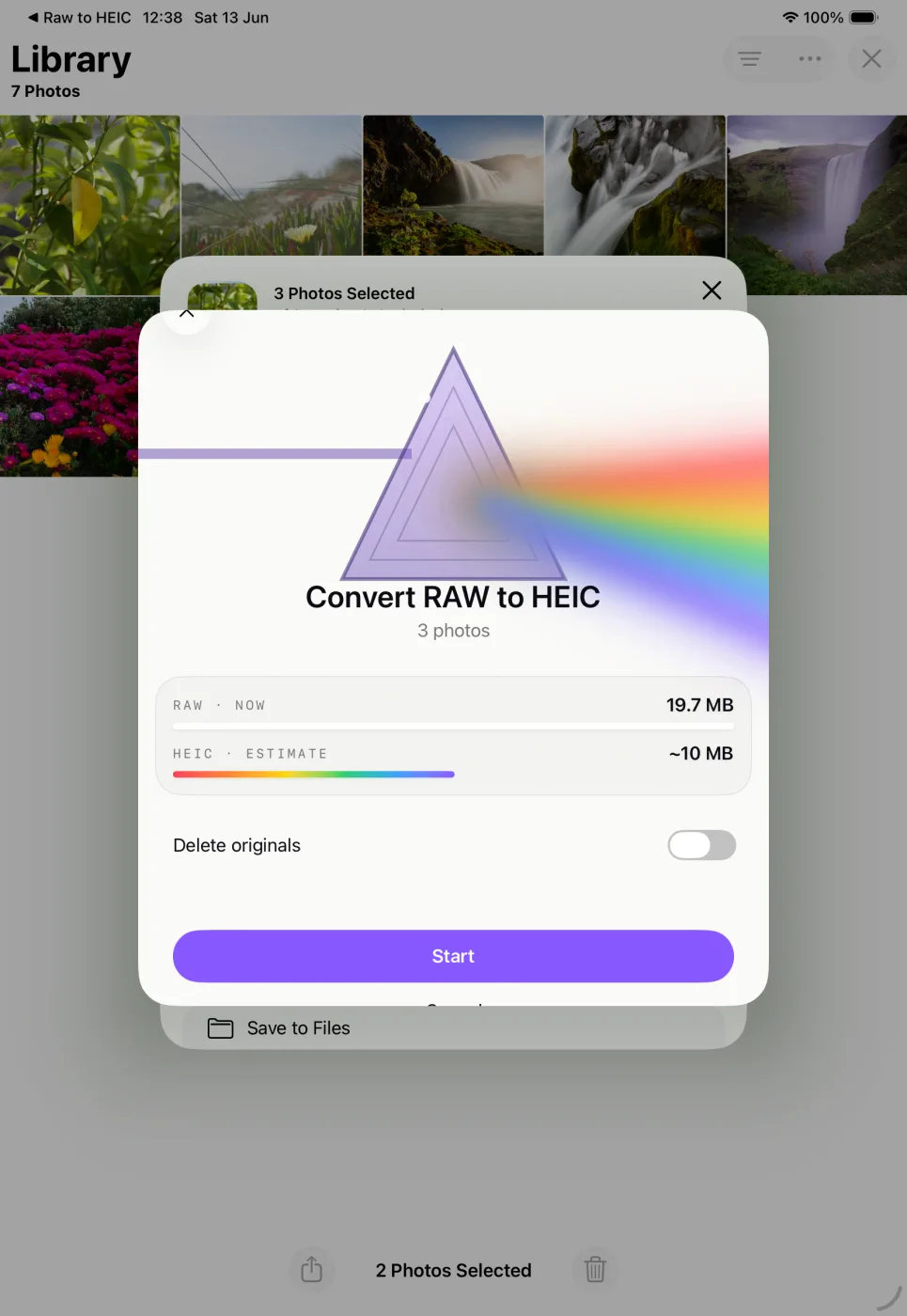
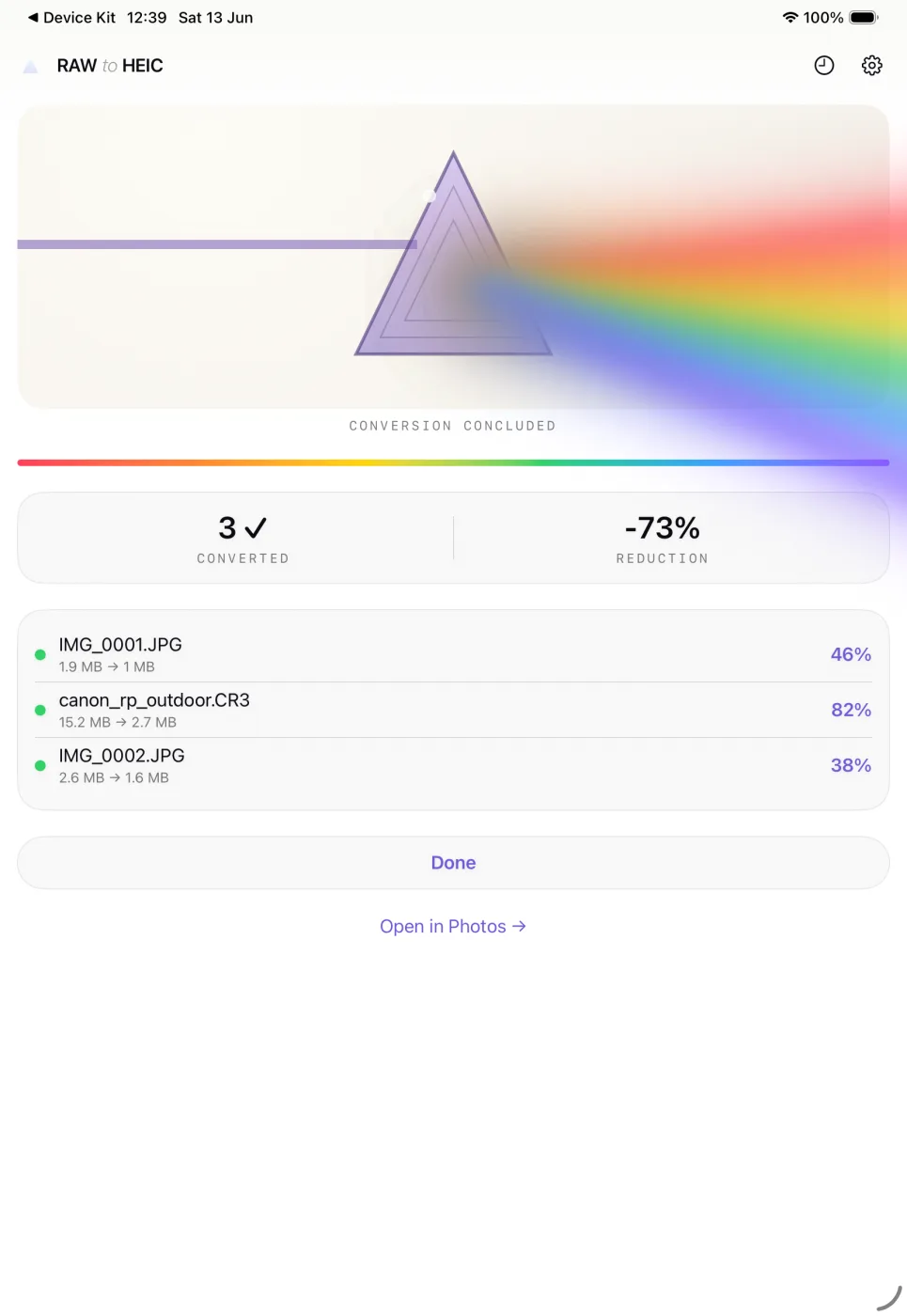
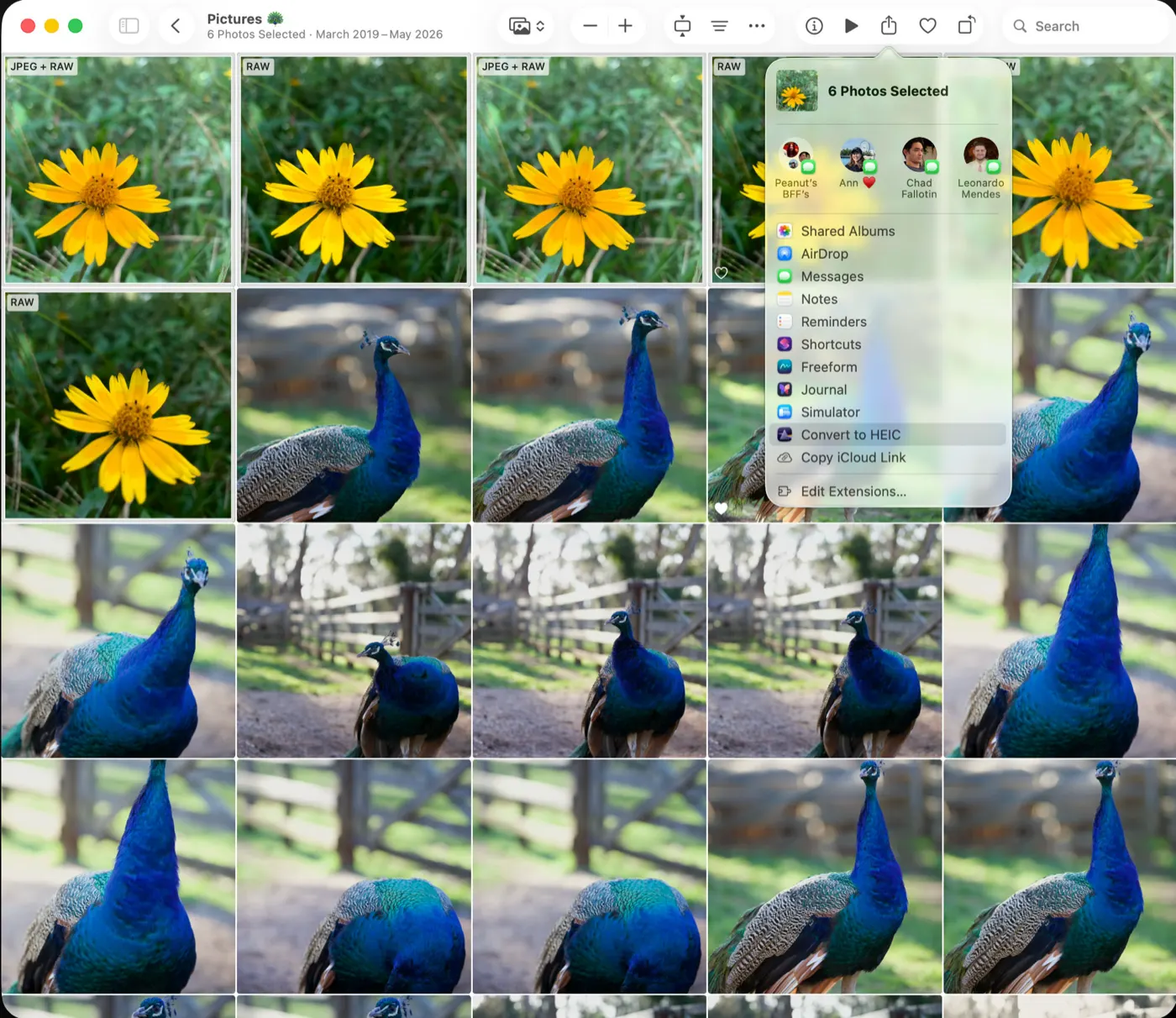
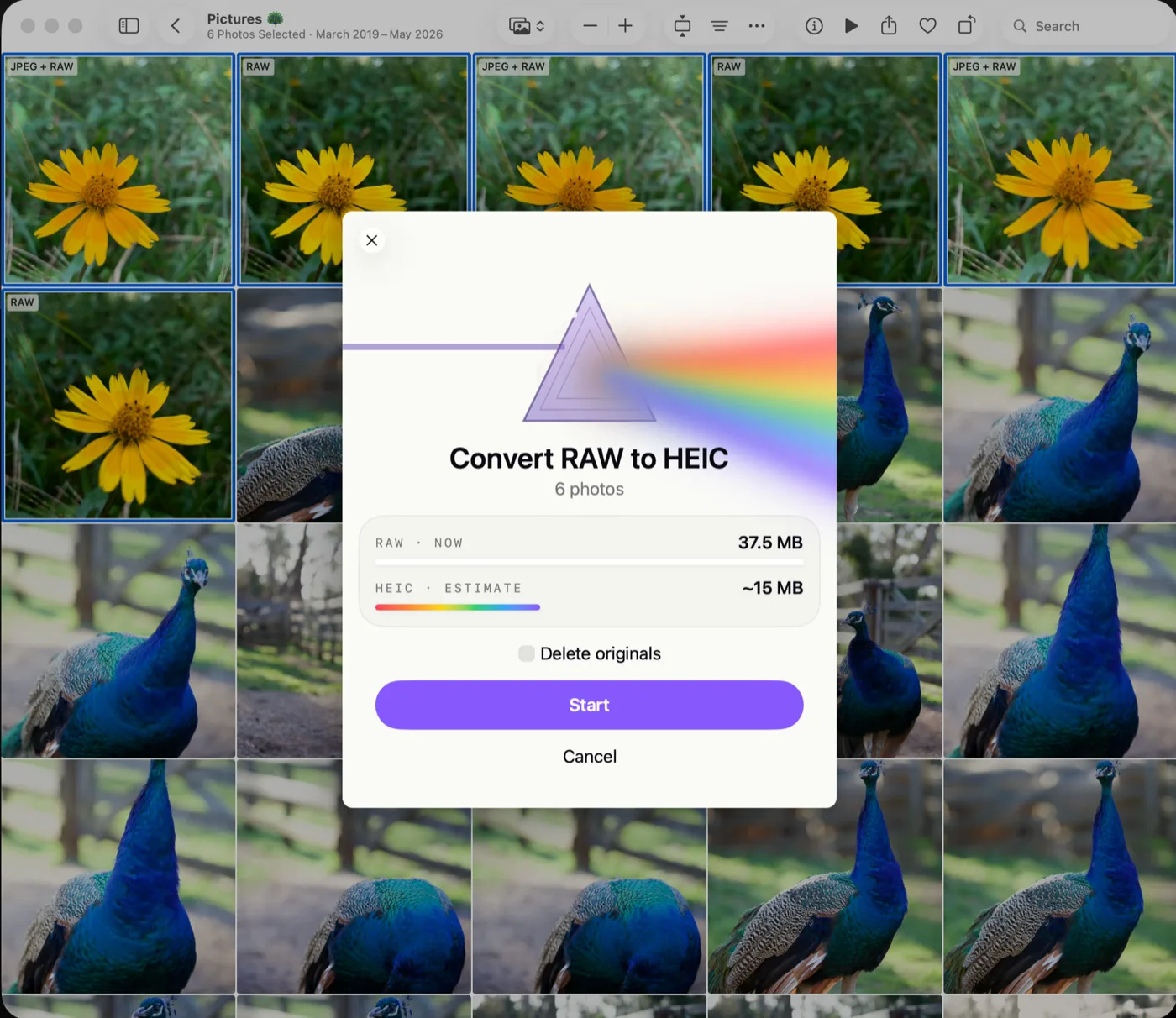
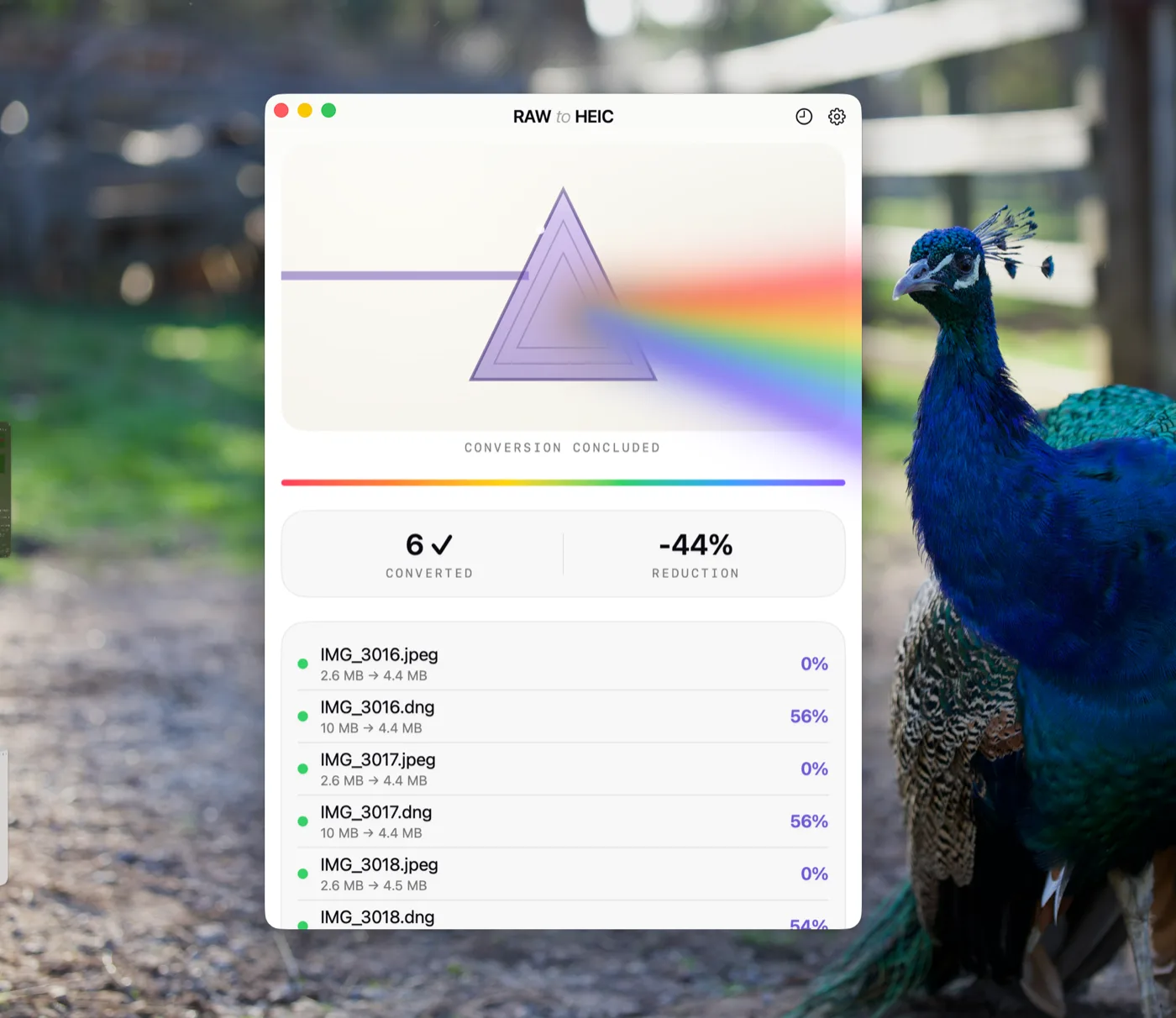
The third advantage is simplicity after editing. Many photographers shoot RAW for flexibility, then end up keeping giant source files long after the edit is done. In Photos, that creates a real storage problem, especially on devices with limited local space or paid iCloud tiers. But if Photos is your long-term home, you may not want to export finished copies and lose context. This is where a Photos-native conversion workflow matters. A tool like RawToHEIC can convert supported RAW files directly inside the Photos library, preserve metadata and organization, and avoid the usual export-import mess.
For Apple-first users, that last point is bigger than it sounds. It means you can keep using the library you already trust while cutting storage use dramatically.
Where Lightroom wins
Lightroom is still the more capable editing environment. There is no need to pretend otherwise.
If you edit exposure and white balance only, Photos is often enough. If you push shadows hard, correct lens behavior, fine-tune color ranges, build local masks, batch-apply looks, or need consistent output across a large set, Lightroom is operating on another level. Its toolset is broader, and the editing experience is designed around image development rather than general photo management.
Lightroom also makes more sense for photographers who treat files as assets first and library items second. You might import from multiple cameras, keep shoots in separate projects, deliver exports in several formats, and revisit RAW originals months later. That is standard Lightroom behavior.
There is also the ecosystem factor in Lightroom’s favor. If you collaborate with other photographers, retouchers, or clients who already use Adobe tools, Lightroom fits more easily into that world. Presets, syncing, and handoff patterns are more established there.
The trade-off is that Lightroom can feel heavier than many Apple users actually need. More controls usually mean more decisions. More flexibility often means more file management. And for people who mostly want to enjoy their library, make strong edits, and keep everything accessible on Apple devices, that overhead can become the main problem.
RAW editing and image quality
This is where comparisons often get oversimplified.
Lightroom generally gives you more latitude with RAW files. Its controls are deeper, its masking is better, and its workflow is built around extracting the most from a RAW capture. For challenging scenes, heavy dynamic range recovery, and color-specific work, Lightroom gives experienced editors more room.
Apple Photos, though, is better than many people expect. For a large number of real-world photos, especially images from recent iPhones and mainstream mirrorless cameras, Photos can deliver results that look excellent without much effort. The controls are more limited, but they are also faster to use. That is a real advantage when you are editing for personal use, family archives, travel shots, or social sharing instead of client delivery.
A practical way to think about it is this: Lightroom is for maximizing the file. Photos is for finishing the photo.
If you shoot RAW because you want safety and flexibility at capture time but do not need to revisit every image with advanced local adjustments later, Photos may be enough. If your editing style depends on precision and repeatability, Lightroom is the safer choice.
Storage, syncing, and everyday usability
For many Apple users, storage is the deciding factor even more than editing tools.
RAW files are large. ProRAW files are larger. A library that feels manageable at first can become expensive and slow over time. This is where Apple Photos versus Lightroom becomes less about image quality and more about day-to-day ownership.
In Apple Photos, large originals often remain mixed into the same library as casual shots, videos, screenshots, and finished images. That keeps everything together, which is convenient, but it can also inflate local and cloud storage quickly. The upside is that your organization remains intact. Albums, favorites, captions, locations, and edits all stay attached to the photo record.
In Lightroom, storage pressure can be easier to think about because the workflow is more explicitly file-based. But that clarity comes with more maintenance. You may be managing originals, previews, exports, and cloud limits in parallel. For photographers who enjoy that control, it is fine. For people who want less friction, it is not.
There is an important middle ground here. Many Apple users want to shoot and edit in RAW, keep the finished image in Photos, and stop paying the storage penalty of holding every massive source file forever. That is a specific workflow problem, and general editors do not always solve it cleanly. A native conversion path inside Photos is often the simplest answer because it reduces file size without breaking the library apart.
Privacy and trust
This matters more than feature grids suggest.
Apple Photos benefits from being part of the platform. For users who prefer on-device behavior, familiar permissions, and minimal data exposure, that trust is built in. Lightroom is a polished product, but it is still part of a broader service ecosystem with subscription expectations and cloud dependencies that not every Apple user wants.
That does not make Lightroom unsafe. It simply makes the decision more personal. Some users want maximum editing power and are comfortable with Adobe’s model. Others want photo management that feels local, private, and durable without ongoing fees.
If you are in the second group, Apple Photos has a clear advantage.
Which one should you choose?
Choose Apple Photos if your library already lives in the Apple ecosystem, you value simple organization, and you want strong enough editing without managing extra complexity. It is especially compelling if your biggest pain point is not editing capability but storage growth, sync convenience, and preserving the context of your library.
Choose Lightroom if editing is the main event. If you regularly work from RAW, want the best masking and tonal control, and are comfortable with a more involved workflow, Lightroom remains the stronger tool.
A lot of people, though, do not need to choose one forever. You can edit selectively where Lightroom makes sense and still recognize that Photos is the place you actually live day to day. If that is your reality, optimize the library you keep. Keep the workflow native. Reduce storage where it hurts. Protect the organization you have already built.
The best photo system is not the one with the longest feature list. It is the one you will still trust, understand, and comfortably use three years from now.
Shrink your RAW library, right inside Photos.
RawToHEIC converts camera RAW and iPhone ProRAW to HEIC up to 10× smaller — keeping every edit, album, favorite, and location. On-device, no account, one purchase for iPhone, iPad, and Mac.
Not sure yet? Convert a few sample photos free — no install, nothing uploaded.
Try it free — no install →